Cheng Zhao Don Zhao
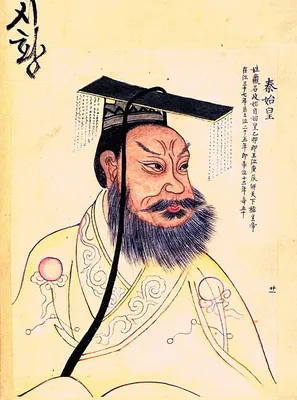
Qin Shi Huang unified China, established the emperor title, and initiated significant reforms, though historical portrayals vary.
Qin Shi Huang, born Ying Zheng, was the founder of the Qin dynasty and the first emperor of China, reigning from 221 to 210 BC. He unified the warring states, creating the title 'emperor' (Huángdì) to signify his supreme rule. His reign was marked by sweeping reforms aimed at standardization across China, including a unified currency, weights, measures, and a national road system. He also commissioned massive public works, most notably the incorporation of existing walls into the Great Wall of China and the construction of his vast mausoleum guarded by the Terracotta Army.
Historically, Qin Shi Huang has often been depicted as a harsh tyrant, a view largely shaped by assessments from the succeeding Han dynasty, which emphasized his alleged book burnings and scholar executions. However, modern scholarship has begun to re-evaluate these characterizations, leading to ongoing discussions about the true nature of his policies and their lasting impact. Despite the controversies, his achievements are widely acknowledged as having profoundly influenced China's subsequent history, marking the beginning of a new imperial epoch.
Founding the Empire and Imperial Title
Born Ying Zheng, he rose to power as King Zheng of Qin and, after conquering the other warring states by 221 BC, declared himself China's first emperor. He innovated the title 'Huángdì' (Emperor), merging concepts from mythical rulers to signify a new level of authority beyond that of a mere 'king' (wáng). This title, carrying significant prestige and religious undertones, was adopted by subsequent monarchs for over two millennia. His reign saw extensive territorial expansion through military campaigns, incorporating regions like the Yue lands and parts of Inner Asia into the expanding Chinese state.
Reforms and Public Works
Working with his minister Li Si, Qin Shi Huang implemented sweeping economic and political reforms to standardize the diverse practices of the former Chinese states. These reforms aimed to consolidate his rule and facilitate governance across the unified empire. His administration oversaw the construction of monumental public works, including connecting and expanding various state walls to form the Great Wall of China, and developing an extensive national road network. Perhaps most famously, he commissioned his own city-sized mausoleum, famously guarded by the life-sized Terracotta Army.
Historical Portrayal and Re-evaluation
Qin Shi Huang's legacy has been complex, often characterized by the Han dynasty's portrayal of him as a cruel tyrant who suppressed knowledge by banning and burning books and executing scholars. This negative depiction has influenced historical perception for centuries. However, since the mid-20th century, scholars have increasingly questioned this traditional view. Current academic discussions explore the multifaceted nature of his policies and reforms, with many acknowledging his profound and lasting influence on the trajectory of Chinese history, marking the start of a significant imperial era.
Names and Titles
His personal name is often cited as Ying Zheng, with 'Ying' as the surname and 'Zheng' as the given name in modern contexts. Ancient naming conventions differed, sometimes using 'Zhao' as a surname derived from his birthplace. He initially ruled as King Zheng of Qin. Upon unifying China, he adopted the new title 'Huángdì' (Emperor), a term he coined by combining 'Huáng' (from the mythical Three Sovereigns) and 'Dì' (from the legendary Five Emperors), signifying a divine and supreme ruler. He styled himself the 'First Emperor' (Shǐ Huángdì), intending a dynastic succession of numbered emperors. His personal name 'Zheng' and the pronoun '朕' (which he reserved for himself) became taboo.
Key Ideas
- Unification of China under a single imperial rule.
- Creation of the title 'Huángdì' (Emperor) to signify supreme authority.
- Standardization of laws, currency, weights, and measures across the empire.
- Construction of the Great Wall of China and extensive road systems.
- Debate over historical portrayal as tyrant versus effective reformer.
Books by Cheng Zhao Don Zhao
0 free public domain books · Read online or download
