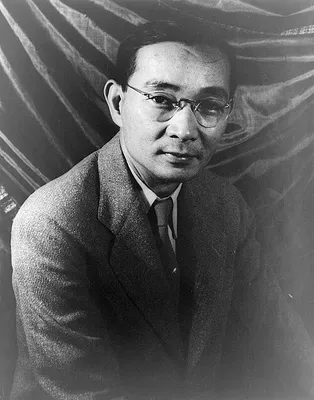
Cheng Lin Liu
Lin Yutang was a multifaceted Chinese writer, linguist, and inventor known for bridging Eastern and Western cultures.
Lin Yutang, born in 1895, was a prominent Chinese writer, linguist, and inventor who achieved renown for his bilingual literary contributions and efforts to foster cultural understanding between China and the West. He developed a distinctive humorous prose style in modern Chinese literature and was recognized for translating Chinese classics into English. His academic pursuits included compiling language learning materials and creating an English-Chinese dictionary. Lin also explored his spiritual journey, transitioning from Christianity to Taoism and Buddhism before returning to Christianity later in life, a path documented in his writings.
Beyond his literary and linguistic work, Lin was an inventor, notably designing a Chinese typewriter that, while patented, was not mass-produced. He received multiple nominations for the Nobel Prize in Literature. His career involved periods of teaching, government service, and extensive writing, both in China and abroad, particularly in the United States. Lin's work often explored Chinese philosophy, culture, and ways of life, making him a significant figure in cross-cultural intellectual history.
Philosophical and Cultural Contributions
Lin Yutang served as a crucial cultural intermediary, significantly shaping the perception of Chinese culture in the West. His writings, such as 'My Country and My People' and 'The Importance of Living,' were instrumental in introducing Chinese philosophy and daily life to Western audiences. He championed a humorous and tolerant worldview, which he introduced to Chinese literature through his magazine 'The Analects Fortnightly.' This publication featured essays by prominent writers and was central to his efforts to integrate Western concepts of humor into Chinese discourse. Lin's exploration of Confucianism, Taoism, and Buddhism, alongside his Christian upbringing, informed his nuanced perspective on life and culture, reflecting a deep engagement with diverse philosophical traditions.
Linguistic and Inventive Pursuits
As a linguist, Lin Yutang made significant contributions to language education and lexicography. In the 1930s, he developed a series of English as a Second Language (ESL) textbooks specifically for Chinese learners. Later in his career, he undertook the monumental task of compiling 'Lin Yutang's Chinese-English Dictionary of Modern Usage,' published in 1972. His inventive spirit was most notably expressed through his design of a Chinese typewriter. Recognizing the challenges posed by the character-based nature of the Chinese language for modern printing technology, he dedicated years to developing a functional typewriter, which was patented in the United States in 1952, though it never achieved widespread commercial success.
Spiritual and Personal Journey
Lin Yutang's life was marked by a dynamic spiritual evolution. Born into a Christian family, his father being a minister, Lin later questioned his faith during his academic years. He delved deeply into Taoism and Buddhism, exploring these philosophies extensively. This period of spiritual seeking and immersion in Eastern thought is reflected in his writings. Ultimately, in his later life, Lin returned to Christianity, a journey he chronicled in his book 'From Pagan to Christian.' This personal quest for spiritual understanding and integration of different belief systems highlights a significant dimension of his intellectual and personal development.
Key Ideas
- Bridging Eastern and Western cultures through literature and translation.
- Pioneering a humorous prose style in modern Chinese literature.
- Introducing Chinese philosophy and way of life to Western audiences.
- Exploring the integration of diverse spiritual and philosophical traditions (Christianity, Taoism, Buddhism, Confucianism).
- Developing practical solutions for Chinese language technology (typewriter, dictionary).
Books by Cheng Lin Liu
0 free public domain books · Read online or download
