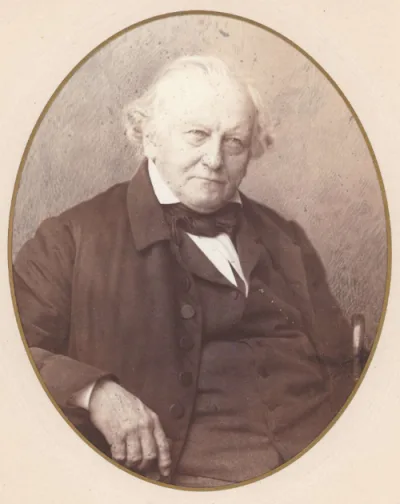
Charles Harrington
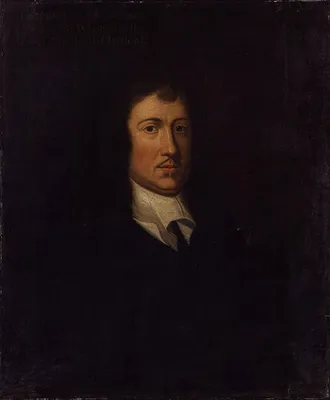
James Harrington was an English political theorist known for his republican ideals, particularly 'The Commonwealth of Oceana'.
James Harrington (1611–1677) was an English political theorist recognized for his contributions to classical republican thought. His most famous work, "The Commonwealth of Oceana" (1656), outlined an ideal republican constitution intended as a blueprint for England's republic established after King Charles I's execution. The book faced initial censorship by Oliver Cromwell but was eventually published. Harrington also advocated for practical political reforms like the vote by ballot and the rotation of officials, though these efforts saw limited success.
Harrington's early life included birth in Northamptonshire and education at Oxford and the Middle Temple. His youth was marked by extensive travel across Europe, including visits to Geneva and Rome, and a period in Venice that deepened his appreciation for Italian republics. He provided financial support to Parliament during the Civil Wars but also maintained a personal loyalty to King Charles I, accompanying him in various capacities after his capture. This loyalty ultimately led to his dismissal following a disagreement over the Treaty of Newport.
Later in life, Harrington was imprisoned without trial following the Restoration, enduring harsh conditions and a deteriorating state of health. He suffered mental and physical ailments before his death in Westminster. His writings, primarily focused on defending "Oceana," have been subject to various editorial efforts, with modern scholars offering differing interpretations of his literary style and political intent.
The Commonwealth of Oceana
Harrington's seminal work, "The Commonwealth of Oceana," published in 1656, presented a detailed vision for an ideal republican government. Conceived as a constitutional model for England following the establishment of the republic, the book was initially seized by authorities under Oliver Cromwell. However, through the intercession of Cromwell's daughter, Elizabeth Claypole, Harrington regained his manuscript and dedicated the published work to Cromwell. "Oceana" explored principles such as the vote by ballot and the regular rotation of political officeholders, ideas that Harrington and his associates, who formed the "Rota" club in 1659, attempted to implement with little practical success.
The "Cake" Metaphor
Within "The Commonwealth of Oceana," Harrington employed a simple yet profound analogy, commonly referred to as his "cake" metaphor, to illustrate how a just political system can effectively balance individual self-interest with the collective good. The metaphor describes a scenario where two parties must divide a cake: one divides, and the other chooses first. This arrangement incentivizes the divider to make an equitable division, as they would receive the smaller portion if the division were unequal. Harrington argued that political institutions could be structured similarly, ensuring that the pursuit of private advantage naturally leads to public fairness and justice.
Early Life and Political Ambiguities
Born in 1611, James Harrington's early life was situated in Northamptonshire. His family background included connections to English nobility. After attending Trinity College, Oxford, without obtaining a degree, and studying at the Middle Temple, Harrington embarked on extensive travels throughout Europe. His youth was marked by a complex political stance during the English Civil Wars. While he provided financial support to Parliament and acted as an agent for a relative of the King who supported Parliament, he also maintained a personal devotion to King Charles I. He served the King in various capacities after his capture, including as a 'gentleman of the bedchamber,' before his dismissal due to a public disagreement concerning the Treaty of Newport.
Later Life and Imprisonment
Following the Restoration of the monarchy, Harrington faced significant adversity. In 1661, he was arrested on charges of conspiracy and imprisoned in the Tower of London without a formal trial. His treatment was reportedly severe, and his confinement was moved to St Nicholas Island. Through the intervention of his brother and uncle, who posted a substantial bond, Harrington was eventually released to a fort in Plymouth. His health, both physical and mental, deteriorated significantly during this period, marked by delusions and physical ailments, ultimately leading to a stroke. He married later in life and died in Westminster, with his burial place noted as being next to Sir Walter Raleigh.
Key Ideas
- Republican constitution as an ideal model
- Vote by ballot
- Rotation of magistrates and legislators
- Balancing self-interest with the common good through institutional design (cake metaphor)
Notable Quotes
“Divide,' says one unto the other, 'and I will choose; or let me divide, and you shall choose.' If this be but once agreed upon, it is enough; for the divident dividing unequally loses, in regard that the other takes the better half; wherefore she divides equally, and so both have right.”
Books by Charles Harrington
1 free public domain book · Read online or download