Charles Dickens John Tenniel Frank Stone
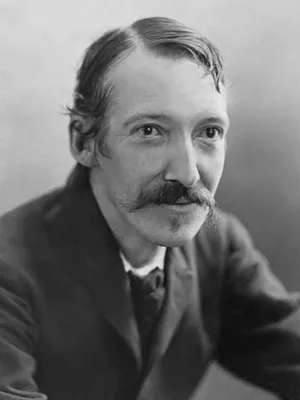
Robert Louis Stevenson was a Scottish writer known for adventure novels and poetry, who explored darker themes later in life.
Robert Louis Stevenson, born in Edinburgh in 1850, was a prolific Scottish author recognized for his novels, essays, poetry, and travel writing. Despite lifelong health challenges, he produced notable works such as "Treasure Island," "Strange Case of Dr Jekyll and Mr Hyde," and "Kidnapped." His early life was marked by family traditions in engineering, but he ultimately pursued a literary career, influenced by his intellectual and artistic circles. Stevenson's travels, including trips related to his family's lighthouse engineering work, provided inspiration for his writings. He also spent time in the Scottish countryside, which influenced his connection to nature.
As Stevenson matured, his writing evolved. Settling in Samoa in 1890, he observed increasing Western influence and began to incorporate a more somber realism into his work, moving away from earlier romances. He died in Samoa in 1894 at the age of 44. During his lifetime, Stevenson achieved considerable fame, and his literary reputation, though fluctuating, is generally positive today. He remains a widely translated author, ranked highly among global literary figures.
Early Life and Influences
Born Robert Lewis Balfour Stevenson in Edinburgh in 1850, he came from a family of prominent lighthouse engineers. His childhood was significantly impacted by recurring respiratory illnesses, which led to frequent stays in warmer climates and often kept him from school. He was educated sporadically, often by private tutors, and developed a love for storytelling from a young age, even dictating tales before he could read. His nurse, Alison Cunningham, played a key role in his early years, providing both comfort during his illnesses and a mix of religious and folk teachings that influenced his imagination. Despite his family's professional background, Stevenson eventually chose a literary path, a decision met with his father's resigned acceptance.
Literary Development and Later Life
Stevenson's early literary efforts included a historical account of the Covenanters, published when he was sixteen. He studied engineering and law at university but showed little enthusiasm for either, instead immersing himself in literary societies and friendships. His family's lease on Swanston Cottage provided him with access to the countryside, fostering a deep appreciation for nature that would permeate his writing. Annual trips for lighthouse inspections, while stemming from his family's profession, provided him with travel experiences and narrative material. In his later years, he moved to Samoa, where his perspective shifted towards a darker realism, influenced by the changing socio-political landscape of the South Pacific.
Philosophical and Religious Exploration
Stevenson's intellectual journey saw him move away from his strict Presbyterian upbringing. He adopted a more Bohemian lifestyle and, by his early twenties, had rejected Christianity, declaring himself an atheist. His association with the LJR (Liberty, Justice, Reverence) Club, which encouraged questioning parental teachings, reflects this period of intellectual and philosophical exploration. His essay "An Apology for Idlers" (1877) articulated a philosophy that valued personal happiness and finding one's own path over conventional success, suggesting that a happy individual is a valuable contribution to the world.
Key Ideas
- The value of personal happiness and "the liveableness of life" over conventional pursuits.
- Exploration of dual nature and the darker aspects of the human psyche.
- Appreciation for nature and wild places.
- Influence of childhood illness and imagination on writing.
Notable Quotes
“Now I often wonder what I inherited from this old minister... I must suppose, indeed, that he was fond of preaching sermons, and so am I, though I never heard it maintained that either of us loved to hear them.”
“A happy man or woman... is a better thing to find than a five-pound note. He or she is a radiating focus of goodwill”
“Disregard everything our parents have taught us.”
Books by Charles Dickens John Tenniel Frank Stone
0 free public domain books · Read online or download
