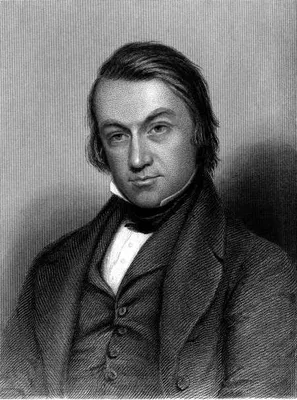
Charles A Mills
Charles Mackay was a Scottish writer known for his poetry, journalism, and a famous work on popular delusions.
Charles Mackay, born in Scotland in 1814, led a multifaceted career as a poet, journalist, novelist, and songwriter. His early life involved education in London and Brussels, followed by work for an ironmaster near Liège, where he began his writing career. He later moved to London and then back to Scotland, holding editorial positions at various newspapers, including The Morning Chronicle and the Glasgow Argus. Mackay's literary output was extensive, encompassing poetry collections, historical romances, and a notable history of London. He also explored linguistic theories, though his etymological conjectures were met with skepticism by contemporaries. His songs achieved significant popularity, with some being set to music and widely performed. Mackay's later life included travels to North America and correspondence for The Times during the American Civil War. He received an honorary degree from the University of Glasgow. Mackay passed away in 1889, leaving behind a legacy primarily associated with his insightful, albeit sometimes controversial, observations on human behavior and history.
Journalistic Career and Travels
Charles Mackay began his journalistic endeavors in London, contributing to publications like The Sun and serving as an assistant sub-editor for The Morning Chronicle. His career progressed to editing the Glasgow Argus and later The Illustrated London News. Mackay's travels also played a role in his writing; he visited North America in the 1850s, documenting his experiences in "Life and Liberty in America." During the American Civil War, he returned to the United States as a correspondent for The Times, notably being the first to report on the Fenian conspiracy. These experiences provided him with a broad perspective on social and political events, which he incorporated into his journalistic work and publications.
Literary Works and Linguistic Theories
Mackay's literary contributions are varied, including collections of songs and poems, and historical novels. His most enduring work is "Extraordinary Popular Delusions and the Madness of Crowds," published in 1841, which examines historical instances of irrational collective behavior. He also ventured into linguistic studies, publishing works on the etymology of Western European languages and Scotch dialect. However, his theories, particularly those suggesting a strong link between English words and Scottish Gaelic, were characterized by contemporaries as "fanciful conjectures" and he was described as an "etymological monomaniac," rarely taken seriously in this field during his lifetime.
Musical and Popular Contributions
Beyond his prose and poetry, Charles Mackay was also a songwriter whose lyrics achieved considerable popularity. Some of his songs, such as "Cheer Boys Cheer," were set to music by Henry Russell and became widely known. His poetic works also included pieces like "You have no enemies, you say?" and "Who shall be fairest?" These popular verses and songs contributed significantly to his public recognition during his lifetime, showcasing a talent for accessible and engaging lyrical expression that resonated with a broad audience.
Key Ideas
- Analysis of collective irrationality and societal delusions
- Exploration of linguistic etymology, particularly concerning Scottish Gaelic
- Observations on life and society in North America during the 19th century
Books by Charles A Mills
0 free public domain books · Read online or download
