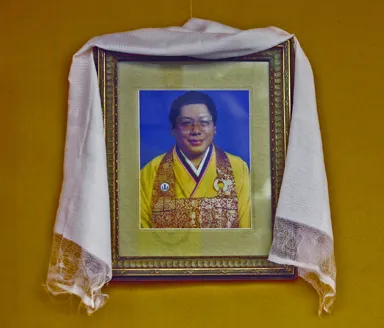
Ch Gyam Ngakpa Ngakpa Chogyam Khandro Dechen
Chögyam Trungpa was a Tibetan Buddhist master who introduced Vajrayana to the West, founding institutions and Shambhala Training, alongside controversial personal conduct.
Chögyam Trungpa, born in Tibet in 1939, was the eleventh Trungpa tulku and a master of both Kagyu and Nyingma lineages. He played a significant role in bringing Tibetan Buddhism, particularly Vajrayana teachings, to the West. Trungpa founded Vajradhatu, Naropa University, and the Shambhala Training method, establishing numerous meditation centers globally. He was also recognized as a scholar, poet, artist, and originator of the Shambhala Buddhist tradition.
His escape from Tibet in 1959 was a perilous nine-month journey through the Himalayas. Upon arriving in the West, he began teaching, initially in Scotland where he co-founded Samye Ling, the first Tibetan Buddhist monastery in the West. In 1969, he disrobed and returned his monastic vows, opting to teach as a layperson. This shift, along with his unconventional methods including heavy drinking and sexual relationships with students, led to considerable controversy. Despite this, he was highly influential, with many students remaining devoted and finding his teachings transformative.
Introduction of Vajrayana and Shambhala Training
Chögyam Trungpa was instrumental in introducing the Vajrayana teachings of Tibetan Buddhism to Western audiences. He established Vajradhatu in 1973, which served as an umbrella organization for his North American institutions, including over 100 meditation centers worldwide, now known as Shambhala Meditation Centers. He also founded Naropa Institute (later Naropa University) in 1974, the first accredited Buddhist university in North America, which offered programs in both Buddhist studies and the arts and humanities. Trungpa developed the Shambhala Training method, a path of meditation and contemplative practice designed for contemporary life. His approach often presented Buddhism in a way that minimized traditional cultural elements, aiming for accessibility to Western practitioners.
Teaching Methods and Controversies
Trungpa's teaching style was often characterized by unconventional and provocative methods, a phenomenon he termed 'crazy wisdom.' This approach sometimes involved actions that generated significant controversy, both during his lifetime and afterward. These included heavy drinking, engaging in sexual relationships with students, and accusations of ordering sexual assault. He disrobed in 1969, returning his monastic vows to teach as a layperson, partly to challenge students' preconceptions of spiritual teachers. While some found his behavior unsettling and intimidating, many students remained deeply loyal, perceiving his actions as integral to their spiritual development and finding his teachings profoundly impactful.
Dissemination and Legacy
Trungpa's influence extended beyond establishing institutions; he was a prolific translator of Tibetan Buddhist texts and a poet. His students included notable figures in various fields, such as Pema Chödrön, Allen Ginsberg, and Joni Mitchell. The seminaries he conducted were intensive three-month residential programs designed to deeply immerse students in Buddhist teachings and meditation, also serving to train future teachers. His legacy includes the widespread network of Shambhala centers and Naropa University, which continue to offer Buddhist education and contemplative practices. His journey from Tibet, documented and confirmed through later research, is considered a remarkable feat of endurance.
Key Ideas
- Crazy Wisdom: Unconventional and flamboyant teaching methods employed by some spiritual masters.
- Shambhala Training: A method of meditation and contemplative practice for contemporary life.
- Ri-mé (Nonsectarian): An ecumenical movement within Tibetan Buddhism aiming to unite teachings from different schools.
Books by Ch Gyam Ngakpa Ngakpa Chogyam Khandro Dechen
0 free public domain books · Read online or download
