Caterina Nirta Andrea Pavoni
Neapolitan ragù is a slow-cooked meat and tomato sauce with a rich history, evolving from French ragoût and becoming a culinary symbol of Naples.
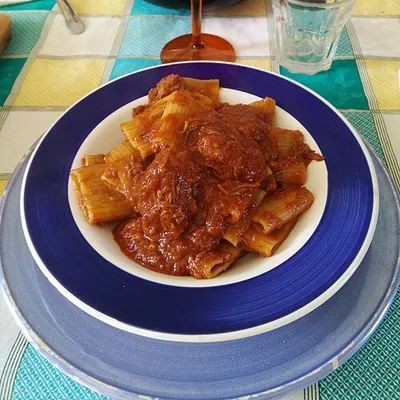
Neapolitan ragù, known locally as 'rraù', is a celebrated dish from Naples, Italy, characterized by meat braised for many hours in tomato. It is traditionally served in two parts: first as a pasta sauce, then as meat eaten on its own. This method of preparation highlights the meat's flavor, with the tomato acting as a vehicle. The dish holds significant cultural importance in Naples, often referred to as the "queen of sauces."
Its origins trace back to the French 'ragoût' introduced to Italy in the late 17th century. Over time, it transformed, shedding foreign ingredients like asparagus and truffles while incorporating tomatoes and pasta. By the 19th century, emigrants brought variations to America, influencing Italian-American cuisine. Neapolitan ragù differs from its Bolognese counterpart in its longer cooking time, higher tomato content, use of whole meat pieces instead of minced, and typical pairing with short pasta shapes.
Historical Evolution and Culinary Identity
The Neapolitan ragù evolved from the French 'ragoût', a term that arrived in Italy in the late 17th century. Initially, these sauces were complex, featuring ingredients like asparagus, truffles, and various animal parts. Early Neapolitan recipes, such as those described by Antonio Latini, included stuffed veal and sauces with a wide array of unusual components. Over approximately 150 years, the dish simplified, shedding these exotic elements and integrating tomatoes and pasta, transforming into a distinctly Neapolitan creation. This evolution reflects a broader culinary trend in Italy, where regional dishes developed unique identities. The Neapolitans hold their ragù in high esteem, viewing it fundamentally as a meat sauce where tomato plays a supporting role, a perception that distinguishes it from other Italian meat sauces.
Development of the Modern Dish
The integration of tomatoes into Neapolitan ragù became more widespread around the early 19th century, possibly originating among the general populace before becoming codified. Cookbooks from the period show the gradual shift, with the term 'ragù' eventually replacing 'sugo di carne' for the meat sauce. Early modern versions often included grated cheese, a practice that eventually faded. Despite its complexity and long cooking time, which made it a rare and special meal for many, especially during holidays, adaptations in cookbooks aimed at home cooks in the 19th and 20th centuries eventually made it more accessible. The inclusion of tomatoes became standard by the 20th century, solidifying the distinction between Neapolitan ragù and other sauces like Genovese.
Ingredients and Preparation Nuances
The defining characteristic of Neapolitan ragù is its focus on meat, with tomato serving to enhance its flavor. The choice of meat varies regionally, from water buffalo and lamb to goat and pork, often utilizing cuts that require extended braising. Cuts like beef shoulder and pork short ribs are common. While historically offcuts and sausages were used due to cost, modern preparations often favor specific braised meats like braciola. The sauce itself is made by slowly braising meat in tomato purée and paste, a process that can take many hours. After the meat is tender, it's removed, and the sauce is reduced. This slow-cooking method is crucial for developing the rich flavor and texture that defines Neapolitan ragù, distinguishing it significantly from faster-cooking sauces like ragù alla bolognese.
Books by Caterina Nirta Andrea Pavoni
0 free public domain books · Read online or download
