Carlo Pascal
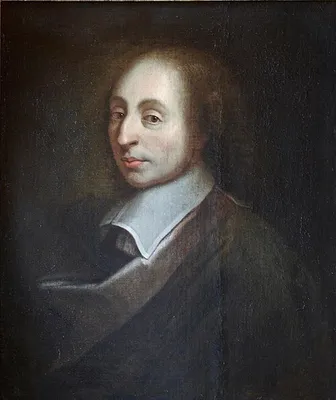
Blaise Pascal was a French mathematician, physicist, inventor, and writer known for probability theory, the Pascaline calculator, and philosophical works.
Blaise Pascal (1623–1662) was a French intellectual prodigy who made significant contributions across mathematics, physics, and philosophy. Educated by his father, he displayed an early aptitude, producing a major work on conic sections at 16. His work with Pierre de Fermat laid the foundations for probability theory, influencing economics and social sciences. Pascal also pioneered mechanical calculating devices, inventing the Pascaline, though it saw limited commercial success.
In the natural sciences, Pascal clarified concepts of pressure and vacuum, challenging Aristotelian views. He is also credited with establishing the first public transportation system. Following a profound religious experience in 1654, Pascal turned to theology and philosophy, producing influential works like "Lettres provinciales" and "Pensées." The latter includes "Pascal's Wager," a probabilistic argument for belief in God. Despite a relatively short life marked by illness, Pascal's multifaceted genius left a lasting legacy.
Early Life and Scientific Foundations
Born in Clermont-Ferrand, France, Blaise Pascal lost his mother at a young age. His father, Étienne Pascal, a mathematician himself, undertook his children's education, initially steering Blaise away from mathematics. However, Pascal's innate genius led him to independently rediscover Euclidean geometry by age 12. His fascination with conic sections, particularly the work of Desargues, culminated in his "Essai pour les coniques" (Essay on Conics) at age 16, a treatise so advanced that Descartes initially doubted its authorship. This early work, which established what is now known as Pascal's theorem, demonstrated his precocious mathematical talent.
Inventions and Scientific Inquiry
Pascal's inventive spirit led him to develop the "Pascaline," a mechanical calculator, around 1642. Designed to aid his father with tax calculations, this device was capable of addition and subtraction, making Pascal one of the earliest inventors of such machines. While pioneering, the Pascaline was expensive and cumbersome, limiting its commercial appeal. Beyond mechanics, Pascal made crucial contributions to physics, particularly in fluid dynamics. He clarified the principles of pressure and vacuum, challenging established ideas and generalizing the work of Torricelli. The SI unit for pressure, the pascal, is named in his honor. He also proposed groundbreaking ideas in the realm of public transportation with the establishment of the "carrosses à cinq sols."
Philosophical and Theological Works
A significant turning point in Pascal's life occurred in 1654, following a profound religious experience. This event led him to dedicate more attention to philosophy and theology. His "Lettres provinciales" addressed the conflict between Jansenists and Jesuits, while "Pensées" explored profound existential and religious themes. Within "Pensées" lies "Pascal's Wager," a famous probabilistic argument suggesting that belief in God is the most rational choice, considering the potential infinite gains and finite losses. Pascal also explored the mathematical properties of the arithmetical triangle, now known as Pascal's triangle, and applied principles of mathematical induction in his work.
Key Ideas
- Pascal's Theorem: Geometric theorem concerning conic sections.
- Pascaline: An early mechanical calculator.
- Probability Theory: Co-founder with Fermat, focusing on gambling problems and expected value.
- Pascal's Wager: A probabilistic argument for belief in God.
- Principle of Mathematical Induction: Explicit statement and application.
Books by Carlo Pascal
1 free public domain book · Read online or download