Cancerian House
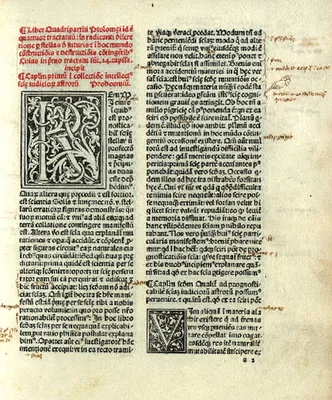
Ptolemy's Tetrabiblos, a foundational text on astrology, systematically explained its principles and philosophical underpinnings.
Written by the Alexandrian scholar Claudius Ptolemy in the 2nd century CE, the Tetrabiblos is a seminal work on astrology, exploring its philosophy and practical applications. While Ptolemy is also known for his astronomical text, the Almagest, the Tetrabiblos served as its influential counterpart in the realm of astrology. The work not only detailed astrological techniques but also provided a philosophical defense of astrology as a natural and beneficial study, contributing to its acceptance and integration into Western thought during the Medieval and Renaissance periods. Its influence extended to university curricula, medical studies, and literary works, shaping the intellectual landscape of Western Europe.
The Tetrabiblos has been historically significant, evidenced by numerous commentaries, translations, and paraphrases throughout antiquity, the Middle Ages, and the Renaissance. Although the scientific understanding of astronomy evolved, the Tetrabiblos has remained a vital theoretical and practical resource for astrologers. It is recognized for its systematic arrangement of astrological material, grounding it in logical principles and connecting celestial cycles to earthly effects through the philosophical framework of its time, notably Aristotelian qualities. Despite periods of criticism and declining intellectual standing, the Tetrabiblos continues to be studied by scholars and practitioners of modern Western astrology.
Foundational Text and Philosophical Defense
The Tetrabiblos, authored by Claudius Ptolemy in the 2nd century CE, is a cornerstone of astrological literature. It systematically outlines the philosophy and practice of astrology, aiming to establish it as a rational and natural science. Ptolemy's approach involved presenting astrological principles within the scientific and philosophical context of his era, emphasizing logical connections and astronomical basis. He differentiated between astronomy, which studies celestial movements, and astrology, which interprets their effects on earthly matters. This work was crucial in defending astrology against critics, providing a coherent framework that helped secure its theological tolerance and academic inclusion during the Medieval and Renaissance periods.
Historical Influence and Transmission
Ptolemy's Tetrabiblos exerted a profound and lasting influence on the development of astrology across various cultures and eras. It was translated into Arabic in the 9th century, becoming a key text for medieval Islamic astrology. Its subsequent translation into Latin in the 12th century facilitated its integration into medieval Christian scholarship, notably by figures like Albertus Magnus and Thomas Aquinas. This integration led to the teaching of Ptolemaic astrology in universities, often alongside medical studies, and influenced prominent literary works, shaping the cosmological views of Western Europe. The text remained a standard in European universities into the 17th century.
Enduring Significance and Methodological Approach
Despite periods of decline in astrology's intellectual standing, the Tetrabiblos continues to be recognized for its historical impact and as an influential textbook for modern Western astrologers. Its enduring significance stems from Ptolemy's reputation, the text's status as one of the oldest complete astrological manuals, and the clarity and order of its explanations. Ptolemy's methodological approach was characterized by a commitment to natural causes and a dismissal of astrological practices lacking astronomical justification. He organized astrological knowledge systematically, linking celestial phenomena to terrestrial events through concepts like the four Aristotelian qualities (hot, cold, wet, dry).
Key Ideas
- Astrology as a natural science based on astronomical cycles.
- The philosophical defense of astrology to legitimize its study.
- Systematic arrangement of astrological principles and techniques.
- Connection of celestial influences to earthly effects via Aristotelian qualities.
Notable Quotes
“As for the nonsense on which many waste their labour and of which not even a plausible account can be given, this we shall dismiss in favour of the primary natural causes; we shall investigate, not by means of lots and numbers of which no reasonable explanation can be given, but merely through the science of the aspects of the stars to the places with which they have familiarity.”
Books by Cancerian House
1 free public domain book · Read online or download