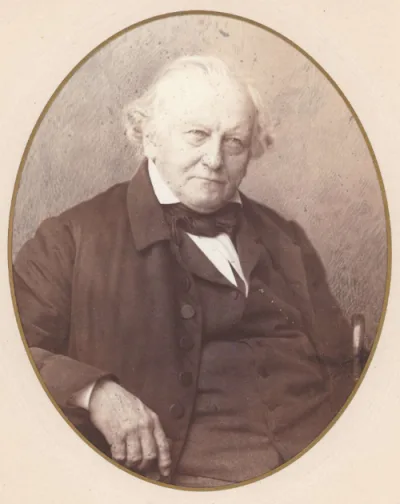
CADBURY, (John)
John Steinbeck was an American author known for novels exploring California life, fate, and injustice, earning him a Nobel Prize.
John Ernst Steinbeck (1902–1968) was an American writer celebrated for his novels, which often depicted life in his native central California. His extensive literary output includes 33 books, comprising novels, non-fiction works, and short story collections. Steinbeck's writing frequently delved into themes of fate and injustice, particularly concerning protagonists who faced hardship. His work earned him widespread recognition, including the 1962 Nobel Prize in Literature for his realistic and imaginative storytelling, which combined humor with social commentary. He is considered a significant figure in American literature.
Born in Salinas, California, Steinbeck's background included German, English, and Irish heritage. His early life involved experiences working on ranches and with migrant laborers, providing him with material for his later writings. He attended Stanford University but left without a degree. After periods of odd jobs and attempts at writing in New York, he returned to California, where he faced financial struggles during the Great Depression. During this time, he developed a close friendship and intellectual connection with marine biologist Ed Ricketts, who influenced his thinking on ecology and philosophy. Steinbeck's literary career began with less successful works before gaining significant acclaim.
Early Life and Influences
John Steinbeck was born in Salinas, California, in 1902, with roots tracing back to German, English, and Irish ancestry. His paternal grandfather had even been involved in a short-lived farming colony in Palestine. Steinbeck's upbringing in a rural valley near the Pacific coast profoundly shaped his literary settings. He gained valuable insights into the lives of working people by summering on ranches and laboring alongside migrant workers in sugar beet fields. These experiences exposed him to the hardships of migrant life and the complexities of human nature, which later found their way into his narratives. He displayed an early aptitude for mechanics and repair. After attending Stanford University, he pursued writing in New York but returned to California, eventually settling in Pacific Grove. During the Great Depression, he and his first wife, Carol, faced poverty, sometimes relying on welfare and even resorting to petty theft for sustenance, while also sharing what they had with friends.
Friendship with Ed Ricketts and Philosophical Leanings
A pivotal relationship in Steinbeck's life was his friendship with marine biologist Ed Ricketts, whom he met in 1930. Ricketts, a man of broad knowledge and quiet self-sufficiency, became a significant mentor and friend. He introduced Steinbeck to ecological thinking, particularly the concept of humans as part of a larger web of life, beyond individual control or comprehension. Ricketts's biological laboratory on the Monterey coast served as a hub for their intellectual exchanges. Their shared interests in music and art, alongside Steinbeck's study of biology and Ricketts's ecological philosophy, forged a strong bond. Ricketts's insights into interconnectedness and the natural world likely influenced Steinbeck's thematic explorations of human existence within broader systems.
Literary Career and Major Works
Steinbeck's early literary efforts, including his first novel 'Cup of Gold' (1929) and unpublished works, met with limited success. His breakthrough came with 'Tortilla Flat' (1935), a humorous novel about a group of Monterey paisanos, which garnered critical acclaim and a gold medal. He then embarked on a series of 'California novels' and Dust Bowl fiction, focusing on common people during the Great Depression. Key works from this period include 'In Dubious Battle,' the acclaimed novella 'Of Mice and Men' (1937), which he wrote with a stage play in mind, and his masterpiece, 'The Grapes of Wrath' (1939). The latter, based on his reporting of migrant worker conditions, achieved immense success and is considered a cornerstone of American literature. His writings consistently explored themes of social injustice and the struggles of ordinary individuals.
Key Ideas
- Exploration of fate and injustice, particularly affecting downtrodden protagonists.
- Depiction of life and struggles in central California, especially the Salinas Valley.
- Influence of ecological thinking, viewing humans as part of a larger natural web.
- Focus on the lives and plight of migrant workers and the common man.
Books by CADBURY, (John)
0 free public domain books · Read online or download