César
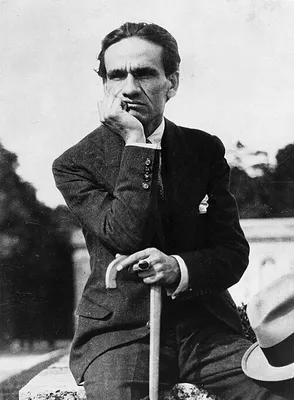
César Vallejo was a Peruvian poet and writer, considered a major 20th-century innovator, whose work explored profound human suffering and social injustice.
César Vallejo (1892-1938) was a Peruvian poet, writer, playwright, and journalist, widely recognized as a pivotal innovator in 20th-century poetry across all languages. Despite publishing only a few books during his lifetime, his influence is immense. Vallejo's early life in the Peruvian Andes and his experiences witnessing the exploitation of workers on a sugar plantation profoundly shaped his political and aesthetic views. His academic pursuits in Lima led him to the avant-garde artistic and political circles, and he produced his first poetry collection, 'Los heraldos negros', which, along with his later work 'Trilce', is considered groundbreaking in its radical use of language and exploration of themes like religiosity, life, and death.
Vallejo faced significant personal and legal tribulations, including unjust accusations and imprisonment related to an incident in his hometown, which forced him into exile in Europe. His European years were marked by poverty, political activism, and continued literary production. He became increasingly involved with socialist ideals and joined the Peruvian Communist Party. His later works, including 'Poemas humanos' and 'España, aparta de mí este cáliz', reflect his engagement with the Spanish Civil War and his profound sense of human suffering. Vallejo died in Paris in 1938, leaving behind a legacy as one of the most significant and influential poets of his time.
Early Life and Influences
Born in the Peruvian Andes, César Vallejo was the youngest of eleven children. His lineage included both Spanish priests and indigenous Peruvians. Financial difficulties interrupted his studies, leading him to work on a sugar plantation where he directly observed the harsh exploitation of laborers. This experience deeply impacted his political outlook and artistic expression. He later pursued Spanish literature studies in Lima, immersing himself in the city's vibrant artistic and political avant-garde scene. His early work was notably influenced by the writings of fellow Peruvian Manuel González Prada, a prominent intellectual figure.
Legal Troubles and Exile
Vallejo's life was marked by significant hardship, including unjust accusations of involvement in arson and looting in his hometown. These events led to his arrest and imprisonment in Trujillo for over 100 days. Later judicial investigations revealed the proceedings were politically motivated and fabricated by local authorities and powerful business interests, aiming to suppress progressive student movements. Facing further legal threats, Vallejo emigrated to Europe, primarily Paris, where he lived in poverty for much of his remaining life. This period of exile prevented him from ever returning to his native Peru.
Literary Innovation and Themes
Vallejo is celebrated for his radical experimentation with language, particularly in his poetry collections 'Los heraldos negros' and 'Trilce'. 'Trilce', published in 1922, is considered one of the most avant-garde poetry collections in Spanish, pushing the boundaries of linguistic expression. His work frequently delves into profound human suffering, existential anguish, and social injustice, often imbued with a sense of religiosity and a questioning of faith. His later poems, written during the Spanish Civil War, further explore themes of solidarity, pain, and human resilience.
Political Activism and Later Life
During his years in Europe, Vallejo became increasingly politically engaged, aligning himself with socialist and communist ideals. He joined the Peruvian Communist Party in 1931 and participated in international writers' congresses. His journalistic work and reportage from trips to the USSR reflect his political commitments. He also ventured into playwriting and novel writing, with works like 'El Tungsteno' exploring socialist themes. His final years saw a surge of poetic activity, culminating in posthumously published works that cemented his reputation as a major literary voice.
Key Ideas
- Exploration of profound human suffering and existential anguish
- Critique of social injustice and exploitation
- Radical experimentation with poetic language
- Themes of religiosity, faith, and destiny
- Political engagement with socialist ideals
Notable Quotes
“There are blows in life, so powerful . . . I don't know! Blows as from God's hatred; as if before them, the backlash of everything suffered were to dam up in the soul . . . I don't know! They are few; but they are . . . They open dark furrows in the fiercest face and in the strongest side. Maybe they could be the horses of barbarous Attilas; or the black heralds Death sends us. They are the deep abysses of the soul's Christs, of some revered faith Destiny blasphemes. Those gory blows are the cracklings of a bread that burns-up on us at the oven's door. And man . . . Poor . . . poor! He turns his eyes, as when a slap on the shoulder calls us; he turns his crazed eyes, and everything lived is dammed up, like a pond of guilt, in his gaze. There are blows in life, so powerful . . . I don't know!”
Books by César
0 free public domain books · Read online or download