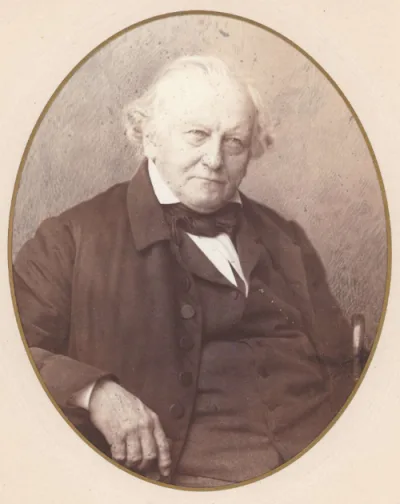
BRINLEY, John.
The Boston Brahmins were an established New England upper class with deep historical roots and cultural influence.
The Boston Brahmins, also known as New England Brahmins, represented Boston's historic upper class, particularly from the late 19th to mid-20th centuries. They were often characterized by a cultivated New England accent, association with Harvard University, and adherence to traditional Anglo-American customs. Descendants of early English colonists, they were considered White Anglo-Saxon Protestants (WASPs). The term itself was coined by Oliver Wendell Holmes Sr. in 1860, drawing a parallel to the priestly caste in India to denote old, wealthy, and influential New England families of English Protestant heritage that shaped American institutions and culture.
These families, though sometimes of common origin, sought to solidify their social standing through strategic marriages with established aristocratic lineages. They cultivated an image of personal excellence, duty, and restraint, aiming to embody an enlightened aristocracy. This ideal included maintaining a reserved demeanor in dress and conduct, supporting arts and charities, and acting as community leaders. While they cautioned against avarice, many found economic success appealing. Strong family ties, attendance at elite schools and clubs, and a culture of marrying within their circle reinforced their social position. Their political affiliations evolved over time, and their distinctive manners and dress, known as 'preppy' style, became influential.
Origins and Etymology
The term 'Boston Brahmins' emerged in the mid-19th century to describe Boston's established upper class, often descendants of the earliest English colonists. These families were typically White Anglo-Saxon Protestants (WASPs) and held significant influence in shaping American institutions and culture. The phrase itself was popularized by Oliver Wendell Holmes Sr. in 1860, likening these elite families to the Brahmin caste of India. This appropriation highlighted their perceived societal standing, wealth, and historical prominence within New England. While the direct influence of this gentry has diminished over time, their legacy persists in the institutions and ideals they championed during their peak.
Characteristics and Ideals
Boston Brahmins were associated with a cultivated New England accent, attendance at institutions like Harvard University, and adherence to specific religious denominations such as Congregationalism, Unitarianism, and Episcopalianism. They were expected to embody an ideal of cultivated excellence, duty, and restraint, distinguishing themselves from commoners through their urbane and dignified demeanor. Their lifestyle included supporting the arts and charitable causes, such as hospitals and colleges, and assuming leadership roles within their communities. While they preached against greed, economic success was often a pursued goal. Their culture was reinforced by strong extended family networks, shared educational paths in preparatory schools and universities, and participation in exclusive private clubs. Marriage within established families was common, serving not only to preserve wealth but also as a means of social and moral reinforcement.
Family and Lineage
The influence of the Boston Brahmins was deeply rooted in their family lineages, with many tracing their ancestry back to prominent figures in the colonial era, including governors, magistrates, Harvard presidents, and members of the Royal Society. Other families gained prominence in the 19th century through commerce and trade, often integrating into established Brahmin circles through marriage. The provided list includes notable families such as the Adams, Amory, Appleton, Bacon, Bates, Boylston, Bradlee, and Brinley families, showcasing individuals who were politicians, authors, financiers, military leaders, and philanthropists. The Brinley family, for instance, included Francis Brinley, an early settler in Rhode Island who also held land in Massachusetts and served as a judge and governor's assistant, with his family later establishing a Boston estate.
Books by BRINLEY, John.
0 free public domain books · Read online or download