Brian Rees
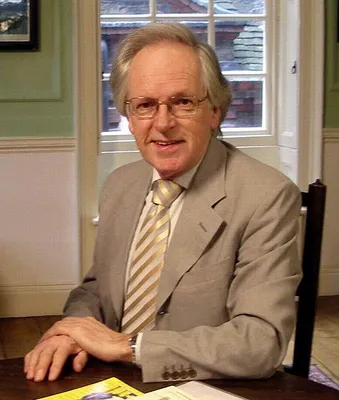
Brian Rees is a writer and broadcaster known for language reference books and the Radio 4 show Quote... Unquote.
Born near Liverpool in 1944, Brian Rees is an English writer and broadcaster with a significant career in language and broadcasting. After studying English at Oxford, he began his media career in television with Granada and later worked as a reporter for ITN's News at Ten. He transitioned to radio, serving as a reporter and producer for BBC Radio before moving into presenting.
Rees became a familiar voice on BBC Radio 4, hosting programs like the current affairs magazine Twenty Four Hours and the arts program Kaleidoscope. He also founded and presented newspaper review shows such as Between the Lines and Stop Press. His involvement in comedy included appearances on Radio 4's Week Ending... and The Burkiss Way, as well as Harry Enfield and Chums. He was a regular presenter of BBC Radio 4's Today programme and, notably, devised and hosted the long-running panel game Quote... Unquote from 1976 to 2021.
Beyond broadcasting, Rees is a prolific author, specializing in reference works on language, particularly etymology, word origins, and humorous language. His extensive bibliography includes over fifty books, some of which have become bestsellers. He has also authored collections of graffiti and a quarterly newsletter dedicated to quotations. His expertise has been recognized by figures like Fred Shapiro, who described him as a 'pioneering quotation scholar'.
Broadcasting Career
Brian Rees commenced his broadcasting career shortly after university, initially in television with Granada in Manchester. His early TV appearances began in 1967, after which he relocated to London as a freelancer. He gained experience as a reporter for ITN's News at Ten before shifting his focus to BBC Radio, where he worked as both a reporter and producer. In 1971, Rees moved into presenting roles. He hosted the BBC World Service current affairs program Twenty Four Hours from 1972 to 1979 and was a regular presenter of Radio 4's arts magazine Kaleidoscope between 1973 and 1975. He also founded and presented Radio 4's newspaper review programs, Between the Lines (1976–1978) and Stop Press (1984–1986). A significant part of his broadcasting legacy is the Radio 4 panel game Quote... Unquote, which he devised and hosted from 1976 until 2021.
Literary Works and Language Expertise
Rees is widely recognized for his extensive writing, particularly his contributions to the study of language. He has authored over fifty books, many of which are reference works focusing on language, etymology, and humor derived from language. His writing career was significantly influenced by the success of the first Quote... Unquote book in 1978, which spawned a series of related titles. His work includes explorations of popular phrases, movie quotations, and humorous sayings. One of his graffiti collections achieved bestseller status in the UK. Since 1992, he has also published and edited The Quote... Unquote Newsletter, a journal dedicated to the origins and usage of common quotations and sayings. His academic contributions have earned him recognition, with Fred Shapiro describing him as a 'pioneering quotation scholar' in The Yale Book of Quotations.
Early Life and Education
Brian Rees was born near Liverpool on June 5, 1944. He received his secondary education at Merchant Taylors' School in Crosby. Subsequently, he pursued higher education at New College, Oxford, where he studied English. During his time at Oxford, he was a Trevelyan Scholar and played an active role in the Oxford University Broadcasting Society. His academic and intellectual pursuits also led him to become a past President of the Lichfield Johnson Society. His reputation as an authority on language was noted in The Spectator, which referred to him as 'Britain's most popular lexicographer'.
Key Ideas
- The study and popularization of language, etymology, and word origins.
- The humor and wit found within language, quotations, and common sayings.
- The collection and analysis of graffiti as a form of popular expression.
- The role of quotations and phrases in culture and communication.
Books by Brian Rees
1 free public domain book · Read online or download