Breezer Press
Ryde, on the Isle of Wight, is a seaside town with a history shaped by its coastal location and development as a resort.
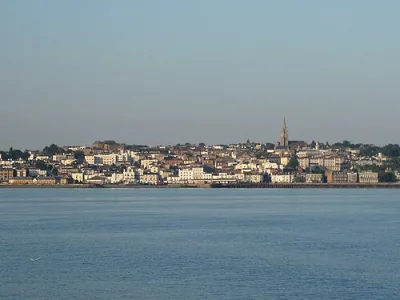
Ryde is a seaside town situated on the northeast coast of the Isle of Wight. Originally a small fishing village, it experienced significant growth in the 19th century, merging Upper and Lower Ryde to become a popular resort. This development is reflected in its architecture, particularly along the central and seafront areas. The town is known for its expansive sandy beaches, which are revealed at low tide, and its long pier, a vital transport link and a notable structure in the UK.
The town's history includes periods of destruction, such as a French invasion in 1377, and significant events like the sinking of the Mary Rose and HMS Royal George nearby, with survivors washing ashore. Ryde's population grew steadily from the 17th century onwards, accompanied by the construction of notable Regency and Victorian buildings. Its transport links have evolved, with ferry services, hovercraft, and a local railway line connecting it to the mainland and other parts of the island. The town offers various amenities for tourists and residents, including an esplanade, recreational spaces, and a marina.
Historical Development and Coastal Influence
Ryde's origins trace back to a small fishing village mentioned in early records. Its transformation into a seaside resort accelerated in the 19th century with the amalgamation of Upper and Lower Ryde. This period saw the construction of many Regency and Victorian buildings, which still define the town's character. The town's proximity to the sea has profoundly influenced its history, from its early fishing roots to its role as a transport hub. The expansive sands, revealed at low tide, are a key feature, necessitating the construction of a long pier, which is one of the longest and oldest surviving in the United Kingdom. This pier facilitated ferry services, crucial for connecting the island to the mainland and supporting the town's growth as a destination.
Notable Structures and Infrastructure
The town boasts several significant architectural landmarks. All Saints' Church, designed by George Gilbert Scott, and Ryde Town Hall, completed in 1831, are prominent examples of the town's Victorian development. The Ryde Pier, opened in 1814, was essential for passenger access, especially before modern transport, as ferry passengers arriving at low tide were transported ashore by horse and cart. Beyond the pier, Ryde has a busy transport interchange serving hovercraft, catamaran, and bus services, making it a key transit point on the Isle of Wight. The town also features a small, tidal marina catering to smaller vessels and a notable esplanade area that serves as a focal point for tourism and recreation.
Community and Notable Figures
Ryde's community life is marked by its annual carnivals, with England's oldest carnival originating in the town. The town has been home or connected to a diverse range of notable individuals across various fields. These include figures from the arts, such as screenwriter Raymond Allen and director Anthony Minghella; military and political figures like soldier Sam Browne and Sir Charles Clifford; scientists and academics such as economist A. C. Pigou and historian Albert Pollard; and notable residents like conspiracy theorist David Icke and musician Mark King. The town's educational institutions, like Ryde School, have also educated several prominent figures, including sailors and writers.
Books by Breezer Press
1 free public domain book · Read online or download