Bourke, John Gregory
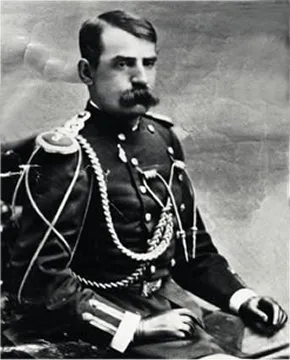
John Gregory Bourke was a US Army officer, ethnologist, and author known for his detailed studies of the American West and its indigenous peoples.
John Gregory Bourke, born in Philadelphia to Irish immigrants, received a comprehensive early education before embarking on a distinguished military career. He served in the Union Army during the Civil War, earning a Medal of Honor for his bravery. His military service led to his admission to West Point, from which he graduated to serve as an Army officer until his death. Bourke's career as an aide-de-camp to General George Crook provided him with extensive opportunities to observe and document life in the American Old West, including military campaigns, settler life, and interactions with Native American tribes.
Bourke meticulously kept diaries throughout his adult life, filling 124 volumes that are now considered invaluable primary sources for historians of the American West. He dedicated significant time to studying Native American cultures, including the Apache, Navajo, Zuni, and Plains tribes, documenting their customs, rituals, languages, and beliefs. This research earned him recognition from leading anthropologists and ethnologists of his time, including John Wesley Powell of the Smithsonian Institution, who mentored him. Bourke also became a respected author, publishing popular and scholarly works on his experiences and ethnographic research.
Military Service and Ethnographic Fieldwork
John Gregory Bourke's military career began at a young age when he enlisted in the Union Army during the Civil War, distinguishing himself in battles such as Stones River and Chickamauga, earning a Medal of Honor. His performance led to an appointment at West Point, where he graduated in 1869. As an aide-de-camp to General George Crook, Bourke traveled extensively across the Arizona Territory and later the Department of the Platte. During these assignments, he was deeply involved in campaigns against various Native American groups and witnessed firsthand the complexities of frontier life, including military operations, interactions with settlers, and the challenges faced by indigenous populations. His duties often took him through rugged terrain, and he endured harsh conditions during engagements in the Wyoming and Dakota territories.
Ethnological Contributions and Advocacy
Bourke's extensive ethnographic work stemmed from his keen observational skills and his practice of keeping detailed daily journals from 1872 until his death. These journals, comprising 124 volumes, are a significant resource for understanding the American West. He was granted leave from his military duties to live among and study various Native American tribes, meticulously documenting their customs, religious ceremonies, languages, and social structures. His research gained the attention of prominent figures in American anthropology, such as John Wesley Powell, who encouraged his development as an ethnologist. Bourke became a respected writer, contributing both popular articles and scholarly monographs on Native American culture. He was elected to prestigious scientific societies, including the Association for the Advancement of Science and the Anthropological Society of Washington. His reputation culminated in his appointment as curator for an exhibit at the World's Columbian Exposition in 1893.
Advocacy for Native American Rights
Beyond his scholarly pursuits, John Gregory Bourke became a vocal advocate for the equitable treatment of Native Americans. In 1885, he publicly criticized U.S. government Indian policies, arguing for more just and fair dealings. He opposed the forced relocation of the Chiricahua Apache and spoke out against sending Native American children to off-reservation boarding schools. Bourke believed that much of the conflict with these tribes could have been avoided with greater understanding and fairness. These positions were often unpopular at the time, and his outspoken criticisms of federal policies may have contributed to his promotion stagnating at the rank of captain for the remainder of his career. His writings reflected a belief that ignorance and intolerance on the part of white settlers were significant factors in the difficulties faced by Native Americans.
Key Ideas
- Detailed ethnographic documentation of Native American cultures
- Advocacy for equitable treatment of indigenous peoples
- Critique of U.S. government Indian policies
- Value of firsthand observation and journaling for historical research
Notable Quotes
“Much of our trouble with these tribes could have been averted, had we shown what would appear to them as a spirit of justice and fair dealing.”
“He (Bourke) began to attribute much of the (Indian) problem to avarice, ignorance and intolerance on the part of the whites.”
Books by Bourke, John Gregory
1 free public domain book · Read online or download