Bill Wrobel
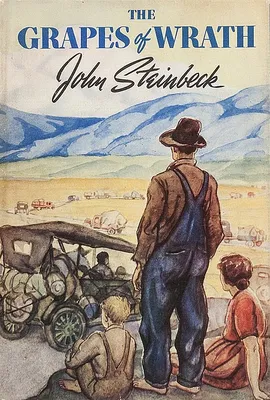
The Grapes of Wrath chronicles the Joad family's exodus from Oklahoma during the Dust Bowl, seeking dignity and work in California.
John Steinbeck's 1939 novel, The Grapes of Wrath, is a realistic portrayal of the Joad family's struggle during the Great Depression. Driven from their Oklahoma farm by drought, economic collapse, and bank foreclosures, they embark on a perilous journey to California, joining thousands of "Okies" in search of employment and a better life. The novel details their hardships on the road, including the deaths of family members and the harsh realities of exploitation and poverty they face upon arrival in California.
The narrative follows Tom Joad, recently paroled, and former preacher Jim Casy as they reunite with the Joads. The family’s hope for prosperity in California quickly fades as they encounter a surplus of labor, low wages, and exploitative conditions. Casy becomes involved in labor organizing, leading to his tragic death. The Joads endure further loss and hardship, culminating in a final act of communal survival amidst devastating floods.
The Journey and its Symbolism
The central narrative of The Grapes of Wrath follows the Joad family's migration from Oklahoma to California along Route 66, a journey fraught with loss and disillusionment. This "mother road" becomes a symbol of both hope and despair, carrying thousands of displaced "Okies" seeking refuge and opportunity. The novel uses "interchapters" – brief, often symbolic vignettes – to broaden the scope beyond the Joads' immediate story. A notable example is the land turtle struggling to cross a dusty road, which is interpreted as representing the slow, persistent endurance of the migrants facing the Dust Bowl and the Great Depression. These interchapters provide context and thematic depth, reflecting the wider social and environmental upheaval of the era.
Themes of Exploitation and Resilience
The Grapes of Wrath starkly depicts the economic exploitation faced by migrant workers in California. Corporate farmers collude to suppress wages, leaving families like the Joads in conditions of near starvation, while law enforcement sides with the growers. This systemic injustice fuels Jim Casy's transformation into a labor organizer, advocating for workers' rights. Despite facing violence, death, and immense hardship, the Joad family, particularly Ma Joad, exhibits profound resilience. Their struggle highlights themes of human dignity, the search for community, and the enduring will to survive against overwhelming odds, culminating in a powerful act of selfless compassion at the novel's conclusion.
Biblical and Christ-like Parallels
Scholarly interpretations frequently identify significant Christian symbolism within The Grapes of Wrath. Both Tom Joad and Jim Casy are often viewed as Christ-like figures. Casy, a former preacher who loses his faith but finds a new purpose in social justice, is particularly resonant. His journey, including his martyrdom, is seen as mirroring aspects of Christ's ministry and sacrifice. The novel's title itself is drawn from the "Battle Hymn of the Republic," evoking themes of divine judgment and redemption. The final scene, where Rose of Sharon offers her breast milk to a starving man, can be interpreted as a secularized act of communion and sacrifice, underscoring the novel's exploration of spiritual and humanitarian themes amidst earthly suffering.
Key Ideas
- The plight of migrant workers during the Great Depression
- The impact of economic hardship and environmental disaster on families
- Themes of resilience, dignity, and exploitation
- Symbolism and biblical parallels in literature
Books by Bill Wrobel
1 free public domain book · Read online or download