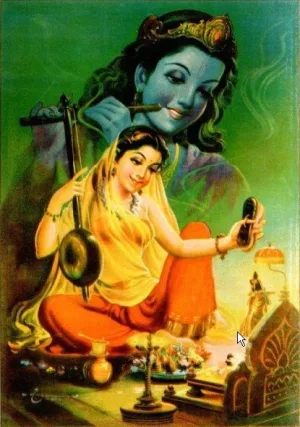
The Bhakti movement was a medieval Hindu devotional path emphasizing love and devotion to achieve spiritual liberation.
The Bhakti movement, originating in South India around the 6th century CE, was a significant spiritual phenomenon within Hinduism. It emphasized devotion and love towards a personal deity as a primary means of achieving salvation. This movement spread across India, gaining momentum from the 15th century onwards. It was championed by poet-saints who used local languages to reach a wider audience, transcending social barriers of caste and gender. While traditionally viewed as a reform movement, some contemporary scholars suggest it was more of a revival and reinterpretation of ancient Vedic traditions. The movement encompassed diverse philosophical viewpoints, from dualism to monism, and focused on a personal, emotional connection with the divine.
Origins and Spread of Devotion
The Bhakti movement emerged in the Tamil region of India, initially flourishing between the 7th and 8th centuries CE. It was characterized by a deep, personal relationship between the divine and the devotee, marked by intense emotional experiences. This spiritual path was popularized by two main groups: the Shaivas, who worshipped Shiva, and the Vaishnavas, who revered Vishnu. The poet-saints known as the Alvars (Vaishnava) and Nayanars (Shaiva), active between the 5th and 9th centuries CE, composed hymns and poems expressing profound love for their chosen deities. These figures, originating from various social strata, including lower castes, played a crucial role in establishing temple sites and spreading devotional ideas. Their works, compiled into influential scriptures like the Divya Prabandham and Tirumurai, formed the bedrock of major Vaishnava and Shaiva traditions.
Philosophical Underpinnings and Terminology
The Sanskrit term 'bhakti' derives from the root 'bhaj,' meaning to divide, share, or belong to. It signifies a deep attachment, devotion, faith, or love towards something, particularly as a spiritual principle or a means to salvation. In the context of the Bhakti movement, 'bhakti' represents a spiritual engagement that combines emotion and intellect, characterized by committed devotion rather than uncritical sentiment. The movement embraced a spectrum of philosophical stances, from theistic dualism (Dvaita) to absolute monism (Advaita Vedanta), reflecting a rich intellectual landscape. The poet-saints often preached in vernacular languages, making their message accessible to the masses and challenging the rigid caste system prevalent at the time.
Textual Roots and Early Mentions
The concept of devotion, or bhakti, has ancient roots in Indian philosophical and religious texts. Early mentions can be found in scriptures dating back to the first millennium BCE, including the Śvetāśvatara Upaniṣad, the Kaṭha Upaniṣad, and the Bhagavad Gita. The Śvetāśvatara Upaniṣad, particularly verse 6.23, is noted for its use of the word 'Bhakti,' often interpreted as an early reference to 'the love of God,' though its exact meaning and authenticity are debated among scholars. The Bhagavad Gita, composed between the 5th and 2nd centuries BCE, explicitly introduces 'bhakti marga' (the path of devotion) as one of three paths to spiritual liberation, alongside the paths of action (karma marga) and knowledge (jnana marga). The Devi Mahatmya also embodies bhakti through narratives centered on the goddess Devi, highlighting devotion as crucial for divine aid and protection.
Later Developments and Regional Variations
Following its initial development in the South, the Bhakti movement spread northward, gaining significant traction in the second millennium CE. In Kannada-speaking regions, figures like Basava in the 12th century championed Lingayatism, advocating for the rejection of caste and Vedic authority, and promoting gender equality. Madhvacharya, also from the 12th-13th centuries, was a prominent scholar who promoted the dualistic philosophy of Dvaita Vedanta. In Odisha, the movement, known as Jñanamisrita bhakti or Dadhya Bhakti, began in the 12th century and became a mass movement by the 14th century, centered around the worship of Jagannath. The 15th and 16th centuries saw a flourishing of Bhakti in North India with influential figures like Nimbārkāchārya, Nāmdev, Rāmānanda, and Eknath, contributing to the diverse expressions of devotional Hinduism across the subcontinent.
Key Ideas
- Bhakti as devotion and love towards a deity
- Salvation through devotional practices
- Emphasis on personal relationship with the divine
- Use of local languages to spread spiritual message
- Challenging caste system and social hierarchies
- Diverse philosophical interpretations (Dvaita, Advaita Vedanta)
- Bhakti marga as a path to spiritual liberation
Books by
1 free public domain book · Read online or download