B. C. J. Lievegoed, Bernard Lievegoed
Bernard Lievegoed was an educator and physician who applied the ancient four temperaments theory to child development and education.
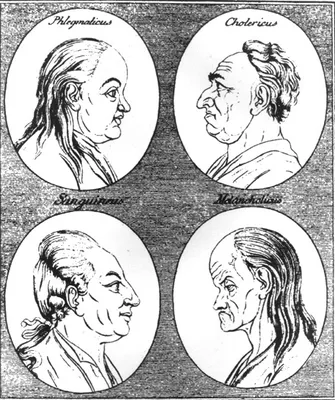
Bernard Lievegoed, also known as B. C. J. Lievegoed, was an influential figure in applying the ancient theory of the four temperaments to modern understanding of personality and education. This theory, originating with Hippocrates and Galen, posits four fundamental personality types—sanguine, choleric, melancholic, and phlegmatic—linked to bodily humors and elemental associations. While modern science has largely moved beyond this framework, Lievegoed recognized its enduring value, particularly within pedagogical contexts.
Lievegoed suggested that these temperaments are most clearly observable in children between the ages of approximately six and fourteen. He believed that understanding a child's dominant temperament could significantly aid educators in tailoring their teaching methods to foster optimal learning and development. His work integrated these ancient concepts into practical approaches for understanding and nurturing individual children, emphasizing the developmental stages and how temperaments manifest and evolve.
The Four Temperaments in Education
Bernard Lievegoed proposed that the ancient concept of the four temperaments—sanguine, choleric, melancholic, and phlegmatic—finds its clearest expression during childhood, specifically between the ages of six and fourteen. He viewed these temperaments not as rigid classifications but as influential factors in personality that become less dominant yet remain significant as individuals mature. Lievegoed's pedagogical approach centered on recognizing these temperaments to better understand children's learning styles and developmental needs. He believed that educators could more effectively engage students by appealing to the specific characteristics associated with each temperament. For instance, he suggested reaching sanguine children through their natural enthusiasm and admiration, choleric children through respect and challenges, melancholic children by awakening their sympathy, and phlegmatic children by demonstrating interest in their pursuits.
Historical Context and Lievegoed's Application
The theory of the four temperaments has a long history, originating in ancient Greek medicine with Hippocrates and further developed by Galen. It linked personality types to the balance of four bodily humors: blood (sanguine), yellow bile (choleric), black bile (melancholic), and phlegm (phlegmatic). These were associated with elements, seasons, and physiological states. Although this humoral theory was eventually superseded by modern medical science, its influence persisted. Lievegoed's contribution was to revitalize and adapt this ancient framework for contemporary educational and psychological insights. He saw value in the temperaments as a dynamic model for understanding human nature, particularly in the formative years of childhood, providing a lens through which to view individual differences and guide pedagogical practices within fields like Waldorf education and anthroposophy.
Key Ideas
- Application of the four temperaments (sanguine, choleric, melancholic, phlegmatic) to child development.
- Belief that temperaments are most evident in childhood (ages 6-14).
- Pedagogical strategies tailored to each of the four temperaments.
- Integration of ancient humoral theory with modern educational psychology.
Books by B. C. J. Lievegoed, Bernard Lievegoed
2 free public domain books · Read online or download