Beniamino M Di Dario
Beniamino M. Di Dario's biography is not provided; the text details the history and significance of Palermo, Italy.
The provided text focuses entirely on the city of Palermo, Sicily, detailing its extensive history from its Phoenician founding in 734 BC to its modern status. It outlines Palermo's strategic importance through various rulers, including Carthaginians, Romans, Arabs, and Normans, highlighting its role as a capital city and a center of culture and trade. The text emphasizes the city's rich architectural heritage, diverse population, and significant economic and cultural influence in the Mediterranean region. It also touches upon the city's religious significance, particularly its patron saint, Santa Rosalia, and its famous markets.
Ancient Foundations and Transformations
Palermo, originally founded as Ziz by the Phoenicians in 734 BC, boasts a history spanning over 2,700 years. Initially a Phoenician settlement near a natural harbor, it later came under Carthaginian control. The Greeks knew it as Panormos, meaning 'wide haven,' a name adopted by the Carthaginians on their coinage. The city transitioned into the Roman sphere, remaining part of the Roman Republic and Empire for over a millennium. During this period, luxurious residences were constructed, and the city's infrastructure, including its defensive walls, was reinforced. The district known as Cassaro likely derives its name from the Arabic 'al-qaṣr,' referring to a castle or stronghold, reflecting the city's strategic military importance throughout its early history.
Medieval Crossroads and Capital Status
Following the decline of the Roman Empire, Palermo experienced periods of rule by various Germanic tribes, including the Vandals and Ostrogoths, before being retaken by the Byzantine Empire in 535 AD. A significant shift occurred in 831 AD when Arabs conquered the city, establishing the Emirate of Sicily and making Palermo its capital. Known as Bal'harm under Arab rule, it is said to have rivaled cities like Córdoba and Cairo in splendor and importance, serving as the capital of a flourishing emirate for over a century and introducing important agricultural crops. This era was followed by the Norman conquest in 1072. Under Roger II, Palermo became the capital of the newly formed Kingdom of Sicily, a wealthy and influential state in Europe, with significant construction projects like the Palermo Cathedral undertaken.
From Imperial Seat to Provincial Center
Palermo's importance continued under Frederick II, who inherited the Kingdom of Sicily and became Holy Roman Emperor, making Palermo the capital of his vast empire and his favored city. Following periods of Angevin and Aragonese rule, the city experienced population decline. From the late 15th century through the early 18th century, Palermo was successively ruled by the Kingdom of Spain, Savoy, and Austria. Later, under Bourbon rule established in 1734, Charles III was crowned King of Sicily in Palermo. While new construction and growth occurred, Palermo gradually became more of a provincial city as the Royal Court relocated to Naples. The city later saw periods of refuge for royalty, such as Charles' son Ferdinand following the French Revolution.
Modern Palermo: Culture, Economy, and Heritage
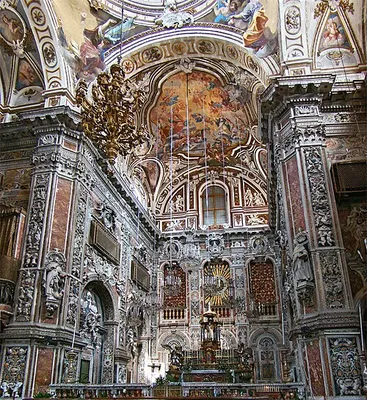
Today, Palermo is the cultural, economic, and tourism capital of Sicily, attracting visitors with its Mediterranean climate, renowned cuisine, and diverse architectural styles, including Romanesque, Gothic, Baroque, and Art Nouveau. It is a major industrial and commercial hub, with significant sectors in tourism, services, commerce, and agriculture, alongside an international airport and a notable underground economy. Palermo holds recognition as a principal seat of the UNESCO World Heritage Site 'Arab-Norman Palermo and the Cathedral Churches of Cefalù and Monreale.' The city is actively undergoing redevelopment, aiming to enhance its position in the Euro-Mediterranean area. Its vibrant markets, such as Vucciria, Ballarò, and Capo, are well-known attractions.
Books by Beniamino M Di Dario
0 free public domain books · Read online or download
