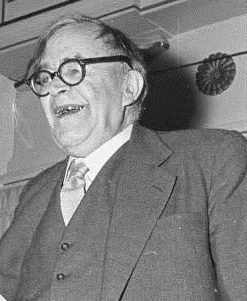
Barth Hans Martin
Swiss theologian Karl Barth is known for his critique of liberal theology and his monumental Church Dogmatics.
Karl Barth was a Swiss Reformed theologian (1886-1968) renowned for his profound theological writings and his significant break from the liberal theology prevalent in his early education. His pastoral work in Safenwil, Switzerland, led to disillusionment with his liberal training, prompting a re-examination of Christian thought. This shift culminated in his influential commentary, The Epistle to the Romans, particularly its second edition, which marked a departure from prevailing theological trends.
Barth's theological system, most comprehensively detailed in his unfinished multi-volume work, the Church Dogmatics, profoundly impacted subsequent theology and culture. He was a key figure in the Confessing Church's opposition to Nazism, co-authoring the Barmen Declaration. His influence extended beyond academia, reaching mainstream culture and shaping Christian ethics and thought for many.
His theological journey began under liberal influences but evolved dramatically after his pastoral experiences and a critical response to the intellectual climate of his time, particularly during World War I. This led him to develop a distinct theological approach, emphasizing God's transcendence and the centrality of revelation.
Theological Evolution and Key Works
Karl Barth's theological trajectory was marked by a significant departure from the liberal Protestantism in which he was educated. His early pastoral service in Safenwil proved pivotal, leading to a deep dissatisfaction with the prevailing theological currents. This critical re-evaluation fueled his influential work, The Epistle to the Romans, first published in 1919. The second edition, released in 1922, solidified his break from liberal theology, proposing a more radical understanding of God's revelation that challenged human attempts to align divine truth with cultural achievements. This work garnered international acclaim and established Barth as a major theological voice. His magnum opus, the multi-volume Church Dogmatics, published between 1932 and 1967, represents the most extensive exposition of his theological system, covering doctrines of God, creation, reconciliation, and redemption, though it remained unfinished.
Political and Social Engagement
Beyond his academic contributions, Barth was deeply involved in the socio-political landscape of his time. His experience as the 'Red Pastor' in Safenwil, advocating for textile workers and aligning with Social Democratic values, demonstrated an early commitment to social justice. A defining moment of his public life was his role in the Confessing Church's resistance to Nazi ideology. He was instrumental in drafting the Barmen Declaration in 1934, a document that asserted the Church's primary allegiance to Jesus Christ over political figures like Adolf Hitler. His refusal to take an oath of loyalty to Hitler led to his dismissal from his professorship in Bonn in 1935, prompting his return to Switzerland. Barth continued to voice opposition to Nazism, supporting those who fought against it and advocating for German penitence after World War II.
Influence and Legacy
Karl Barth's theological insights and critical stance had a far-reaching impact, extending well beyond theological circles into broader culture. His work influenced a generation of theologians, including figures like Dietrich Bonhoeffer, Jürgen Moltmann, and Hans Küng, as well as philosophers and novelists. His profound influence on modern Christian ethics is also widely recognized, shaping the thought of ethicists such as Stanley Hauerwas and John Howard Yoder. The sheer scope and depth of his writings, particularly the Church Dogmatics, cemented his reputation as one of the most significant theologians of the 20th century. His appearance on the cover of Time magazine in 1962 underscored his broad cultural significance.
Key Ideas
- Critique of liberal theology
- Emphasis on God's transcendence and revelation
- Theocentric starting-point in theology
- Theology as a response to God's Word
Books by Barth Hans Martin
0 free public domain books · Read online or download
