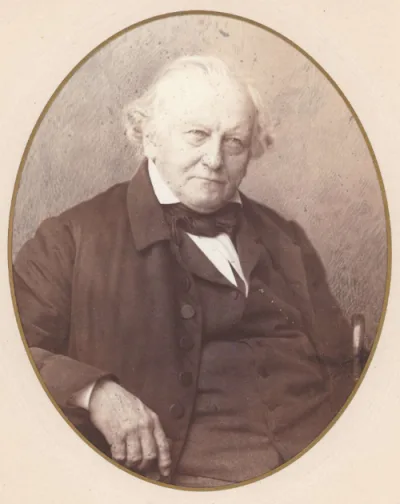
✍️ Author Biography
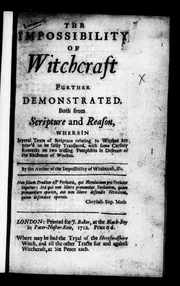
Author of 'The impossibility of witchcraft, &c.'
📅 1433 – 1499
🌍 American
📚 0 free books
⭐ Known for: 'The impossibility of witchcraft, &c.'
The author of 'The impossibility of witchcraft, &c.' is associated with a historical perspective on magic's role across ancient civilizations.
The history of magic is deeply intertwined with early literate societies, where charms, divination, and spells were used to understand and influence natural forces. Even pre-literate cultures left behind artifacts and art interpreted as having magical significance. For a long time, magic and what would later be termed science, such as astrology and alchemy, were practiced concurrently. However, the Scientific Revolution in Europe began to separate these domains based on empirical observation. Despite this shift, magical practices have persisted, adapting to contemporary contexts and continuing to be explored by modern occultists.
Ancient Mesopotamia provides extensive examples of magic's integration into daily life. Rituals and medical treatments often incorporated magical formulas to ward off evil, counteract omens, and heal the sick. The Mesopotamians viewed magic as a primary defense against malevolent spirits and sorcerers, employing techniques like protective incantations and rituals such as Maqlû ('The Burning') to neutralize curses. They also utilized magic for purification from unintentional sins through rituals like Šurpu ('Burning'), where guilt was symbolically transferred to objects and then destroyed. Love spells and rituals to reconcile individuals with deities or estranged partners were also common. The Mesopotamians did not distinguish between rational science and magic; physicians prescribed both medicinal and magical treatments, often administered by skilled practitioners known as āšipu, who acted as magicians, physicians, priests, and scholars.
Magic in Ancient Egypt
In ancient Egypt, magic, personified by the god Heka, was a fundamental aspect of religion and culture, evidenced by numerous surviving texts. Heka was considered a divine gift, a tool for humanity to navigate life's challenges. This practice was not exclusive to the literate priestly class; it was also employed by commoners. The core principle of Heka was the potent creative power of words, mirroring the creator god's act of bringing the world into existence. Ancient Egyptians believed humans shared this divine capacity. Amulets, known as 'meket,' were widely used for protection and to reinforce a sense of cosmic order, with examples found dating back to the earliest periods and continuing through Roman times.
The Book of the Dead and Egyptian Rituals
The Book of the Dead comprises a collection of spells designed to guide the deceased through the afterlife. Initially, these spells were inscribed within royal tombs, such as the Pyramid Texts found in the pyramid of Unas, intended solely for royalty. However, during periods of unrest, these sacred texts became accessible to commoners, who began inscribing similar spells on their coffins, known as the Coffin Texts, to ensure their own passage into the afterlife. Mummification was crucial, as the Egyptians believed the soul's survival depended on the preservation of the physical body. The 'Opening of the Mouth' ceremony was a final ritual before entombment, employing magical instruments to restore the deceased's senses for the afterlife.
Egyptian Spells and the Power of the Word
The individual texts within the Book of the Dead, often beginning with 'ro' (meaning mouth, speech, or spell), highlight the Egyptian belief in the intrinsic link between spoken or written words and magical power. These spells served various functions: imparting mystical knowledge, identifying the deceased with deities, ensuring the reunification of their being, granting control over their surroundings, and protecting them from dangers in the underworld. Some spells specifically addressed the 'Weighing of the Heart' ritual during judgment. The Book of the Dead's texts and imagery were both magical and religious, with magic considered as legitimate as prayer, even when aimed at influencing deities. The act of reciting a ritual formula was seen as an act of creation.
Key Ideas
- Magic as an ancient practice for influencing nature and reality.
- The historical intertwining of magic and early science (e.g., astrology, alchemy).
- Mesopotamian magic for defense, purification, and social/personal reconciliation.
- Egyptian Heka: the divine power of words and its application in life and afterlife.
- The Book of the Dead: spells for navigating the afterlife and ensuring spiritual survival.