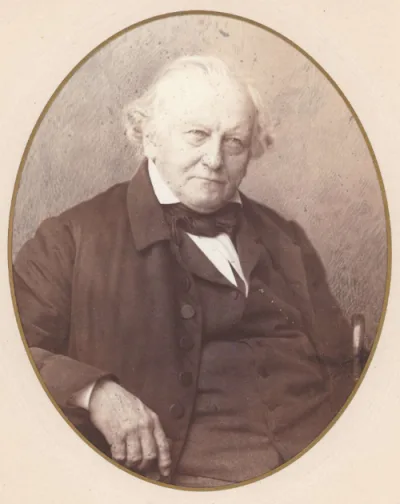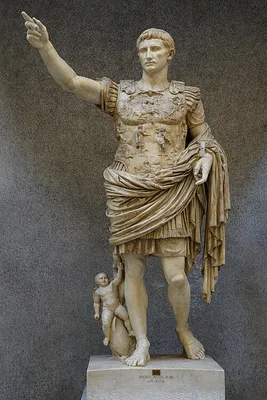
Augustus Emperor of Rome
Augustus, Rome's first emperor, established an era of peace and reformed the empire, leaving a lasting legacy.
Gaius Octavius, later known as Augustus, was the founder and first emperor of the Roman Empire, reigning from 27 BC to AD 14. His rule marked the beginning of the Pax Romana, a period of relative peace and stability across the Roman world. Augustus established the principate, a system of government that maintained the appearance of the Republic while consolidating power under the emperor. He inherited his great-uncle Julius Caesar's name and fortune, navigating a turbulent political landscape to emerge as Rome's sole ruler.
His reign saw significant territorial expansion, administrative reforms, and the establishment of infrastructure like roads and professional military forces. Augustus also fostered a cultural environment, acting as a patron to poets. He was posthumously deified by the Senate, solidifying his revered status. Despite rumors of poisoning, he died of natural causes and was succeeded by his stepson, Tiberius. His legacy includes the transformation of Rome from a republic to an empire and the ushering in of a long period of imperial peace.
Ascension and Imperial Establishment
Born Gaius Octavius, he became Gaius Julius Caesar upon being named the principal heir of his great-uncle, Julius Caesar, after Caesar's assassination in 44 BC. He skillfully navigated the ensuing political chaos, securing Caesar's legions and wealth. After forming a triumvirate with Mark Antony and Marcus Lepidus to defeat Caesar's assassins, Octavian eventually outmaneuvered his rivals. His victory over Antony and Cleopatra at the Battle of Actium in 31 BC left him the undisputed ruler of Rome. In 27 BC, the Senate granted him the title Augustus, marking the formal beginning of his reign as the first Roman Emperor and the establishment of the principate, a system where imperial authority was masked by nominal deference to the Senate.
Reforms and Expansion
Augustus's reign initiated an era of profound transformation for the Roman world, known as the Pax Romana. He dramatically expanded the empire's borders, annexing territories such as Egypt, Dalmatia, and Hispania, while securing frontiers through client states and diplomatic treaties. His administrative reforms included a reorganized taxation system, the development of a comprehensive road network with an official courier service, and the establishment of a professional standing army and the Praetorian Guard. He also created official police and fire-fighting services for the city of Rome and oversaw extensive renovations of the capital.
Cultural Patronage and Legacy
Beyond his political and military achievements, Augustus was a patron of arts and literature. He supported poets like Virgil, contributing to a flourishing cultural period. His image and titles, such as 'princeps' (first citizen) and 'augustus' (the revered), were carefully crafted to legitimize his rule without appearing monarchical. The month of August was named in his honor. Following his death in AD 14 at the age of 75, Augustus was deified by the Senate, cementing his status as a revered figure in Roman history. His reign laid the foundation for centuries of imperial rule and profoundly shaped the Western world.
Key Ideas
- Principate: A system of government where the emperor held autocratic power while maintaining the facade of republican institutions.
- Pax Romana: An extended period of relative peace and minimal expansionist conflict experienced by the Roman Empire.
- Imperial Cult: The development of religious veneration directed towards the emperor and the imperial family.
Books by Augustus Emperor of Rome
1 free public domain book · Read online or download