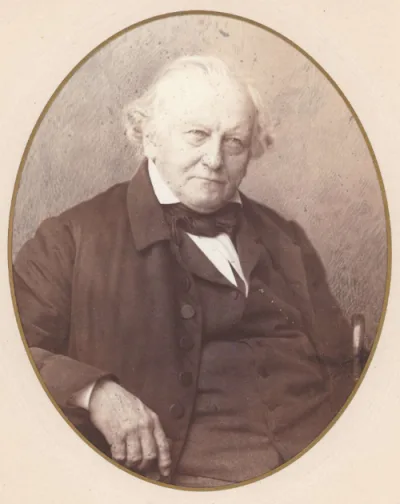
✍️ Author Biography
Astrology and Numerology A
📅 1089 – 1164
🌍 American
📚 7 free books
Astrology is an ancient practice of divining human affairs from celestial positions, now considered pseudoscientific but historically influential.
Astrology is a collection of predictive practices that seek to understand human events and earthly occurrences by observing the positions of stars and planets. These practices have ancient origins, dating back to at least the second millennium BCE, often stemming from early calendrical systems used to mark seasons and interpret celestial cycles as divine messages. While most cultures have observed the sky, some, like the Hindu, Chinese, and Maya civilizations, developed complex systems for predicting earthly events based on these observations. Western astrology, one of the oldest continuously used systems, originated in Mesopotamia and spread through ancient civilizations to Europe. Modern Western astrology frequently involves horoscopes to interpret personality and predict life events, a practice common among professional astrologers today.
Historically, astrology was widely accepted as a scholarly pursuit, often intertwined with astronomy, meteorology, medicine, and alchemy, and was present in learned and political circles. However, with the rise of the Enlightenment and the scientific method, astrology lost its academic standing and was increasingly challenged on empirical grounds, leading to a decline in common belief. Despite this, a resurgence in interest began in the 1960s, and it continues to be practiced and studied, though it is now widely regarded as a pseudoscience.
Historical Roots and Cultural Significance
The practice of astrology, which involves interpreting celestial object positions to understand human affairs and terrestrial events, has deep historical roots. Early civilizations, including the Babylonians, Hindus, Chinese, and Maya, developed sophisticated systems for observing the sky and correlating celestial movements with earthly occurrences. These practices often originated from the need to track seasons and predict agricultural cycles, but they evolved to incorporate divinatory and spiritual meanings. The ancient Arabs, for instance, held a strong belief in fatalism influenced by their interpretations of astral phenomena. Hellenistic astrology, a significant development, blended Babylonian and Egyptian traditions, eventually spreading through Greek and Roman societies. This system was later adopted and translated by Islamic scholars, subsequently influencing European thought.
Astrology in Scholarly and Literary Traditions
For much of its history, astrology was considered a legitimate field of study, closely connected with other disciplines such as astronomy, medicine, meteorology, and alchemy. It was integrated into academic and political spheres, and its influence permeated literature. Prominent figures like Dante Alighieri, Geoffrey Chaucer, Christopher Marlowe, and William Shakespeare incorporated astrological themes and references into their works, reflecting its widespread acceptance in learned circles. Even renowned astronomers and scientists like Tycho Brahe, Johannes Kepler, and Galileo Galilei practiced as court astrologers, underscoring its historical prominence before the scientific revolution.
Critique and Decline of Scholarly Standing
Despite its historical prestige, astrology faced considerable criticism from philosophical skeptics and later from scientific inquiry. Ancient critics, such as Carneades and Cicero, questioned its logical foundations, arguing against the concept of fate, the uniformity of stellar influence, and the potential for contradictory outcomes. Cicero's critique, in particular, is noted for its early distinction between astrology and astronomy. As scientific advancements, particularly in astronomy and physics during the Enlightenment, provided alternative explanations for natural phenomena, astrology's standing as a scholarly pursuit diminished. By the 17th century, astronomy became established as a distinct scientific discipline, while astrology became associated primarily with divination and the prediction of human affairs.
Modern Status and Resurgence
Since the late 19th century, with the widespread adoption of the scientific method, astrology has been rigorously challenged on both theoretical and experimental grounds. Research has consistently failed to validate its scientific claims, leading to its classification as a pseudoscience. This scientific rejection resulted in a loss of academic credibility and a general decline in popular belief in Western societies. However, beginning in the 1960s, there has been a notable resurgence of interest in astrology, leading to its continued practice and a renewed, albeit non-academic, engagement with its principles and interpretations in contemporary culture.
Key Ideas
- Divinatory practice based on celestial object positions
- Historical integration with astronomy, medicine, and alchemy
- Considered a pseudoscience since the 18th century
- Ancient origins in calendrical and seasonal prediction
- Western astrology traces roots to Mesopotamia
- Modern practice often involves horoscopes
- Faced significant philosophical and scientific criticism
- Experienced a resurgence in popularity from the 1960s