Arielle P Kozloff
The Eighteenth Dynasty of Egypt marked a golden age of power and prosperity, featuring notable pharaohs and significant religious shifts.
The Eighteenth Dynasty, spanning from 1550/1549 to 1292 BC, stands as the first dynasty of Egypt's New Kingdom, a period of immense power. This era saw the reigns of some of Egypt's most famous rulers, including Tutankhamun, Hatshepsut, and Akhenaten. The dynasty is notable for its expansionist policies, reaching its greatest territorial extent and influencing regions like Nubia and the Near East. It also experienced profound religious changes, particularly during the Amarna Period under Akhenaten, who promoted the worship of the Aten, a sun disk, which some scholars debate as a move towards monotheism.
The dynasty was founded by Ahmose I, who expelled the Hyksos and ushered in the New Kingdom. His consort, Ahmose-Nefertari, was highly venerated. Subsequent rulers like Thutmose I expanded the empire, while Hatshepsut ruled as a powerful female pharaoh. Thutmose III is recognized as a formidable military leader. The reign of Amenhotep III is characterized by prosperity and artistic achievement. The dynasty concluded with rulers like Ay and Horemheb, paving the way for the Nineteenth Dynasty.
Anthropological and genetic studies have explored the origins and characteristics of Eighteenth Dynasty rulers, examining cranial features and haplogroups, with findings suggesting connections to Nubian and Near Eastern populations. These studies contribute to ongoing scholarly discussions about ancient Egyptian identity and lineage.
Founding and Early Expansion
The Eighteenth Dynasty commenced with Ahmose I, who concluded the expulsion of the Hyksos rulers, thereby ending the Second Intermediate Period and initiating the New Kingdom. His consort, Ahmose-Nefertari, held considerable reverence and was later deified. Following Ahmose I, his son Amenhotep I ruled without major incident. The pharaoh Thutmose I significantly expanded Egypt's imperial borders, extending north to the Euphrates and south beyond the fourth Nile cataract. His reign set the stage for further territorial growth and consolidation.
Notable Pharaohs and Rule
This dynasty included several iconic rulers. Hatshepsut, daughter of Thutmose I, ruled as pharaoh for over two decades. Thutmose III earned renown as a highly effective military leader, expanding Egypt's influence across vast territories. Amenhotep III's reign is considered a pinnacle of prosperity, artistic brilliance, and international standing, marked by extensive building projects and diplomatic prestige. The dynasty is also distinguished by having two queens who ruled as pharaohs: Hatshepsut and Neferneferuaten, often identified as Nefertiti.
The Amarna Period and Religious Change
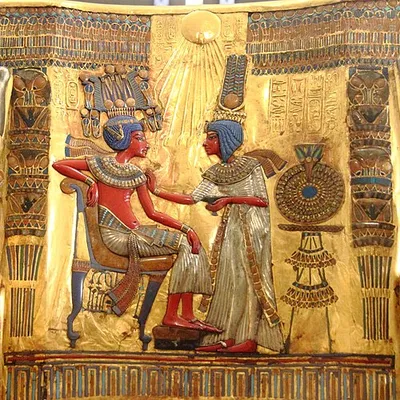
A significant shift occurred during the reign of Amenhotep IV, who renamed himself Akhenaten and relocated the capital to Amarna. He elevated the Aten, the sun disk, to supreme importance, leading to debates about whether this constituted true monotheism or a suppression of traditional polytheism. This period, known as the Amarna Period, was later viewed by Egyptians as an unusual and unfortunate deviation. Akhenaten's successors, including Tutankhamun, eventually restored traditional polytheistic practices.
Later Dynasty and Succession
The final rulers of the Eighteenth Dynasty, Ay and Horemheb, emerged from the ranks of court officials. Ay's reign was brief, and he may have married Tutankhamun's widow to secure his claim. Horemheb, a military general, succeeded Ay and is believed by some to have seized the throne. Without heirs, Horemheb appointed his vizier, Pa-ra-mes-su, who became Ramesses I, the founder of the Nineteenth Dynasty, thus marking the end of the Eighteenth Dynasty.
Interactions and Origins
The Eighteenth Dynasty's influence extended significantly into Nubia, which was directly controlled and administered, providing valuable resources like gold and ivory. In the Near East, the dynasty pursued expansionist policies, campaigning in Canaan and Syria. Scientific studies, including X-ray examinations and genetic analyses of royal mummies, have investigated the physical characteristics and ancestral origins of the pharaohs, suggesting connections to Nubian and Near Eastern populations, contributing to ongoing discussions about ancient Egyptian heritage.
Books by Arielle P Kozloff
0 free public domain books · Read online or download
