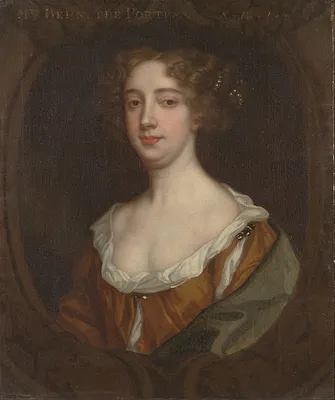
Aphra Behn
Aphra Behn was a pioneering English writer of the Restoration era, known for her plays, poetry, and prose, who also served as a spy.
Aphra Behn was a significant English writer during the Restoration period, recognized as one of the first women to sustain herself through her literary work. Her career challenged cultural norms and established her as an inspiration for future female authors. Initially gaining attention from King Charles II, she was employed as a spy in Antwerp. Following her return to London and a period of financial difficulty, she began her prolific writing career, which included plays, poetry, and prose. Behn was associated with a circle of notable figures of the time, including libertines and poets, and often used the pseudonym Astrea. Her political leanings, particularly her support for the Stuart monarchy, led to legal issues during the Exclusion Crisis, prompting her to focus more on prose and translations. She remained loyal to the Stuarts, refusing to write a welcoming poem for William III, and died not long after.
Early Life and Education
Details about Aphra Behn's early life are sparse, with conflicting accounts and potential intentional obscurity. Various sources suggest different parentage, with some identifying her father as a barber named John or Bartholomew Johnson. Her early years may have been influenced by her religious upbringing, which, according to one biographer, may have led her to explore themes of sexual desire within her writing, particularly in relation to church experiences. While formal education for women was uncommon, Behn likely educated herself by copying existing works. She showed a certain disdain for the English ideal of not formally educating women and questioned the necessity of classical language proficiency, aligning with writers like Francis Kirkman who prioritized clear English prose.
The Suriname Expedition and Espionage
A significant, though poorly documented, period of Behn's life involves a journey to the English colony of Surinam. She claimed to have met an African slave leader there, whose story inspired her well-known work, 'Oroonoko'. It is also suggested she acted as a spy during this time. Upon her return to England, she may have married a merchant named Johan Behn, after which she adopted the professional name 'Mrs Behn'. Her alleged espionage activities for King Charles II in Antwerp during the Second Anglo-Dutch War are more concretely documented. Using the code name Astrea, her mission involved trying to turn William Scot into a double agent. However, her efforts were not financially rewarding, and she faced difficulties securing payment for her services and expenses, even facing potential debt.
Literary Career and Political Stance
Aphra Behn's literary output spanned plays, poetry, and prose, earning her a living and breaking barriers for women writers. She was associated with a coterie of poets and libertines and used the pseudonym Astrea. Her strong support for the Stuart monarchy, particularly for the Catholic Duke of York, is evident in her dedications and her refusal to write a poem for the new king, William III, during the Exclusion Crisis. This political stance likely contributed to legal troubles and influenced her shift towards prose and translation. Despite the obscurity surrounding her early life and the speculative nature of some biographical details, her impact as a writer and her challenge to societal expectations remain significant.
Key Ideas
- Challenging gender roles in literature
- Exploration of sexuality in writing
- Themes of slavery and power dynamics (in Oroonoko)
- Loyalty to the Stuart monarchy
- Self-education and critique of formal education for women
Notable Quotes
“All women together ought to let flowers fall upon the tomb of Aphra Behn which is, most scandalously but rather appropriately, in Westminster Abbey, for it was she who earned them the right to speak their minds.”
Books by Aphra Behn
1 free public domain book · Read online or download