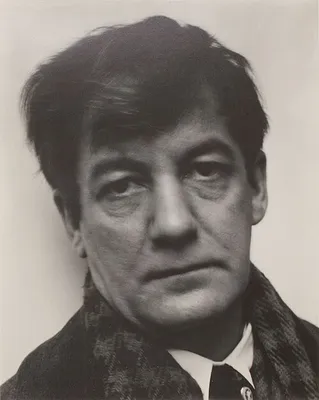
Anderson Walt
Sherwood Anderson, an American novelist, found literary success after a breakdown, known for subjective works like Winesburg, Ohio.
Sherwood Anderson was an American author recognized for his introspective and revealing narratives. He began his career in advertising and business, achieving success before experiencing a mental health crisis in 1912. This event prompted him to leave his established life and dedicate himself fully to writing.
Following his decision to become a writer, Anderson relocated to Chicago, where he remarried and began to build his literary career. His seminal work, the short-story collection "Winesburg, Ohio," marked a turning point and is considered his most significant contribution. Throughout the 1920s, he continued to produce a variety of literary forms, including novels, memoirs, essays, and poetry. While his books generally sold adequately, his novel "Dark Laughter" was his sole bestseller, drawing inspiration from his diverse life experiences.
Early Life and Influences
Born in Ohio in 1876, Sherwood Anderson's early life was marked by his family's frequent moves and financial instability. His father's struggles as a harness-maker and later as a sign-painter, coupled with his mother taking in laundry, led young Sherwood to take on various odd jobs, earning him the nickname "Jobby." Despite his declining school attendance, he was a dedicated reader, often borrowing books from libraries and acquaintances. His formative years, particularly his time in Caledonia, later inspired his semi-autobiographical novel "Tar: A Midwest Childhood." The instability of his youth and his father's struggles with alcohol likely contributed to the introspective nature of his later writing.
Path to Writing and Early Career
Anderson left school at 14 and worked numerous jobs, showcasing an early talent for sales and a wide range of experiences that would later inform his fiction. He served in the Ohio National Guard and briefly in Cuba during the Spanish-American War, though his company saw no combat. After the war, he pursued further education, attending preparatory school and then enrolling in night classes. A pivotal moment occurred when he was introduced to fine literature by a teacher, Trillena White, who became a significant influence. This, combined with a job offer in advertising, led him back to Chicago in 1900, where he began his professional writing career, initially penning articles for trade journals like "Agricultural Advertising."
Literary Breakthrough and Later Works
Anderson's career as a writer truly launched after a nervous breakdown in 1912, prompting him to abandon his business pursuits. He moved to Chicago, remarried, and focused on his literary endeavors. His most celebrated work, "Winesburg, Ohio," a collection of interconnected short stories, captured the inner lives of small-town inhabitants and established his reputation for subjective and psychologically deep narratives. The 1920s saw a prolific output from Anderson, including novels, memoirs, and poetry. His novel "Dark Laughter," inspired by his varied life experiences from army service to factory work and advertising, achieved bestseller status and is noted for its innovative use of shifting perspectives, influenced by James Joyce.
Key Ideas
- Subjective and self-revealing works
- Exploration of small-town life and its inhabitants' inner worlds
- Influence of personal experience on literary creation
- Innovative narrative techniques, such as shifting points of view
Books by Anderson Walt
0 free public domain books · Read online or download
