Amy L Lansky
Jewish dairy restaurants, originating from European traditions, served as cultural hubs and affordable eateries for immigrant communities.
Jewish dairy restaurants, also known as 'milchig' establishments, are a specific type of kosher eatery that adheres to Jewish dietary laws by excluding meat, allowing for dairy, eggs, and fish. These restaurants evolved from European 'milk pavilions' and 'dairy cafes,' becoming prominent in the late 19th and early 20th centuries, particularly within Jewish immigrant communities in North America and Europe. They were often patronized by those conscious of health and cost, serving Ashkenazi Jewish cuisine and American Jewish dishes.
These establishments played a significant role in the social and cultural fabric of immigrant life. They offered inexpensive gathering spaces, fostering connections within the community and serving as a link to heritage for subsequent generations. Many also aligned with the era's health and vegetarian food trends, sometimes incorporating 'health' into their names. Despite their cultural importance, Jewish dairy restaurants have seen a decline and are less preserved than other ethnic restaurant styles, though some notable examples and their famous patrons are remembered.
Origins and Evolution
The concept of Jewish dairy restaurants traces its roots to European 'milk pavilions' and 'dairy cafes,' such as the German 'milchhallen' and Austrian 'meierei,' and Polish 'mleczarnia.' These early establishments served dairy products, cheese, and sometimes small snacks. In the United States, particularly in areas with large Jewish immigrant populations like New York's Lower East Side, these restaurants began to flourish in the late 19th and early 20th centuries. They offered an alternative to meat-focused delicatessens, necessitated by the strict Jewish laws separating milk and meat. The proliferation of these eateries was also influenced by factors such as the increasing affordability and safety of refrigeration, community dissatisfaction with high kosher meat prices leading to boycotts, and a growing interest in vegetarianism promoted by progressive Jewish thinkers.
Cultural and Social Significance
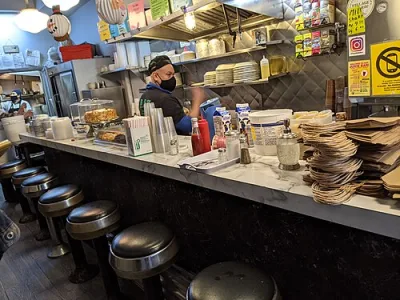
Jewish dairy restaurants served as vital community centers and affordable meeting places, particularly for immigrants and those interested in arts, politics, and culture. They provided a sense of comfort and connection to heritage for first and subsequent generations of American Jews. Many of these establishments actively promoted healthier eating habits, aligning with the broader vegetarian and health food movements of the time, and sometimes used advertising to highlight these aspects. They fostered a sense of belonging and acted as informal 'third places' outside of home and work, contributing significantly to the social landscape of their neighborhoods, often extending their influence beyond the Jewish community.
Menu and Notable Establishments
The menus of Jewish dairy restaurants featured a range of Ashkenazi Jewish dishes, often including items like potato latkes, blintzes, kugel, gefilte fish, matzo brei, and borscht, alongside American staples such as scrambled eggs and tuna salad. Some also offered innovative items like 'protose,' a vegetarian meat substitute. Notable examples of these establishments include Ratner's and B&H Dairy in New York City, which were frequented by a diverse clientele, including Yiddish theater actors, writers, and even notable figures like gangster Meyer Lansky and author Isaac Bashevis Singer. These restaurants often reflected the cultural milieu of their locations, serving as gathering spots for intellectuals and artists.
Key Ideas
- Kosher dairy restaurants (milchig) exclude meat, allowing dairy, eggs, and fish, adhering to Jewish dietary laws.
- These restaurants originated from European dairy cafes and pavilions, becoming important community hubs for Jewish immigrants.
- They were associated with health-conscious and vegetarian trends, and served as affordable social gathering places.
- Dairy restaurants provided a connection to heritage for American Jews and were influenced by economic factors like meat prices and refrigeration.
Books by Amy L Lansky
0 free public domain books · Read online or download
