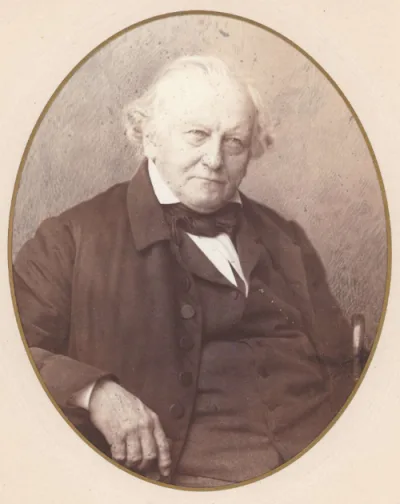
Amanda J. Evans
Richard Evans is a British historian specializing in modern European history, particularly Germany, known for his work on social history and his role in the David Irving libel case.
Sir Richard J. Evans is a distinguished British historian whose academic career has primarily focused on 19th and 20th-century European history, with a significant emphasis on Germany. He has authored numerous books, including a notable trilogy on the Third Reich. Evans held prestigious academic positions, including Regius Professor of History at the University of Cambridge and President of Wolfson College, Cambridge. His scholarly contributions have been recognized with a knighthood for services to scholarship.
Evans' research delves into the social history of Germany, exploring themes such as the rise of nationalism, the failures of liberalism and feminism, and the social development that paved the way for the Third Reich. He has critically engaged with historical debates, including the "Historikerstreit" (historians' dispute), where he challenged interpretations that sought to downplay or justify aspects of Nazi Germany's past. His work often examines history from the perspective of ordinary people and social movements.
Beyond his extensive academic publications, Evans gained public recognition for his role as an expert witness in the 2000 libel case of David Irving versus Deborah Lipstadt. In this capacity, he provided crucial testimony refuting Irving's claims and offering a scholarly analysis of historical evidence related to Holocaust denial. Evans has also defended the discipline of history itself against postmodernist critiques that question the possibility of objective historical reconstruction.
Academic Focus and Key Themes
Richard Evans's historical scholarship centers on modern Europe, with a particular expertise in German history from the 19th and 20th centuries. Influenced by the Annales school of social history, he investigates the societal underpinnings of major historical events. A recurring theme in his work is the analysis of German middle-class culture, its perceived weaknesses, and its susceptibility to nationalist ideologies. Evans posits that certain values prevalent in 19th-century German society contained the nascent elements that would later contribute to the rise of National Socialism. He critically examines the trajectory of German social development, exploring how it might have influenced the path towards the Third Reich, while also acknowledging the existence of alternative historical possibilities.
Contributions to Historical Debate and Methodology
Evans has been a significant voice in historical controversies, notably the "Historikerstreit" in Germany during the 1980s. He actively contested arguments put forth by certain German historians whom he viewed as attempting to revise or mitigate the historical understanding of Nazi Germany. Through his writings, such as "In Hitler's Shadow," Evans challenged specific interpretations related to the Holocaust and the origins of World War II. He also advocated for a "history from below" approach, emphasizing the importance of ordinary people's experiences and grassroots movements in shaping historical events, contrasting with traditional "great man" theories of history. His work often incorporates interdisciplinary methods, drawing on social sciences and anthropology.
Expert Witness and Defense of History
Richard Evans gained widespread public recognition for his pivotal role as an expert witness for the defense in the 2000 libel trial involving David Irving and Deborah Lipstadt. In "Denying the Holocaust," Lipstadt had accused Irving of Holocaust denial and historical distortion. Evans's meticulous examination of Irving's work, conducted with his doctoral students, uncovered instances of forged documents, selective use of evidence, and misrepresentation of historical records. His testimony was instrumental in refuting Irving's claims and establishing the historical consensus on the Holocaust. Furthermore, in "In Defence of History," Evans addresses postmodern skepticism towards historical knowledge, arguing for the possibility of reconstructing the past accurately despite inherent limitations and warning against theories that could inadvertently fuel Holocaust denial.
Key Ideas
- Social history of 19th and 20th-century Germany
- Critique of nationalism and middle-class culture in Germany
- History from below (grassroots movements and ordinary people)
- Rejection of Holocaust denial and revisionism
- Defense of historical objectivity against postmodern skepticism
Notable Quotes
“History is about people, and their relationships. It's about the perennial question of 'how much free will do people have in building their own lives, and making a future'”
“The road to Auschwitz was built by hate, but paved with indifference”
Books by Amanda J. Evans
0 free public domain books · Read online or download