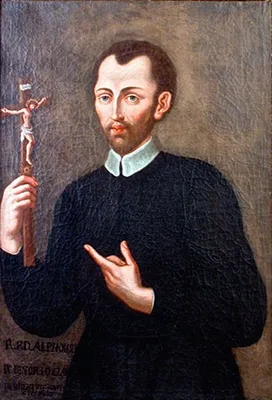
Alphonsus Maria de Liguori
Alphonsus Maria de Liguori was an Italian bishop, saint, and prolific writer on moral theology and spirituality.
Alphonsus Maria de Liguori, born in 1696 near Naples, was an Italian Catholic bishop, saint, and influential spiritual writer. He founded the Congregation of the Most Holy Redeemer, known as the Redemptorists, in 1732, dedicated to missionary work among the poor. Despite a successful early career as a lawyer, he felt called to the priesthood, being ordained in 1726. He was known for his simple, accessible preaching and for establishing "Evening Chapels" that fostered prayer, community, and education.
A prolific author, Liguori published numerous works on spirituality and moral theology, with his "Moral Theology" being a seminal text. He also composed music, including the well-known Christmas carol "Tu scendi dalle stelle." He was appointed Bishop of Sant'Agata de' Goti in 1762, where he worked to reform the diocese and support the clergy and faithful. He resigned due to ill health in 1775 and died in 1787. Canonized in 1839 and proclaimed a Doctor of the Church in 1871, he is revered as the patron saint of confessors and moral theologians.
Early Life and Education
Born in 1696 in the Kingdom of Naples, Alphonsus Maria de Liguori came from a noble but somewhat impoverished family. Initially trained in law, he graduated with a doctorate in civil and canon law at the age of 16. Despite a successful legal career, he experienced a profound disillusionment with the profession, famously remarking on its difficulties and dangers. After losing a significant case, he resolved to leave law, influenced by what he described as an "interior voice" calling him to a different path.
Priesthood and Missionary Work
In 1723, Liguori decided to pursue the priesthood, eventually being ordained in 1726. He dedicated his early years as a priest to ministering to the homeless and marginalized youth in Naples, becoming known for his clear and simple preaching style. He founded "Evening Chapels," which became centers for prayer, community activities, and education, growing to involve thousands of participants. His missionary experiences in poorer regions of Naples further shaped his pastoral approach, emphasizing compassion and understanding for those in need.
Founding the Redemptorists and Theological Contributions
In 1732, guided by a revelation, Liguori founded the Congregation of the Most Holy Redeemer (Redemptorists). This order was established with the mission of conducting popular missions in cities and rural areas, particularly focusing on the spiritual needs of the poor and abandoned. The Redemptorists actively opposed Jansenism, which Liguori viewed as excessively rigorous. His "Moral Theology," first published in 1748, became his most significant contribution, characterized by prudence and a balanced approach that avoided both excessive strictness and laxity. This work, along with his devotional writings, profoundly influenced Catholic moral thought.
Episcopal Ministry and Later Years
In 1762, Liguori was appointed Bishop of Sant'Agata de' Goti, an office he initially tried to refuse due to his age and poor health. During his tenure, he focused on reforming the seminary, addressing ecclesiastical abuses, and encouraging devotion to the Blessed Sacrament and the Virgin Mary. He demonstrated his commitment to the poor by selling personal possessions to fund charitable works. By 1775, his health had severely declined, leading to his resignation. He spent his final years with the Redemptorist community in Pagani, where he died in 1787.
Key Ideas
- Prudent moral theology balancing rigorism and laxism
- Emphasis on pastoral experience and practical application of faith
- Compassionate ministry to the poor and marginalized
- Importance of devotion to Mary and the Blessed Sacrament
Notable Quotes
“My friend, our profession is too full of difficulties and dangers; we lead an unhappy life and run risk of dying an unhappy death.”
“Leave the world, and give yourself to me.”
“I have never preached a sermon which the poorest old woman in the congregation could not understand”
“Scruples are useful in the beginning of conversion... they cleanse the soul, and at the same time make it careful”
“the penitents should be treated as souls to be saved rather than as criminals to be punished”
Books by Alphonsus Maria de Liguori
1 free public domain book · Read online or download