ALLEN, Rowland Hussey.
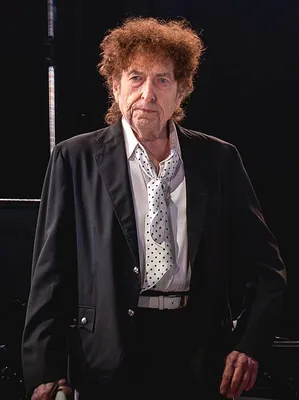
Bob Dylan, born Robert Zimmerman, is a seminal American songwriter, musician, and artist, recognized for his profound lyrical depth and cultural impact.
Born Robert Allen Zimmerman in Minnesota in 1941, Bob Dylan emerged as a pivotal figure in American music, initially drawing from folk and blues traditions. His early career in New York City saw him gain recognition for his songwriting, with albums like 'The Freewheelin' Bob Dylan' featuring songs that became anthems for social movements. Dylan's work consistently pushed artistic boundaries, incorporating literary and philosophical influences into popular music, challenging conventions, and resonating with countercultural sentiments.
Throughout his extensive career, Dylan has explored various musical genres, including rock and country, and has also ventured into visual arts, publishing books of paintings and drawings. His profound influence has been acknowledged with numerous accolades, including the Nobel Prize in Literature for his "new poetic expressions within the great American song tradition." Dylan continues to release music and tour, maintaining a significant presence in popular culture for over six decades.
Early Influences and Musical Evolution
Born Robert Allen Zimmerman, Dylan's early life in Minnesota was shaped by exposure to radio programs like the Grand Ole Opry and artists such as Hank Williams and Johnnie Ray. During his teenage years, he formed bands and performed rock and roll covers. A pivotal moment was witnessing Buddy Holly perform, an experience Dylan later described as electrifying and formative for his songwriting aspirations. His initial immersion in rock and roll eventually gave way to a deeper engagement with American folk music, which he found to be more serious and reflective of profound human emotions like despair, sadness, and triumph.
Move to New York and Songwriting Emergence
In 1961, Dylan relocated to New York City, drawn by the folk music scene and a desire to connect with his idol, Woody Guthrie. He began performing in Greenwich Village clubs, absorbing material and collaborating with fellow folk musicians. His distinctive folk-song style gained attention, leading to a recording contract with Columbia Records. Dylan's debut album featured traditional material, but his second album, 'The Freewheelin' Bob Dylan,' marked his emergence as a significant singer-songwriter, containing compositions that addressed social and political themes and drew upon folk ballad structures. He legally adopted the name Bob Dylan in 1962.
Artistic Innovation and Cultural Impact
Dylan's career is characterized by a continuous evolution and a willingness to experiment, notably when he introduced electric instrumentation to his music in the mid-1960s, sparking controversy but expanding the creative landscape of popular music. His six-minute single 'Like a Rolling Stone' redefined commercial and artistic possibilities. Following a motorcycle accident in 1966, Dylan entered a period of reduced touring, during which he recorded significant material and explored country music. His lyrical contributions, infused with intellectualism and diverse influences, have been recognized as profoundly poetic, earning him the Nobel Prize in Literature.
Key Ideas
- Infusion of literary and philosophical depth into folk and popular music.
- Lyrics reflecting political, social, and existential themes, challenging conventional pop music.
- Adaptation and reinterpretation of traditional folk and blues forms.
- Evolutionary artistic approach, embracing diverse musical genres and expanding creative boundaries.
Notable Quotes
“The sound of his voice went through me like an electric rod.”
“He was the first singer whose voice and style, I guess, I totally fell in love with.... I loved his style, wanted to dress like him too.”
“Buddy wrote songs – songs that had beautiful melodies and imaginative verses. And he sang great – sang in more than a few voices. He was the archetype. Everything I wasn't and wanted to be.”
“The thing about rock'n'roll is that for me anyway it wasn't enough.... There were great catch-phrases and driving pulse rhythms ... but the songs weren't serious or didn't reflect life in a realistic way. I knew that when I got into folk music, it was more of a serious type of thing. The songs are filled with more despair, more sadness, more triumph, more faith in the supernatural, much deeper feelings.”
“You're born, you know, the wrong names, wrong parents. I mean, that happens. You call yourself what you want to call yourself. This is the land of the free.”
Books by ALLEN, Rowland Hussey.
0 free public domain books · Read online or download