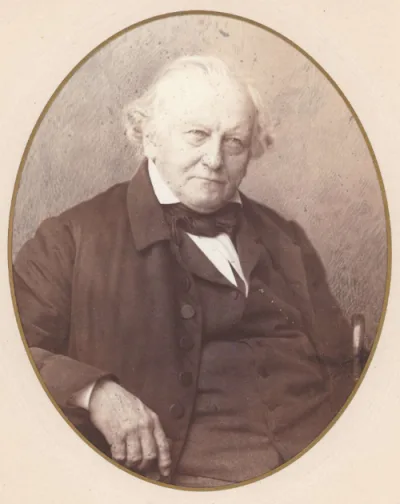
Alfred Firmin Loisy
Paul-Louis Couchoud was a French philosopher, physician, and poet known for adapting haiku and promoting the non-historicity of Jesus Christ.
Paul-Louis Couchoud (1879–1959) was a multifaceted French intellectual, holding degrees from the École Normale Supérieure and practicing medicine. His early career included a significant period in Japan, where he developed a passion for the country and its poetry, leading to his acclaimed adaptations of Japanese haiku into French. He also translated Japanese poets and published works on Asian sages and poets. Couchoud was also a close friend and physician to the renowned writer Anatole France.
Later in his life, Couchoud became a prominent advocate for the "German thesis" concerning the non-historicity of Jesus Christ. Drawing inspiration from lectures by Alfred Firmin Loisy and his own philosophical studies, Couchoud presented his arguments in influential works like "The Enigma of Jesus" (1923) and "The Mystery of Jesus" (1924). These books, introduced by figures like James G. Frazer, argued that Jesus was not a historical figure but a divine creation of early Christian belief. His writings on this topic generated significant debate within religious and academic circles.
Philosophical Education and Early Interests
Paul-Louis Couchoud received a rigorous education, graduating in 1901 from the prestigious École Normale Supérieure in Paris with a lecturer's degree in philosophy. His intellectual journey was significantly shaped by his travels, particularly his extended visit to Japan between 1903 and 1904, a country that deeply captivated him. This immersion led to his pioneering work in adapting Japanese haiku into French verse, a form he explored with friends and published in collections like "Au fil de l'eau." He further delved into Japanese literature by translating lyrical epigrams and studying poets like Yosa Buson, contributing to a greater appreciation of Asian poetry and thought in the West.
Medical Career and Intellectual Circle
In parallel with his literary and philosophical pursuits, Couchoud embarked on a career in medicine, completing his medical doctorate in 1911. He served in various medical capacities, including as a doctor at the leading Cochin hospital in Paris. During this time, he became a close confidant and physician to the esteemed writer Anatole France, offering support and companionship. Couchoud was also involved in intellectual circles, participating in experimental sessions on "extra-retinal vision" alongside figures like Jules Romains, and later marrying Anthippe Sevastos, the sister-in-law of sculptor Antoine Bourdelle.
Advocacy for the Christ Myth Thesis
Couchoud gained significant recognition for his engagement with the "German thesis" on the non-historicity of Jesus Christ. Following exposure to the ideas of Alfred Firmin Loisy and works on the history of religions, Couchoud developed his own arguments, notably in "The Enigma of Jesus" (1923) and "The Mystery of Jesus" (1924). He posited that Jesus was not a historical individual but rather a spiritual entity, a divine product of collective belief and mystical experience that emerged within early Christianity. His approach, characterized by a calm and reasoned analysis, was introduced by anthropologist James G. Frazer, lending considerable weight to his controversial theories and sparking considerable debate.
Key Ideas
- Adaptation of Japanese haiku into French
- The non-historicity of Jesus Christ (Christ Myth Thesis)
- Jesus as a spiritual creation of collective belief rather than a historical figure
Notable Quotes
“After attending Loisy's lectures at the Collège de France, Couchoud became convinced by a German thesis denying the historicity of Jesus.”
“Whether Dr. Couchoud be right or wrong [in denying the historicity of Jesus]...he appears to have laid his finger on a weak point in the chain of evidence on which hangs the religious faith of a great part of civilized mankind.”
“Jesus is an unknown historical figure. It is possible that he may have lived, since millions of people have lived without leaving a trace. It is not enough to declare 'We know nothing about Jesus, except that he existed'. On the contrary, we must boldly assert that 'We do not know anything about him, not even whether he existed'.”
“Jesus belongs to history thanks to his name and the cult built around him, but he is not a historical figure. He is a divine being, whose knowledge was slowly developed by Christian minds. He was begotten in faith, in hope and in love. He was shaped by emotional fervor. He has been given changing figures by various forms of worship. He was born the moment he got his first believer... His only reality is spiritual. Everything else is phantasmagoria.”
“At the origin of Christianity there is, if I am right, not a personal biography, but a collective mystical experience, sustaining a divine history mystically revealed.”
Books by Alfred Firmin Loisy
1 free public domain book · Read online or download