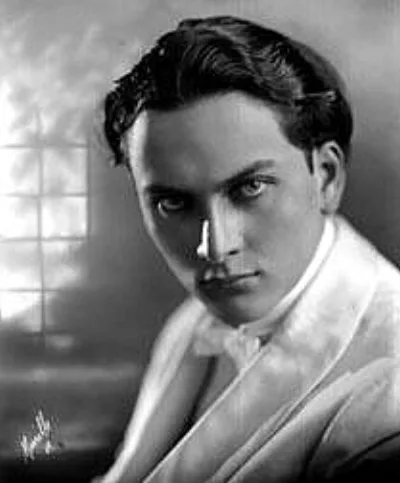
Alessandro Guetta
Leone Modena was a Venetian rabbi, scholar, and critic of Kabbalah, known for bridging Jewish and Christian worlds.
Leone Modena, born in Venice in 1571 to a family of French Jewish descent, was a prominent rabbi and scholar. Despite his intelligence and respected position, his reputation within traditional Judaism was complicated by his criticism of emerging Jewish sects, gambling addiction, and a perceived lack of stable character. This instability led him to pursue a wide array of professions, including preacher, teacher, interpreter, writer, and even merchant and broker. He was a significant intellectual figure, maintaining close ties with students like Azaria Piccio, a notable Talmudist. Modena is historically recognized for his critiques of Jewish mysticism, particularly Kabbalah, arguing in works like 'Ari Nohem' that its foundational text, the Zohar, was a recent fabrication. He also became a key figure in explaining Judaism to Christian audiences, a role that significantly shaped interfaith discourse. His candid autobiography, 'Chayye Yehudah,' revealed personal struggles, including his gambling compulsion and the tragic loss of children. Modena also authored works addressing practical matters, such as 'Tzori la-nefesh u-marpeh la-etsem,' which provided guidance for the care of the sick and dying, aiming to establish Jewish rituals for deathbed preparation. His influence extended to the English court, where his comprehensive guide to Jewish customs, 'Historia de gli riti Hebraici,' was commissioned and widely translated, contributing to discussions on Jewish resettlement in Britain. A musician and cantor, he also explored the integration of polyphony in synagogue services.
Critique of Mysticism and Kabbalah
Leone Modena distinguished himself through his critical stance on the mystical traditions within Judaism, most notably Kabbalah. In his work 'Ari Nohem,' he challenged the authenticity and origins of Kabbalistic teachings, attempting to demonstrate that the Zohar, considered a central text of Kabbalah, was a comparatively modern composition. He argued that the term 'Ḥokhmat HaQabbalah' was misleading, suggesting it was neither true wisdom nor an ancient tradition passed down from Moses, but rather an invention. This intellectual rigor in questioning established mystical frameworks positioned him as a significant voice in early modern Jewish thought, engaging with esoteric traditions by dissecting their claims and historical basis.
Interfaith Dialogue and Cultural Bridge
Modena played a crucial role as an intermediary between the Jewish and Christian communities of his time. He was sought after by prominent Venetians and international figures, including English diplomats like Sir Henry Wotton. At Wotton's request, Modena produced 'Historia de gli riti Hebraici,' a comprehensive exposition of Jewish customs and beliefs intended for a Christian readership. This work, the first of its kind since antiquity, was widely translated and reprinted, becoming a foundational text for Christian understanding of Judaism and fostering discourse on religious tolerance. His engagement with Christian scholars, such as William Bedell, who taught him Christian biblical interpretations, further shaped his perspective and facilitated this cultural exchange.
Personal Life and Philosophical Reflections
Modena's autobiography, 'Chayye Yehudah,' offers a remarkably candid glimpse into his personal life, including his acknowledged struggle with compulsive gambling. The work also details profound personal losses, such as the death of children, one from alchemical experiment fumes and another murdered. His philosophical engagement extended to his youth, as evidenced by his early work 'Sur MeRa,' a dialogue addressing gambling. Beyond personal reflections, Modena also authored practical guides, such as 'Tzori la-nefesh u-marpeh la-etsem,' which provided guidance for the Jewish community on caring for the sick and dying, emphasizing the importance of ritualizing deathbed preparations in accordance with Jewish tradition.
Key Ideas
- Critique of Kabbalah and Jewish mysticism
- Role as an interpreter of Judaism to Christian audiences
- Importance of ritualizing death and care for the sick
- Exploration of gambling's impact on character
Books by Alessandro Guetta
1 free public domain book · Read online or download