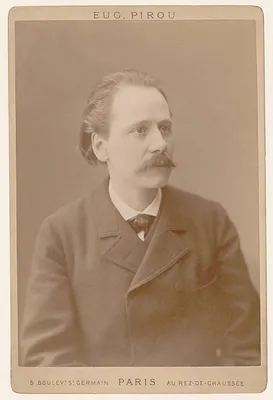
Alain Saint Sae Ns
Jules Massenet was a prolific French Romantic composer, primarily known for his operas, who taught at the Paris Conservatoire.
Jules Massenet (1842-1912) was a prominent French composer of the Romantic era, celebrated for his numerous operas, including the enduringly popular 'Manon' and 'Werther'. His musical journey began early, leading him to study at the Paris Conservatoire under Ambroise Thomas. After winning the prestigious Prix de Rome in 1863, Massenet established himself as a prolific composer across various genres, though his operas quickly became his signature. He possessed a keen theatrical sense, which contributed to his success with Parisian audiences and solidified his position as a leading opera composer in late 19th and early 20th century France. Massenet also served as a professor at the Conservatoire, influencing students like Gabriel Pierné and Ernest Chausson. While some critics later deemed his work old-fashioned, his operas have experienced a resurgence, recognized for their craftsmanship and as notable products of the Belle Époque.
Early Life and Education
Born in Saint-Étienne in 1842, Jules Massenet was the youngest of four children. His father, an ironmonger, and his mother, a talented amateur musician who gave him his first piano lessons, influenced his early musical development. The family relocated to Paris by 1848, where Massenet, at a young age, entered the Paris Conservatoire. His early studies included solfège and piano. A period of disruption occurred when his family moved to Chambéry due to his father's health, but Massenet eventually returned to Paris to resume his studies. He excelled in piano, winning the Conservatoire's top prize in 1859. To support himself, he took on private piano students and played in theatre orchestras, gaining familiarity with the works of composers like Gounod. His early attempts at the organ were unsuccessful, but he met his musical heroes, Wagner and Berlioz, while working as a piano accompanist.
Prix de Rome and Early Career
In 1861, Massenet's first published work, a piano piece, appeared. He then moved into Ambroise Thomas's composition class and entered the competition for the Prix de Rome, a significant musical honor. In 1863, he won the prize, an event that involved interactions with esteemed judges like Berlioz and Thomas. The award granted him three years of subsidized study, with a substantial portion spent at the French Academy in Rome. While in Rome, Massenet engaged in self-directed musical study, absorbing music from St. Peter's and studying German masters. He also formed lasting friendships with artists and met Franz Liszt, through whom he tutored Louise-Constance "Ninon" de Gressy, a wealthy patron's daughter. Massenet and Ninon developed a romantic relationship during this period.
Compositional Output and Recognition
Returning to Paris in 1866, Massenet supported himself by teaching piano and publishing popular songs and piano pieces. His first commissioned opera, 'La grand'tante', premiered in 1867. Following a brief interruption due to the Franco-Prussian War, he completed his first major stage work, 'Don César de Bazan', in 1872, though it was not initially successful. However, his incidental music for 'Les Érinnyes' and the oratorio 'Marie-Magdeleine' in 1873 brought him growing recognition. Massenet's prolific output was attributed to his disciplined early morning composing routine. His opera 'Le roi de Lahore' (1877), based on the Mahabharata, achieved considerable success, being staged internationally and earning praise for its merit, even if not deemed a work of genius. This period marked a career high, with Massenet receiving the Legion of Honour in 1876 and becoming a professor at the Conservatoire in 1878.
Key Ideas
- Prolific composer known for operas
- Successful in Parisian theatre
- Professor at Paris Conservatoire
- Operas recognized for craftsmanship
Notable Quotes
“Ambroise Thomas, my beloved master, came towards me and said, "Embrace Berlioz, you owe him a great deal for your prize."”
“"The prize," I cried, bewildered, my face shining with joy. "I have the prize!!!"”
“"He'll go far, the young rascal, when he's had less experience!"”
“M. Massenet's opera, although not a work of genius proper, is one of more than common merit, and contains all the elements of at least temporary success.”
Books by Alain Saint Sae Ns
0 free public domain books · Read online or download
