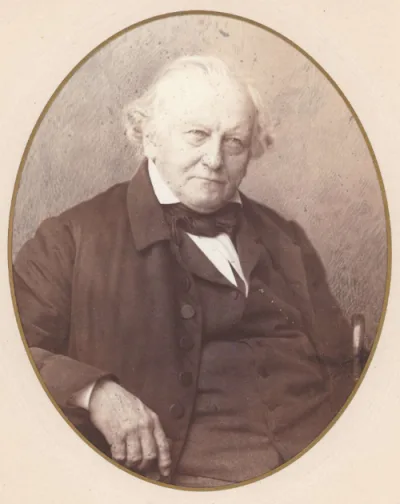
Adele Aldridge
Norman Mailer was a prolific American author, journalist, and filmmaker known for his innovative literary style and controversial commentary.
Norman Mailer, born Nachem Malech Mailer, was a prominent American writer, journalist, and filmmaker whose career spanned over six decades. He achieved early fame with his 1948 novel "The Naked and the Dead" and went on to publish 11 best-selling books across seven decades. Mailer was a pioneer of "New Journalism," a genre that blended fictional techniques with factual reporting, alongside contemporaries like Tom Wolfe and Joan Didion. He was also a vocal cultural critic, expressing his often provocative views through his writings and public appearances. His work frequently explored themes of American society, politics, and the human condition, often with a controversial edge.
Beyond his literary achievements, Mailer was involved in public life, co-founding "The Village Voice" newspaper in 1955. He also ran for Mayor of New York City in 1969. His personal life was marked by six marriages and nine children. Mailer received critical acclaim throughout his career, including two Pulitzer Prizes for his nonfiction and fiction works. His writing style evolved, but he consistently challenged conventional narratives and perspectives, leaving a significant mark on 20th-century American literature and culture.
Literary Innovations and Notable Works
Mailer's literary output was extensive, encompassing 12 novels over 59 years. His debut novel, "The Naked and the Dead" (1948), based on his World War II experiences in the Philippines, brought him significant acclaim and became a bestseller, lauded as a prime depiction of combat. He later explored diverse themes and styles, from the Cold War politics of "Barbary Shore" (1951) to the Hollywood critique in "The Deer Park" (1955). His experimental novel "An American Dream" (1965) and "Why Are We in Vietnam?" (1967) showcased his innovative prose and thematic boldness. Mailer also achieved critical success with "The Executioner's Song" (1980), a "real-life novel" that earned him a Pulitzer Prize for fiction. His later works, such as the epic "Ancient Evenings" (1983) and the CIA-focused "Harlot's Ghost" (1991), demonstrated his ambition and dedication to extensive research, even as reviews varied.
Journalism and Cultural Commentary
Mailer's journalistic endeavors were as impactful as his fiction. He was a co-founder of "The Village Voice" in 1955, where he initially wrote a column that helped him develop his distinctive voice and explore his philosophical ideas. His influential essay "The White Negro" (1957) is considered a seminal piece on the hipster counterculture and its opposition to societal conformity. This essay, along with others, was published in "Advertisements for Myself" (1959), which Mailer considered his first work with a truly personal style. His reporting on John F. Kennedy's rise for "Esquire" magazine in "Superman Comes to the Supermarket" (1960) was a landmark in the development of New Journalism, characterized by its literary approach to factual reporting.
Pioneering New Journalism
Norman Mailer is recognized as a key figure in the development of "New Journalism," a literary movement that merged the techniques of fiction with the reporting of factual events. Alongside writers such as Joan Didion and Tom Wolfe, Mailer used narrative devices, character development, and subjective perspectives to create more immersive and engaging journalism. This approach allowed him to delve deeply into the cultural and political landscape of his time, offering critical and often controversial commentary. His willingness to experiment with form and perspective in his journalistic pieces, as well as his novels, challenged traditional boundaries between fiction and nonfiction, influencing generations of writers.
Key Ideas
- New Journalism: Using literary fiction techniques in factual reporting.
- The White Negro: Exploring the hipster figure as a countercultural force against conformity.
Notable Quotes
“The worst experience of my life, and also the most important”
“The first work I wrote with a style I could call my own.”
“an absolutely astonishing book”
Books by Adele Aldridge
2 free public domain books · Read online or download