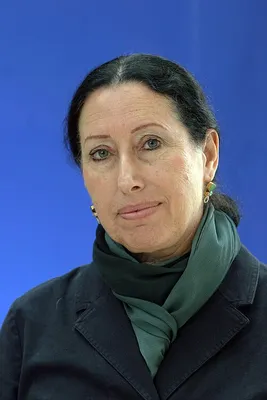
Ada Rapoport Albert
Rachel Elior is an Israeli professor of Jewish philosophy, specializing in Jewish mysticism and Hasidism, whose work has generated significant academic discussion.
Rachel Elior is a prominent Israeli scholar holding the John and Golda Cohen Professorship of Jewish Philosophy and Jewish Mystical Thought at the Hebrew University of Jerusalem, where she has taught since 1978 and currently heads the Department of Jewish Thought. Her academic career is marked by extensive research into early Jewish mysticism, Hasidism, the Dead Sea Scrolls, and various other facets of Jewish philosophy and history. Elior earned her PhD Summa cum laude in 1976 and has held visiting professorships at numerous international universities, including Princeton and the University of Tokyo. Her scholarly contributions have been recognized with awards such as the Gershom Scholem Prize for Research in Kabbalah in 2006.
However, Elior's research, particularly concerning Hasidism and the Dead Sea Scrolls, has also been a subject of considerable scholarly debate. Critics have raised questions about her methodologies and interpretations, with some arguing she employs outdated concepts or overlooks contemporary scholarship. Specific challenges have been raised regarding her theories on the origins of mysticism within the priestly class and her views on the Essenes and the Dead Sea Scrolls, with some scholars finding her historical connections tenuous or lacking specificity. Despite these criticisms, her work is acknowledged as a significant point of discussion within academic circles.
Academic Focus and Research Areas
Rachel Elior's primary academic focus lies in Jewish philosophy, with a deep specialization in the study of Jewish mysticism and Hasidism. Her research encompasses a broad spectrum of early Jewish mystical traditions, including Hekhalot literature and Merkavah mysticism. She has also dedicated significant attention to the historical context and textual analysis of the Dead Sea Scrolls, exploring their origins and significance. Elior's expertise extends to Messianism, Sabbatianism, and the specific theological and historical currents within Hasidic movements like Chabad. Furthermore, she investigates the role of women within Jewish culture and mystical traditions. Her academic work is characterized by a comprehensive approach, drawing connections between various periods and movements within Jewish thought.
Scholarly Contributions and Debates
Elior's scholarly output has made substantial contributions to the understanding of Jewish mysticism and early Jewish history, earning her recognition such as the Gershom Scholem Prize. Her work on Hasidism and the Dead Sea Scrolls, however, has also generated significant academic discourse and controversy. Some scholars have critiqued her approaches, suggesting they rely on outdated frameworks or fail to integrate newer scholarly findings. For instance, her interpretation of Hasidism has been challenged for not fully engaging with contemporary theoretical developments. Similarly, her hypotheses regarding the origins of the Dead Sea Scrolls and the identity of their authors, proposing they were penned by renegade priests rather than the Essenes, have met with resistance and counterarguments from various academics who emphasize the existing evidence for the Essenes' existence and question the historical specificity of her claims.
Key Ideas
- Research into the origins of Jewish mysticism within the priestly class.
- Hypothesis that the Essenes, traditionally associated with the Dead Sea Scrolls, were renegade sons of Zadok, a priestly caste banished in the 2nd century BC.
- Speculation that the Dead Sea Scrolls were hidden for safekeeping by this banished priestly group.
- Exploration of the non-temporal coexistence of ideas within early Hasidic story writing.
Books by Ada Rapoport Albert
0 free public domain books · Read online or download
