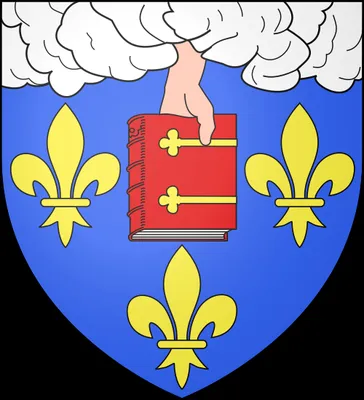
Acade Mie Nationale De Me Decine France
The University of Paris, founded circa 1150, was a leading European institution renowned for humanities, theology, and philosophy.
Emerging around 1150 as an association linked to the Paris cathedral school, the University of Paris became one of Europe's oldest universities. Officially recognized in 1200 and 1215, it gained international acclaim for its academic rigor, particularly in theology and philosophy, establishing enduring traditions like doctoral degrees. The university played a significant role in intellectual life, with notable figures from various fields being educated there. Its structure, including faculties and student divisions based on origin, served as a model for other medieval universities. The university underwent significant transformations, including closure during the French Revolution and re-establishment in 1896, eventually being divided into multiple autonomous institutions in 1970.
Origins and Early Development
The University of Paris originated as a teacher-student corporation around 1150, connected to the cathedral school. It was formally acknowledged as an "Universitas" in 1200 by King Philip II, which allowed it to operate under ecclesiastical law and grant diplomas. Initially comprising four faculties – Arts, Medicine, Law, and Theology – the Faculty of Arts served as a prerequisite for higher studies. Students were organized into four "nations" based on language or region, a system that, along with its faculty structure, influenced the development of later European universities. The institution was under Church governance, with students adhering to its laws and courts, a situation that sometimes created friction with city authorities due to student conduct.
Academic Prestige and Influence
From the Middle Ages onwards, the University of Paris held significant international prestige for its academic achievements in the humanities, especially in theology and philosophy. It was instrumental in establishing academic standards and practices that have persisted, such as the awarding of doctoral degrees and the division of students into "nations." The university's intellectual environment attracted scholars and students from across Europe, contributing to its reputation as a preeminent center of learning. Many distinguished individuals, including popes, royalty, scientists, and intellectuals, received their education at Paris, underscoring its profound impact on European intellectual history.
Transformation and Legacy
During the French Revolution in 1793, the university was closed and its assets were dispersed. It was later replaced in 1806 by a new University of France, comprising independent faculties. A new University of Paris was re-established in 1896, consolidating various Paris faculties. In 1970, following the events of May 1968, the university was reorganized into thirteen autonomous institutions. The heritage of the original University of Paris, including its name and buildings, was managed by the Chancellerie des Universités de Paris, preserving its historical legacy.
Key Ideas
- University structure based on faculties and student nations
- Establishment of academic standards and traditions like doctoral degrees
- Theology and philosophy as prominent fields of study
Books by Acade Mie Nationale De Me Decine France
0 free public domain books · Read online or download
