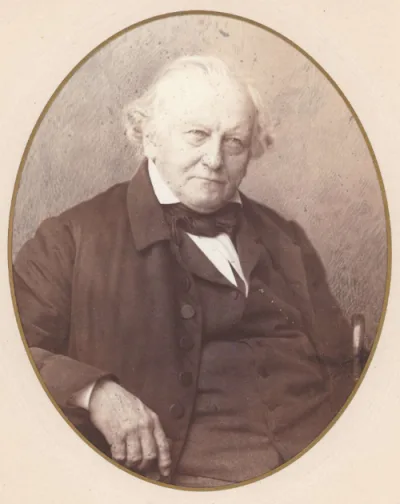
A. Helwa
Mikiel Anton Vassalli was a Maltese linguist, philosopher, and writer who championed the Maltese language and national identity.
Mikiel Anton Vassalli (1764–1829) was a significant Maltese figure known for his contributions to the Maltese language, philosophy, and political thought. Born to a peasant family, he pursued studies in oriental languages in Rome, where he was exposed to Enlightenment ideals. Upon returning to Malta, he became deeply involved in nationalistic pursuits, aiming to elevate the Maltese language and foster a sense of national consciousness among his people. Vassalli published foundational works on the Maltese language, including grammars and dictionaries, and was the first to study it scientifically from its Semitic roots. His efforts aimed to establish Maltese as a language of intellect, culture, and popular education, challenging the dominance of foreign languages. He also engaged in political activism, advocating for reforms and the rights of native Maltese, which led to periods of exile. His philosophical outlook was shaped by the Enlightenment, emphasizing intellectual learning and egalitarian principles, which he sought to apply to Maltese society through educational and political reform.
Linguistic and Educational Reform
Vassalli dedicated himself to the advancement of the Maltese language during the 1790s, a period when previous linguistic works had been lost. While not the first to write about Maltese, he is credited with establishing the study of the language on scientific foundations. He published three key works: 'L-Alfabett Malti' (1790), 'il-Mylsen' (1791), a grammar in Latin, and 'Ktieb il-Kliem Malti' (1796), a Maltese-Latin-Italian dictionary. His writings revealed a broader aim beyond linguistics; he sought the civil and moral education of the Maltese people through their native tongue. This vision positioned the Maltese language as a tool for national awakening and empowerment. Later, as the first Professor of the Maltese language at the University of Malta, he produced a new Maltese grammar in Italian (1827) and a book of Maltese proverbs (1828), further solidifying his commitment to linguistic development and national consciousness.
Philosophical and Political Vision
Influenced by the 'Age of Enlightenment' and the 'Republic of Letters' during his studies in Rome, Vassalli embraced intellectual enlightenment and egalitarian principles. He applied these philosophical doctrines to the Maltese context, advocating for significant social and political reform. His open letter 'Alla Nazione Maltese' (1796), accompanying his dictionary, articulated his philosophical and political views, proposing a reorganisation of Maltese society. Vassalli envisioned a Maltese republic founded on a robust educational system that celebrated cultural identity. Although he drew heavily on contemporary French thinkers, his ability to translate philosophical concepts into practical social and political action was notable. His activism, driven by a desire to address the social divisions and precarious political situation of Malta, included proposing reforms to the Order of St. John. These efforts, however, led to his repeated exile and imprisonment, highlighting the revolutionary nature of his call for Maltese self-determination and democratic power.
Key Ideas
- Elevation of the Maltese language as a tool for national consciousness and education
- Advocacy for civil and moral education through the native tongue
- Application of Enlightenment principles to Maltese social and political reform
- Establishment of a Maltese republic based on education and cultural identity
- Scientific study of the Maltese language from its Semitic roots
Books by A. Helwa
0 free public domain books · Read online or download