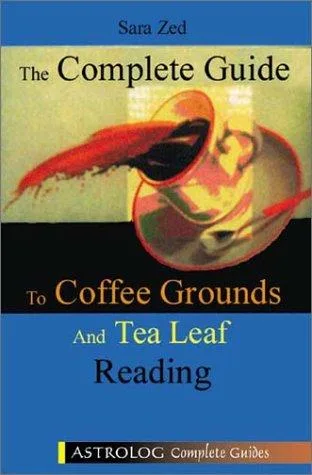
The Complete Guide to Coffee Grounds & Tea Leaf Reading
 61
61

The Complete Guide to Coffee Grounds & Tea Leaf Reading



By Cassian Rothmann (Senior Critic, Ancient Wisdom) — Sara Zad's 'The Complete Guide to Coffee Grounds & Tea Leaf Reading' is a masterful illumination of a deeply esoteric practice. Zad navigates the rich symbolism of tasseography with an authoritative yet accessible voice, revealing its historical roots and profound spiritual applications. This isn't merely a manual; it’s an initiation into perceiving the subtle language of the cosmos through the humble remnants of our daily rituals. The book excels in bridging the gap between ancient lore and contemporary intuition, making it an indispensable resource for serious students of divination and anyone seeking to deepen their connection to the mystical arts. An essential addition to any occult library.
📝 Description
61
Sara Zad's 2015 guide decodes the symbolism found in coffee grounds and tea leaves.
This book examines tasseography, the practice of divining the future from the patterns of coffee grounds or tea leaves. Zad provides instruction on how to interpret these patterns, moving beyond simple fortune-telling to explore the deeper symbolic meanings. The text aims to help readers transform the everyday act of drinking coffee or tea into a method for intuitive interpretation and divination. It teaches how to recognize signs and symbols that relate to personal destiny and the subtle energies present in life.
Readers learn to understand the philosophical basis of this ancient practice. The guide presents tasseography as a way to connect with unseen forces and decipher universal messages. It is written for those interested in developing their intuition and gaining insight into their lives through this accessible form of scrying.
Tasseography is an ancient form of divination with roots in various cultures, including Ottoman Turkey and ancient Greece. Historically, people have observed the residue left in cups after drinking to seek omens and guidance. This practice falls within a broader category of divination arts that interpret natural phenomena or random patterns to understand the divine will or future events. It is related to other forms of scrying and material interpretation found in esoteric traditions.
💡 Why Read This Book?
Unveil the hidden language of the universe in your daily cup. This guide offers a profound exploration of tasseography, transforming a simple ritual into a powerful tool for self-discovery and divination. Ideal for seekers of esoteric knowledge, aspiring mystics, and practitioners looking to expand their divinatory repertoire, it provides clear instruction and deep symbolic insight into the patterns of fate.
⭐ Reader Reviews
Honest opinions from readers who have explored this book.
❓ Frequently Asked Questions
What is tasseography?
Tasseography, also known as tasseomancy, is the art of divination by interpreting patterns formed by tea leaves or coffee grounds in a cup. It involves observing the shapes, symbols, and arrangements left behind after the beverage is consumed.
Do I need special equipment?
No, you primarily need a cup, tea leaves or coffee grounds, and the willingness to observe and interpret. The book guides you through the process using readily available materials.
How accurate is tea leaf reading?
The accuracy of tasseography, like any form of divination, depends on the practitioner's intuition, knowledge of symbolism, and the seeker's openness to receive insights. It's a tool for guidance and self-reflection.
Can I read for others?
Absolutely. Once you grasp the principles, you can extend your divinatory skills to assist friends and family, offering them insights and a unique perspective on their life's path.
What is the philosophical significance of tasseography?
Philosophically, tasseography connects us to the ancient belief that the universe communicates through signs and symbols. It encourages a mindful engagement with the present and a recognition of the interconnectedness of all things.
🔮 Key Themes & Symbolism
The Art of Tasseography
This theme examines the historical origins and evolution of reading coffee grounds and tea leaves as a divinatory practice. It explores the cultural significance of these rituals across various traditions, from ancient nomadic tribes to the sophisticated salons of Europe. The book elucidates the fundamental principles of tasseography, focusing on the intentional preparation of the beverage, the act of consumption, and the crucial step of swirling the cup to create the patterns that will be interpreted. It emphasizes that tasseography is more than mere prediction; it is a meditative dialogue with the subconscious and the subtle energies of the universe, revealing insights into personal journeys and collective consciousness.
Symbolic Language of Residue
Central to the practice is understanding the rich lexicon of symbols formed by the grounds and leaves. This section of the book meticulously decodes the myriad shapes, forms, and figures that emerge, offering a comprehensive guide to their meanings. From common archetypes like animals, celestial bodies, and everyday objects to more abstract patterns representing emotions or spiritual states, each symbol is presented with its potential interpretations. The emphasis is on intuitive understanding, encouraging readers to develop their personal resonance with these symbols, recognizing that their meaning can be both universal and uniquely personal to the individual being read.
Ritual, Intuition, and Self-Discovery
Beyond the mechanics of interpretation, this theme explores the transformative power of tasseography as a ritual for enhanced intuition and profound self-discovery. The book positions the act of reading as a sacred pause in the chaos of modern life, a moment to connect with inner wisdom and external guidance. It provides practical advice on cultivating a receptive state of mind, trusting one's instincts, and integrating the insights gained from readings into one's life. The ultimate goal is not just to foresee possibilities but to empower the individual to navigate their path with greater clarity, purpose, and self-awareness, fostering personal growth and spiritual evolution.
💬 Memorable Quotes
Direct passages from the work, attributed to the author.
“Each swirl of the cup is a question posed to the universe.”
— This emphasizes the active and intentional nature of tasseography, framing the ritual as a dialogue where the practitioner poses inquiries and awaits symbolic answers from the cosmos.
“The patterns are not etched in stone, but in the flowing currents of possibility.”
— This highlights the fluid and dynamic nature of destiny as revealed through tasseography, suggesting that the future is not fixed but a range of potential that can be influenced.
“To read the leaves is to read the soul.”
— This profound statement links the external act of divination to an internal journey of self-exploration, suggesting that the symbols revealed reflect the inner range of the individual.
💡 Key Ideas
Editorial paraphrase of the work's core concepts — not direct quotes.
The whispers of fate are found in the dust of our daily rituals.
This quote suggests that profound wisdom and insights into destiny are not found in grand pronouncements, but in the overlooked remnants of our common, everyday actions, highlighting the sacredness in the mundane.
The most potent magic resides in the ordinary.
This quote underscores the esoteric philosophy that true power and hidden knowledge are often found within the simple, everyday elements of life, waiting to be recognized.
🌙 Esoteric Significance
Tradition
Tasseography finds its esoteric home within the broad spectrum of scrying and augury practices, ancient methods of divination that seek to reveal hidden truths or future events through visual interpretation. It aligns with traditions that believe in the interconnectedness of the microcosm (the individual) and the macrocosm (the universe), where patterns in earthly matter reflect celestial influences and universal energies. Its practice is deeply embedded in folk magic and esoteric spirituality, encouraging a mindful engagement with the present moment as a gateway to understanding the flow of destiny and the subconscious mind.
Symbolism
The esoteric significance of tasseography lies in its wide range of symbolism. The shapes formed by tea leaves or coffee grounds are seen as a visual language, a lexicon of archetypes and metaphors drawn from nature, mythology, and everyday life. Common symbols like birds (journeys, messages), animals (qualities, primal instincts), celestial bodies (cosmic influences, destiny), and geometric shapes (order, challenges) all carry profound meanings. These symbols are not static but are interpreted contextually, influenced by the reader's intuition and the querent's personal associations, making each reading a unique and deeply personal unveiling of the subconscious and the subtle energetic landscape.
Modern Relevance
In an era often characterized by disconnection and rapid change, tasseography offers a profound anchor to intuition and mindfulness. Its modern relevance lies in its ability to foster a sense of inner calm and self-reflection, providing a structured yet intuitive method for navigating life's complexities. As individuals increasingly seek authentic spiritual practices and tools for personal growth, the art of reading leaves offers a tangible way to connect with subtle energies, gain clarity on personal challenges, and cultivate a deeper understanding of one's life path. It serves as a reminder that wisdom can be found in simple rituals, empowering individuals to tap into their innate perceptive abilities.
👥 Who Should Read This Book
This comprehensive guide is a treasure for a diverse range of individuals. Absolute beginners to divination will find clear, step-by-step instructions and a gentle introduction to symbolic interpretation. Seasoned practitioners of tarot, astrology, or other occult arts will discover a valuable new modality to integrate into their toolkit, expanding their divinatory repertoire. Scholars of esoteric history and comparative religion will appreciate the historical context and cultural insights. Ultimately, anyone with a genuine curiosity for self-discovery, a desire to enhance their intuition, or a longing to perceive the subtle currents of life will find profound value and guidance within these pages.
📜 Historical Context
Tasseography, the art of reading tea leaves and coffee grounds, boasts a rich and ancient lineage, with roots stretching back to antiquity. While its precise origins are debated, the practice of interpreting patterns in natural residues for divination is found in various cultures, including ancient Rome, Greece, and the Middle East. The popularization of coffee and tea across Europe and the Ottoman Empire in the 17th and 18th centuries provided fertile ground for the formalization of tasseography as a distinct divinatory art. It flourished in European salons and aristocratic circles, often intertwined with astrology and other occult sciences. During periods of societal upheaval and intellectual exploration, such as the Romantic era, esoteric practices like tasseography experienced resurgences, appealing to those seeking deeper meaning and connection beyond empirical understanding. This book places Zad's work within this historical range, acknowledging its place in a long tradition of seeking wisdom from the subtle signs of the universe.
📔 Journal Prompts
After a reading, what recurring symbols did you notice, and what do they intuitively mean to you in the context of your life right now?
Describe a time when a symbol from a tea leaf reading manifested in your waking life. How did this experience deepen your understanding of tasseography?
Reflect on the process of preparing and consuming the beverage for a reading. What emotions or thoughts arose during this ritual?
How can the practice of tasseography help you to develop more patience and trust in the unfolding of your life's journey?
Consider a current challenge you are facing. If the tea leaves could offer one piece of advice, what would it be, and how would you interpret that advice symbolically?
🗂️ Glossary
Tasseography
The art and practice of divination by interpreting patterns formed by tea leaves or coffee grounds in a cup.
Scrying
A form of divination involving the use of a reflective surface, such as a crystal ball, mirror, or water, to perceive visions or gain insights.
Augury
The practice of interpreting omens, especially from the flight of birds, to predict future events.
Querent
The person for whom a divination reading is being performed.
Archetype
A universal, inherited pattern of thought or image derived from the collective unconscious and present in the literature, art, and mythology of all cultures.
This book appears in 1 collection
🔮 Readers Also Liked
Browse all →









From the “Tea Leaf Reading” Collection
View all →



More Free Divination & Tarot Books
View all →