 64
64

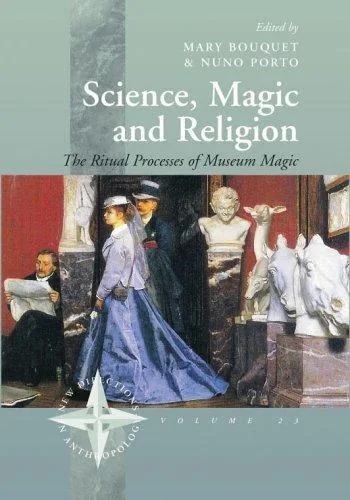
Science, magic, and religion


Celeste Moreau (Divination & Symbolism Reviewer) — Mary Bouquet's "Science, Magic, and Religion" is a revelatory text for anyone drawn to the esoteric underpinnings of human endeavor. Bouquet masterfully bridges the chasm between empirical study and mystical practice, demonstrating how scientific institutions and cultural heritage sites can become sites of potent ritual. Her insightful analysis of protective rites and symbolic preservation offers a unique lens through which to view our relationship with knowledge and power. This work is essential for scholars of comparative religion, practitioners of emergent magical traditions, and seekers of hidden wisdom who wish to understand the sacred dimensions of the material world.
📝 Description
Delve into the liminal spaces where scientific discovery, ancient magic, and sacred religion converge in Mary Bouquet's profound exploration, "Science, Magic, and Religion." This illuminating work unearths the hidden currents that transform seemingly mundane locales, such as the hallowed halls of museums, into potent ritual sites. Drawing inspiration from the enigmatic atmosphere of Umberto Eco's "Foucault's Pendulum," Bouquet masterfully reveals how objects of scientific marvel and cultural heritage become charged with esoteric significance, echoing forgotten rites and ceremonies. Uncover the symbolic language embedded within protective rituals and the preservation of cultural artifacts, understanding them not merely as historical records but as conduits for potent energies. This book is a siren call to those who seek to perceive the unseen architecture of reality, the sacred woven into the secular, and the enduring power of ritual in shaping our perception and experience of the world. It is an invitation to a deeper understanding of the interconnectedness of knowledge, belief, and practice.
✍️ Author
💡 Why Read This Book?
Embark on a journey beyond the veil of ordinary perception. This book unveils the hidden ritualistic potential within scientific institutions and cultural repositories, revealing how objects of study can become focal points for ancient energies. Ideal for seekers of esoteric knowledge, scholars of occult history, and practitioners interested in the sacredness of everyday spaces. Discover a new way to see the world, imbued with magic and meaning.
⭐ Reader Reviews
Honest opinions from readers who have explored this book.
❓ Frequently Asked Questions
What is the central premise of 'Science, Magic, and Religion'?
The book explores how places of scientific discovery and cultural preservation, like museums, can be transformed into ritualistic spaces charged with symbolic and esoteric meaning, echoing ancient practices and beliefs.
How does Umberto Eco's 'Foucault's Pendulum' influence this work?
The novel's depiction of hidden knowledge and the ritualization of secular spaces serves as a direct inspiration, highlighting how such environments can become focal points for esoteric exploration and understanding.
What types of rituals are discussed in the book?
The book examines various forms of ritual, including those related to the protection of cultural property and the ceremonies that imbue objects and places with sacred significance.
Who is the intended audience for this book?
This work is intended for scholars of esoteric studies, religion, and cultural history, as well as practitioners of magic and ritual, and general readers interested in the intersection of science, magic, and spirituality.
Does the book offer practical applications of ritual?
While primarily an analytical and philosophical exploration, the book provides a framework for understanding the principles behind ritual and symbolic transformation, which can inform practical application.
🔮 Key Themes & Symbolism
The Ritualization of Secular Spaces
This theme delves into the fascinating process by which seemingly ordinary locations, particularly those dedicated to scientific study or cultural preservation, are imbued with potent ritualistic energies. Mary Bouquet argues that the intention of safeguarding, cataloging, and displaying artifacts or scientific instruments can inadvertently create environments conducive to esoteric practices. The structured order of a museum, the meticulous preservation of relics, and the collective attention focused on these objects can mirror the focused intent required for ceremonial acts, transforming exhibits into altars and laboratories into sacred groves.
Symbolism in Protection and Preservation
Bouquet explores the deep symbolic currents running through the acts of protecting and preserving cultural property. These actions are not merely logistical but are often rooted in ancient beliefs about safeguarding against decay, malevolent forces, or loss of sacred essence. The methods employed, from elaborate display cases to arcane security measures, can be interpreted as modern manifestations of protective wards and talismans. The book examines how the very act of valuing and safeguarding an object bestows upon it a spiritual significance, connecting it to the collective consciousness and past rituals.
The Esoteric Interplay of Science, Magic, and Religion
This core theme investigates the often-overlooked connections between these three pillars of human understanding. Bouquet posits that science, magic, and religion are not mutually exclusive but rather different facets of humanity's quest to comprehend and influence the cosmos. Scientific inquiry can uncover underlying patterns that magic seeks to manipulate, while religion provides a framework for meaning and reverence. The book demonstrates how this interplay is visible in the ritualistic transformation of scientific and cultural sites, revealing a unified search for knowledge and power across diverse disciplines.
💬 Memorable Quotes
“Where science cataloged, magic invoked.”
— This concise statement highlights the book's central thesis: the potential for ritual and esoteric practice to exist and even thrive within environments dedicated to empirical study and preservation.
“The museum, a temple of forgotten rites.”
— This evocative phrase suggests that seemingly secular collections can become sacred spaces, echoing ancient ceremonies and holding a hidden, spiritual significance for those who can perceive it.
“Objects guarded, spirits awakened.”
— This quote points to the dual nature of preservation: the physical protection of artifacts and the potential for such acts to stir dormant energies or spiritual presences associated with the objects.
“Beneath the glass, a ritual unfolds.”
— This implies that the act of display itself, when viewed through an esoteric lens, can be seen as a form of ritual performance, drawing viewers into a symbolic engagement with the exhibited items.
“Knowledge preserved, power transmuted.”
— This suggests that the careful curation of information and artifacts can lead to a transformation of understanding and, potentially, a channeling or amplification of inherent energies.
🌙 Esoteric Significance
Tradition
This work draws implicitly from a broad spectrum of esoteric traditions, including hermeticism, alchemy, and ritual magic, by exploring the symbolic transformation of material objects and spaces. It aligns with traditions that view the universe as imbued with hidden forces and correspondences, where the mundane can be elevated to the sacred through focused intent and symbolic action. The emphasis on ritual as a means of accessing deeper realities connects to practices across various mystical paths, suggesting a universal language of spiritual engagement.
Symbolism
Key symbols explored include the museum artifact as a relic, the exhibition space as a temple, and the act of preservation as a form of warding. The transformation of scientific instruments into objects of ritual power, and the inherent symbolism in protective ceremonies for cultural property, are central. Bouquet dissects how the order, classification, and display within these institutions mirror the structured intent found in alchemical processes and magical workings, revealing a rich tapestry of hidden meanings.
Modern Relevance
In an age saturated with information and often disconnected from tangible experience, 'Science, Magic, and Religion' offers a vital re-enchantment of the world. It provides a framework for understanding how we imbue objects and spaces with meaning, and how these acts can be consciously directed for personal or collective transformation. The book's insights are relevant for contemporary practitioners seeking to integrate their understanding of the material world with their spiritual practices, and for scholars examining the enduring human need for ritual and sacredness in secular contexts.
👥 Who Should Read This Book
This book is a treasure for the discerning reader. **Beginners** will find an accessible yet profound introduction to the esoteric dimensions of everyday life, demystifying the sacred within the secular. **Scholars** of comparative religion, cultural studies, and the history of magic will discover a unique theoretical framework for analyzing ritualistic behavior in unexpected settings. **Seekers** of hidden knowledge will be captivated by the exploration of symbolism and transformation, finding new perspectives on their own spiritual journeys. **Practitioners** of magic and ritual will gain a deeper appreciation for the power inherent in objects and spaces, and how intention can redefine their significance.
📜 Historical Context
Published in an era increasingly fascinated by the intersections of knowledge and belief, 'Science, Magic, and Religion' emerges from a fertile ground of post-modern thought that questioned established dichotomies. The late 20th and early 21st centuries saw a resurgence of interest in esoteric traditions, comparative mythology, and the psychology of belief, often influenced by thinkers like Jung and, as the original notes suggest, Eco himself. This period was marked by a desire to find deeper meaning and interconnectedness in a world often perceived as fragmented. Bouquet's work resonates with this cultural milieu, offering a sophisticated perspective that bridges the perceived gap between the rational and the mystical, the academic and the arcane.
📔 Journal Prompts
Consider a place you frequent (e.g., your workplace, a local park) and identify elements that could be interpreted as ritualistic or imbued with symbolic power. How might you consciously engage with these elements?
Reflect on an object you deeply value. What protective rituals, conscious or unconscious, do you employ to care for it? What deeper meaning does its preservation hold for you?
How do you perceive the relationship between scientific discovery and spiritual understanding in your own life? Can they coexist, or are they in conflict?
Imagine you are curating an exhibition of objects that represent your personal spiritual journey. What would you include, and how would you arrange them to convey a specific ritualistic message?
In what ways do modern societal rituals (e.g., attending concerts, graduation ceremonies) echo ancient religious or magical practices? Explore the shared elements of intent, symbolism, and community.
🗂️ Glossary
Esoteric
Relating to or accessible only by a small number of people with a specialized knowledge or interest; intended for or likely to be understood by only a small number of people with a specialized knowledge or interest.
Ritual
The established form of a ceremony; a set of actions performed according to a prescribed order, often with symbolic meaning, used to achieve a desired spiritual or psychological effect.
Symbolism
The use of symbols to represent ideas or qualities; the study or interpretation of symbols and their meanings.
Hermeticism
A religious, philosophical, and esoteric tradition based primarily upon the writings attributed to Hermes Trismegistus. It posits that divine knowledge was revealed to him by the god Thoth.
Cultural Property
Objects and places of historical, artistic, or scientific significance that are preserved and protected for their cultural value and heritage.