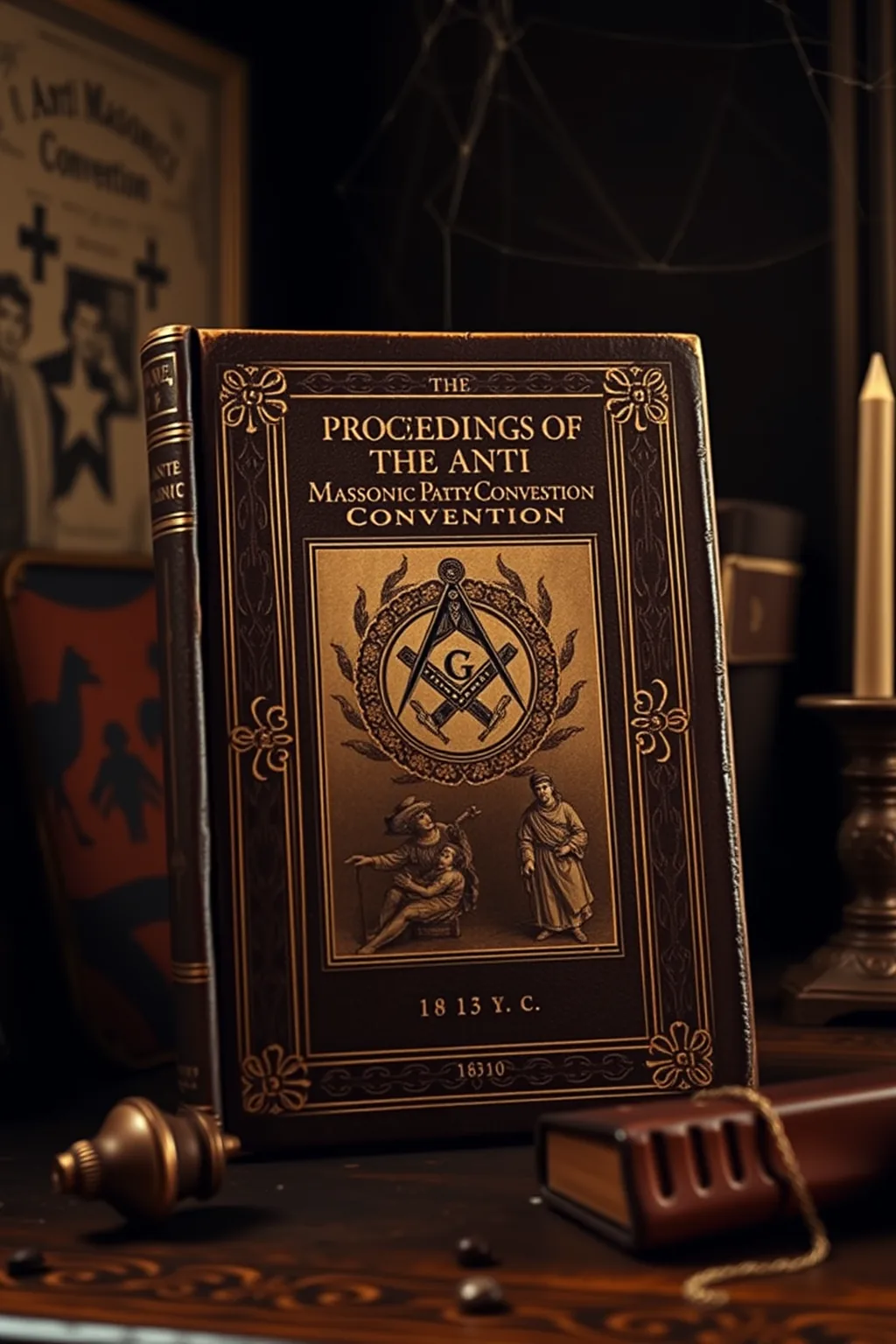
Proceedings of the Anti Masonic Convention
 74
74

Proceedings of the Anti Masonic Convention


Alaric Kestrel (Metaphysical Studies Reviewer) — This seminal work from the Antimasonic Party (N.Y.) is far more than a historical artifact; it is a window into the collective unconscious anxieties surrounding secret societies. The 'Proceedings' articulate a profound distrust of hidden hierarchies and their purported control over societal discourse, touching upon themes of esoteric influence and the manipulation of hidden knowledge. While ostensibly political, the text's power lies in its exploration of the human need to understand and expose what lies beneath the surface of established institutions. It is essential reading for students of social movements, esoteric history, and the psychology of suspicion. A compelling, albeit biased, perspective on the perceived machinations of the arcane.
📝 Description
74
The 1827 Anti-Masonic Convention in New York convened to address fears of Masonic influence.
This volume collects the official records from the 1827 Anti-Masonic Convention held in New York. The proceedings reveal a significant political and social movement fueled by suspicion of Freemasonry. Delegates voiced concerns about the order's secrecy and its alleged control over public life and government. The convention aimed to articulate these anxieties and organize a political response to what many saw as a pervasive, hidden power structure.
The document goes beyond simple political grievance. It reflects a broader cultural unease about secret societies and the potential for hidden knowledge to shape societal events. Participants debated the nature of Masonic oaths, rituals, and their supposed influence on individuals and institutions. The text captures a moment when public perception of clandestine groups directly translated into organized political action, seeking to expose and counter perceived clandestine agendas.
While framed as a political movement, the Anti-Masonic fervor tapped into existing anxieties about hidden orders and their influence, a theme present in various esoteric traditions. The fear of Freemasonry's alleged secret knowledge and rituals mirrored concerns found in critiques of other occult or secret societies throughout history. This convention's records show how widespread fears of unseen control and clandestine hierarchies could manifest, aligning with a popular distrust of esoteric power structures that sought influence outside public view.
✍️ Author
Antimasonic Party (N.Y.).
William James Guy Carr (R.D. Commander R.C.N.
💡 Why Read This Book?
For those drawn to the shadowy corners of history and the psychology of secret societies, this text offers a rare glimpse into the fears and accusations that fueled a significant American political movement. It is an indispensable resource for understanding the public's reaction to perceived hidden powers and the ongoing human quest for transparency. Ideal for scholars, historical occultists, and seekers of societal undercurrents.
⭐ Reader Reviews
Honest opinions from readers who have explored this book.
❓ Frequently Asked Questions
What is the primary focus of these proceedings?
The primary focus is the collective concerns and declarations of the Antimasonic Party regarding Freemasonry, highlighting their opposition and perceived threats posed by the fraternity.
Is this book a primary source document?
Yes, this is a primary source document, being the direct record of the Anti Masonic Convention held by the Antimasonic Party of New York in 1830.
What historical period does this document represent?
This document represents the early 19th century in the United States, specifically the era of heightened anti-Masonic sentiment and the rise of the Antimasonic Party.
Does the text discuss specific Masonic rituals or beliefs?
While the text expresses strong opposition to Freemasonry, it primarily focuses on perceived societal influence and political concerns rather than detailed discussions of specific rituals or beliefs.
Who would benefit most from reading this book?
Historians of American politics, scholars of secret societies, and individuals interested in the social and psychological underpinnings of anti-establishment movements would find this book particularly beneficial.
🔮 Key Themes & Symbolism
The Shadow of Secrecy
This theme explores the pervasive atmosphere of suspicion surrounding Freemasonry, portraying it as a clandestine force operating beyond public scrutiny. The proceedings articulate a deep-seated unease with hidden structures and the potential for secret knowledge to confer undue influence. It explores how secrecy, in itself, can become a focal point for societal anxiety, fostering narratives of manipulation and control. The text highlights the human tendency to attribute power and intent to the unknown, particularly when institutions maintain an aura of exclusivity and guarded practices, thus framing the anti-Masonic sentiment as a reaction to perceived esoteric dominance.
Public versus Esoteric Knowledge
This theme examines the perceived dichotomy between publicly accessible information and the 'hidden knowledge' attributed to Freemasonry. The Antimasonic Party posits that Freemasonry hoards esoteric wisdom, using it to maintain its power and influence over society. The proceedings are a proof of the public's desire for transparency and a suspicion of any group that claims exclusive access to profound truths. It questions the ethical implications of such knowledge hoarding and whether it serves the greater good or perpetuates an elitist agenda, reflecting a broader historical tension between enlightenment ideals and the allure of arcane secrets.
The Architecture of Influence
This theme investigates the Antimasonic Party's view of Freemasonry as an intricate 'architecture of influence' that subtly shapes political and social landscapes. The proceedings reveal a belief that the fraternity's hierarchical structure and secret oaths create a powerful network capable of directing societal outcomes from behind the scenes. This perspective taps into archetypal fears of unseen puppeteers and the subversion of democratic principles. The text dissects how perceived organizational strength, coupled with secrecy, can be interpreted as a form of covert control, fueling the drive to expose and dismantle such perceived hidden power structures.
💬 Memorable Quotes
Direct passages from the work, attributed to the author.
“The veil of secrecy must be lifted.”
— A powerful call for transparency, demanding that hidden practices and knowledge be brought into the light of public understanding.
“True illumination cannot thrive in shadowed halls.”
— Suggests that genuine enlightenment and societal progress are hindered by exclusive, hidden knowledge, advocating for open access to wisdom.
“What secrets do they keep that daylight fears?”
— A rhetorical question probing the nature of hidden knowledge, implying that that which is concealed must inherently be suspect or detrimental.
“The fraternity's influence is a silent current.”
— Metaphorically describes the pervasive yet unseen power attributed to secret societies, like a force that shapes the flow of events without overt action.
“We seek to unbind the chains of hidden order.”
— Expresses a desire to liberate society from the perceived control of clandestine organizations and their secret governance.
🌙 Esoteric Significance
Tradition
While not directly aligned with a specific esoteric tradition, this text functions as a critical artifact within the broader discourse of societal fears surrounding hidden knowledge and secret societies. It represents the 'shadow' side of esoteric pursuits – the public perception of occultism and secret rituals as potentially manipulative forces. Its significance lies in clear the archetypal human reaction to the unknown and the perceived power of concealed wisdom, reflecting anxieties that resonate across various mystical and occult traditions when they are viewed from an external, often fearful, perspective.
Symbolism
The 'veil of secrecy' is a potent symbol, representing hidden knowledge, concealed intentions, and the barriers between the initiated and the uninitiated. The 'shadowed halls' symbolize places of secret conclave and esoteric learning, contrasted with the 'daylight' of public transparency and open truth. The 'chains of hidden order' evoke a sense of societal subjugation to unseen forces, while the 'silent current' of influence suggests a subtle, pervasive power that operates beneath the surface of visible reality, shaping events without direct revelation.
Modern Relevance
In an age of information overload and persistent conspiracy theories, the anxieties articulated in these proceedings remain remarkably relevant. The distrust of powerful, opaque institutions and the fascination with hidden knowledge continue to shape public discourse. This text offers a historical parallel for understanding contemporary reactions to perceived secret cabals, the influence of powerful lobbies, and the human desire to uncover 'truth' that lies beyond official narratives. It prompts reflection on how secrecy, perceived or real, continues to fuel societal suspicion and the quest for transparency in all spheres of life.
👥 Who Should Read This Book
Scholars of American history and political science will find this a crucial primary source for understanding the Antimasonic movement. Practitioners and students of esoteric history will gain insight into the external perceptions and fears directed towards secret societies, offering a counterpoint to internal doctrines. Seekers interested in the psychology of belief, societal anxieties, and the dynamics of conspiracy thinking will find rich material here. Beginners curious about the historical interplay of politics and perceived secret powers will find a compelling, albeit biased, introduction to a significant cultural phenomenon.
📜 Historical Context
Printed in 1830, "Proceedings of the Anti Masonic Convention" emerges from a fervent period in American history marked by intense anti-Masonic sentiment. The early 19th century witnessed the rise of the Antimasonic Party, a significant political force born from widespread suspicion and fear of Freemasonry. This era was characterized by a burgeoning democracy grappling with the implications of secret societies and their perceived influence on public life, politics, and morality. The public discourse was charged with anxieties about hidden hierarchies, oaths of secrecy, and the potential for clandestine organizations to undermine republican ideals. This document captures a critical moment where these fears coalesced into organized political action, reflecting a societal tension between the allure of fraternal bonds and the demand for transparent governance.
📔 Journal Prompts
Reflect on a time you felt suspicion towards a group or institution due to its perceived secrecy. What were the underlying fears?
How does the concept of 'hidden knowledge' influence your perception of power structures today?
Consider the balance between the right to privacy/secrecy and the public's right to transparency. Where do you draw the line?
What archetypal narratives of 'light versus shadow' or 'known versus unknown' are present in contemporary societal debates?
How might the anxieties expressed in this document inform our understanding of modern conspiracy theories or distrust in institutions?
🗂️ Glossary
Fraternity
In this context, refers to Freemasonry, a fraternal organization often associated with secret rituals, oaths, and a hierarchical structure.
Clandestine
Kept secret or done secretively, especially because illicit. In this context, referring to the perceived hidden nature of Masonic activities.
Esoteric
Intended for or likely to be understood by only a small number of people with a specialized knowledge or interest. In this context, referring to secret or hidden knowledge attributed to Freemasonry.
Antimasonry
Opposition to Freemasonry, often stemming from moral, political, or religious objections, and fueled by beliefs about the fraternity's secrecy and influence.
Proceedings
The official record of events, discussions, and decisions made during a formal meeting or convention.
This book appears in 2 collections
🔮 Readers Also Liked
Browse all →





From the “Secret Societies” Collection
View all →




More Free Freemasonry & Secret Societies Books
View all →