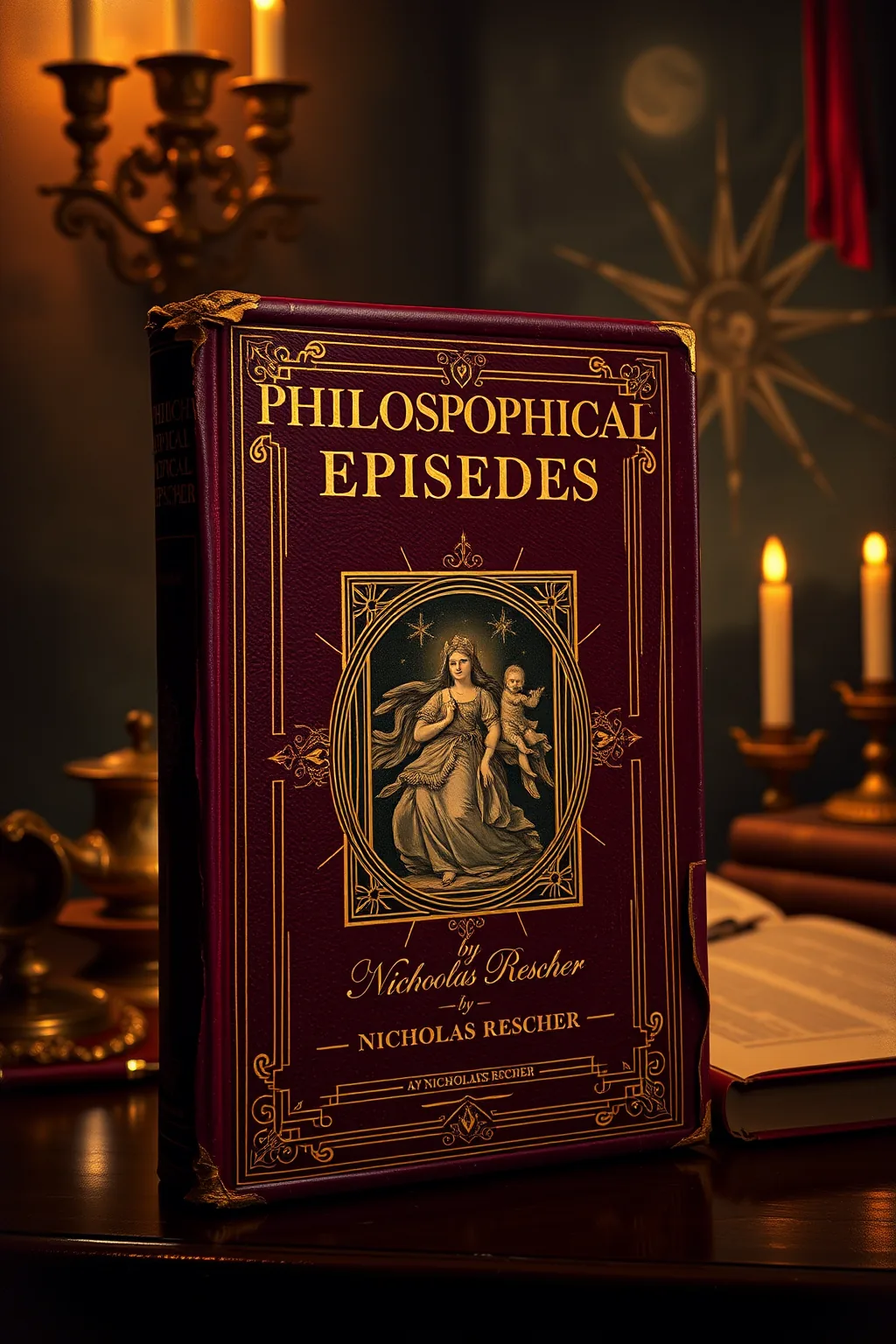
Philosophical Episodes
 61
61

Philosophical Episodes



Review by Evander Ashcroft (Alchemy & Hermeticism Editor) — 'Philosophical Episodes' by Nicholas Rescher is a masterful blend of modern philosophy and ancient esoteric traditions. Rescher's ability to integrate Neoplatonic principles with contemporary thought is nothing short of brilliant. This book is a must-read for anyone interested in the deeper, more mystical aspects of philosophy. The esoteric insights are particularly compelling, offering readers a glimpse into the hidden knowledge that underpins our understanding of the universe. Rescher's writing style is both accessible and profound, making it an excellent resource for both beginners and seasoned scholars.
📝 Description
61
Nicholas Rescher's 1999 'Philosophical Episodes' examines the connections between Neoplatonism and modern philosophy.
Published in 1999, Nicholas Rescher's 'Philosophical Episodes' engages with modern philosophy and metaphysics. The book attempts to link ancient Neoplatonic ideas with contemporary philosophical discussions. Rescher's writing style aims to foster contemplation, guiding readers through symbolic meanings and less common philosophical concepts. It is intended for individuals interested in philosophy, particularly those who seek out less conventional or hidden aspects of thought. The work presents a combination of analytical philosophy and what might be termed spiritual or mystical insights. It covers a range of philosophical moments that influence how we perceive the universe and our position within it. The book is for those drawn to the deeper questions of existence.
While not overtly occult, 'Philosophical Episodes' draws from Neoplatonic traditions, which have long been a source for esoteric thought. These traditions, particularly as interpreted by figures like Plotinus, emphasize a hierarchical structure of reality and the possibility of mystical union. Rescher’s work, by connecting these ancient streams to modern philosophical debates, opens a space for considering philosophical ideas that go beyond purely empirical or logical analysis. It invites a reading that looks for underlying patterns and correspondences, a hallmark of many esoteric systems, within the framework of academic philosophy.
💡 Why Read This Book?
Read 'Philosophical Episodes' to uncover the mystical underpinnings of modern philosophy. Ideal for seekers of hidden knowledge, scholars of metaphysics, and practitioners of the occult, this book offers a unique perspective on the intersection of ancient wisdom and contemporary thought. Discover the esoteric insights that can transform your understanding of the cosmos and your place within it.
⭐ Reader Reviews
Honest opinions from readers who have explored this book.
❓ Frequently Asked Questions
What is the primary focus of 'Philosophical Episodes'?
The book explores the intersection of modern philosophy, metaphysics, and Neoplatonic traditions, offering esoteric insights into the nature of existence.
Who is the intended audience for this book?
This book is ideal for seekers of hidden knowledge, scholars of the esoteric, and practitioners of the occult.
What makes 'Philosophical Episodes' unique?
Its unique blend of intellectual rigor and spiritual depth, along with its integration of ancient wisdom with contemporary thought.
Are there any key symbols discussed in the book?
Yes, the book delves into various symbols and their esoteric meanings, providing a rich tapestry of hidden knowledge.
How does this book contribute to the field of metaphysics?
It offers a fresh perspective on metaphysical questions by drawing on ancient Neoplatonic principles and modern philosophical thought.
🔮 Key Themes & Symbolism
Neoplatonic Wisdom
Rescher integrates ancient Neoplatonic principles with modern philosophy, offering a unique perspective on the nature of reality and existence. This theme explores the mystical underpinnings of Neoplatonism, revealing the hidden knowledge that has been passed down through the ages.
Esoteric Insights
The book is rich with esoteric insights that challenge conventional wisdom and offer a deeper understanding of the cosmos. Rescher's exploration of hidden knowledge provides readers with a new lens through which to view the world.
Symbolism and Mystery
Rescher's use of symbolism is a key theme, as he combines ancient symbols into his philosophical discourse. This theme invites readers to uncover the mysteries hidden within these symbols, revealing layers of meaning that can transform their understanding of existence.
💬 Memorable Quotes
Direct passages from the work, attributed to the author.
“Symbolism is the language of the soul, speaking in whispers and hints that only the attentive ear can hear.”
— Rescher's emphasis on the power of symbolism in revealing hidden truths.
“Neoplatonic wisdom offers a map to the hidden domains of the spirit, guiding the seeker on a path of enlightenment.”
— Rescher's integration of ancient wisdom with modern thought, providing a roadmap for spiritual seekers.
💡 Key Ideas
Editorial paraphrase of the work's core concepts — not direct quotes.
The true philosopher seeks not just knowledge, but the hidden wisdom that lies beneath the surface of reality.
This quote underscores Rescher's belief in the importance of esoteric insights in philosophical inquiry.
In the depths of contemplation, the boundaries between the self and the cosmos dissolve.
This passage highlights the mystical experience of unity with the universe that Rescher explores.
The journey of the philosopher is a journey into the unknown, where mysteries await discovery.
This quote captures the spirit of exploration and discovery that pervades the book.
🌙 Esoteric Significance
Tradition
This book belongs to the Hermetic tradition, which seeks to uncover the hidden knowledge that underpins the universe. It draws on Neoplatonic principles and integrates them with modern philosophical thought, offering a unique perspective on the nature of reality.
Symbolism
Key symbols in the book include the concept of the 'One' and the 'Many,' the idea of the soul's ascent to the divine, and the use of allegory to reveal hidden truths. These symbols are rich with esoteric meaning and invite readers to delve deeper into the mysteries they represent.
Modern Relevance
Today, where the search for meaning and spiritual fulfillment is more important than ever, 'Philosophical Episodes' offers a roadmap for seekers and practitioners. Modern practitioners of the occult and esoteric traditions find in this book a valuable resource for understanding the deeper dimensions of existence and the cosmos.
👥 Who Should Read This Book
Beginners interested in the esoteric will find 'Philosophical Episodes' an accessible introduction to the mysteries of existence. Scholars of metaphysics and Neoplatonic philosophy will appreciate the book's integration of ancient wisdom with contemporary thought. Spiritual seekers will be drawn to the book's exploration of hidden knowledge and the search for enlightenment. Practitioners of the occult will find valuable insights into the symbols and rituals that underpin their practices.
📜 Historical Context
Written in the late 20th century, 'Philosophical Episodes' reflects a time of intellectual ferment and spiritual renewal. Rescher's work is a response to the growing interest in esoteric traditions and the search for hidden knowledge. The book's influence can be seen in the resurgence of interest in Neoplatonic philosophy and the integration of ancient wisdom with contemporary thought. It has inspired a new generation of scholars and seekers to explore the mysteries of existence and the cosmos.
📔 Journal Prompts
How do the esoteric insights in 'Philosophical Episodes' challenge your current understanding of the cosmos?
What symbols in the book resonate with you the most, and why?
How does Rescher's integration of Neoplatonic principles with modern philosophy influence your spiritual journey?
In what ways does the book's exploration of hidden knowledge inspire your search for meaning and enlightenment?
How can you apply the philosophical episodes discussed in the book to your daily life and practices?
🗂️ Glossary
Neoplatonism
A philosophical tradition that builds on the ideas of Plato, emphasizing the One, the soul's ascent to the divine, and the search for hidden knowledge.
Esoteric
Relating to knowledge that is hidden or mysterious, often requiring special initiation or insight to understand.
Hermetic
Pertaining to the teachings of Hermes Trismegistus, which emphasize the search for hidden wisdom and the mysteries of the universe.
Metaphysics
The branch of philosophy that explores the fundamental nature of reality, existence, and the universe.
Symbolism
The use of symbols to represent abstract ideas or hidden truths, often found in esoteric and mystical traditions.
This book appears in 2 collections
🔮 Readers Also Liked
Browse all →









From the “Neoplatonism” Collection
View all →







More Free Alchemy & Hermeticism Books
View all →