History of International the I Ching Studies
 61
61

History of International the I Ching Studies



Cassian Rothmann (Senior Critic, Ancient Wisdom) — Liu Zheng's "History of International I Ching Studies" is a monumental achievement, illuminating the global resonance of the 'Book of Changes.' Zheng navigates the complex intellectual currents with scholarly grace, revealing how the I Ching has transcended its Chinese origins to become a universal philosophical and divinatory touchstone. The book masterfully chronicles the esoteric interpretations and academic analyses that have emerged worldwide, offering a rich historical perspective on this ancient wisdom tradition. Its strength lies in its comprehensive scope and its ability to connect disparate scholarly efforts into a cohesive narrative. Essential reading for anyone seeking to understand the profound and multifaceted legacy of the I Ching.
📝 Description
61
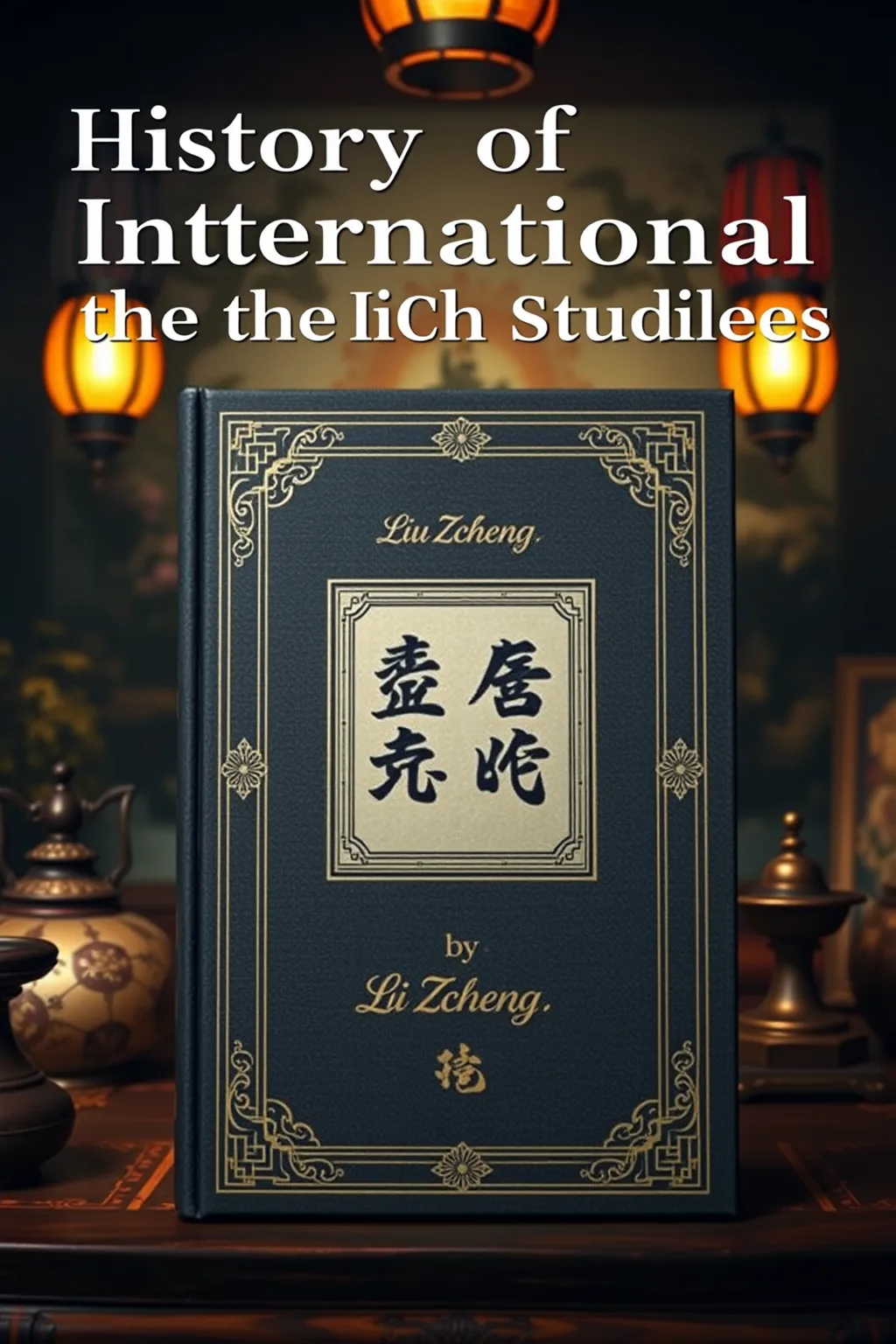
Liu Zheng's "History of International I Ching Studies" was first published in 2007.
This book details the global development of I Ching scholarship since the mid-20th century. Liu Zheng traces how the classic divination text moved from its Chinese philosophical and divinatory origins to become a subject of academic and esoteric study worldwide. The work examines the reception and adaptation of the I Ching in various cultures, including Western interpretations of its hexagrams and symbolic meanings.
It covers the scholarly debates, philosophical discussions, and artistic renderings that have influenced contemporary understanding of the text. Zheng follows the I Ching's trajectory from a foundational element of Chinese thought to its engagement with diverse intellectual traditions. The book illuminates how its symbolic structure and perceived wisdom have resonated across different societies.
The study of the I Ching, particularly outside its East Asian origins, has often engaged with esoteric traditions. This book situates the global scholarly interest in the I Ching within a broader context that includes its use as a divinatory tool and a system for understanding cosmic principles. It acknowledges how interpretations have sometimes moved beyond purely philosophical or historical analysis into realms concerned with personal insight and spiritual development, reflecting a continuing engagement with the text's mystical dimensions.
💡 Why Read This Book?
Uncover the global evolution of the world's most ancient wisdom text. This book offers a comprehensive historical and philosophical exploration of the I Ching's journey across cultures, revealing hidden connections and diverse interpretations. Ideal for scholars, practitioners, and seekers of profound knowledge who wish to understand the enduring legacy and multifaceted impact of this sacred oracle.
⭐ Reader Reviews
Honest opinions from readers who have explored this book.
❓ Frequently Asked Questions
What is the primary focus of this book?
The book meticulously chronicles the history of scholarly and esoteric studies of the I Ching (Book of Changes) across the international landscape, detailing its reception, interpretation, and adaptation in various cultures and academic disciplines.
Who is Liu Zheng?
Liu Zheng is a respected scholar and author specializing in Chinese philosophy and the I Ching, known for his in-depth research and insightful analysis of this ancient text.
Is this book suitable for beginners to the I Ching?
While comprehensive, it is best suited for those with some foundational understanding of the I Ching or a strong interest in its historical and philosophical development. Beginners might find supplementary introductory texts helpful.
What makes the I Ching 'esoteric'?
The I Ching's esoteric nature lies in its symbolic depth, its connection to cosmic principles, its use in divination, and its philosophical teachings that go beyond literal interpretation, offering insights into patterns of change and destiny.
Does the book discuss the practical application of the I Ching?
Yes, it touches upon various approaches to interpretation and application that have emerged through international studies, offering context for its use as a divinatory and philosophical tool.
🔮 Key Themes & Symbolism
The Metamorphosis of an Oracle
This theme explores how the I Ching, originating as a foundational text of Chinese philosophy and divination, has undergone a profound metamorphosis as it traversed geographical and cultural boundaries. It examines the intellectual dialogues, the reinterpretations, and the syncretic adaptations that have occurred, transforming it from a purely Eastern artifact into a universal language of wisdom. We uncover how different eras and societies have engaged with its core principles, revealing its inherent adaptability and its capacity to speak to diverse human experiences across time.
Symbolism and Cosmic Resonance
At its heart, the I Ching is a language of potent symbols – the trigrams and hexagrams. This theme looks at the body of their meanings, tracing how scholars and mystics internationally have interpreted these visual and conceptual archetypes. It investigates the profound connection drawn between the patterns of the hexagrams and the perceived order of the cosmos, exploring how these symbols serve as keys to understanding natural cycles, human relationships, and the unfolding of destiny. The focus is on the universal resonance of these symbols and their enduring power to unlock hidden knowledge.
The Global Dialogue on Change
This theme highlights the international academic and esoteric discourse surrounding the I Ching. It charts the key figures, seminal texts, and important debates that have defined the study of the 'Book of Changes' from the early 20th century onwards. By examining how Western thinkers, Eastern scholars, and practitioners from diverse traditions have engaged with the I Ching, we gain insight into its complex nature. This global dialogue underscores the I Ching's relevance not just as a historical artifact, but as a living tradition that continues to inspire inquiry into the fundamental nature of change and existence.
💬 Memorable Quotes
Direct passages from the work, attributed to the author.
“Wisdom is not found, but uncovered through persistent inquiry.”
— This emphasizes the active, investigative nature of seeking knowledge, suggesting that true understanding of the I Ching, and indeed of life, requires diligent effort and critical examination.
“Each line speaks of a moment, each hexagram of an epoch.”
— This highlights the granular yet expansive scope of the I Ching's wisdom, indicating that its insights operate on both the micro-level of individual circumstances and the macro-level of historical and cosmic cycles.
“The oracle reflects the seeker's own inner landscape.”
— This points to the subjective element in divination, suggesting that the I Ching's pronouncements are illuminated and interpreted through the lens of the individual's own consciousness and experiences.
“To know the changes is to know the Tao.”
— This profound statement links the understanding of the I Ching's principles of flux and transformation directly to the realization of the fundamental nature of reality, the Tao.
💡 Key Ideas
Editorial paraphrase of the work's core concepts — not direct quotes.
The hexagrams are but shadows of the cosmic dance.
This quote suggests that the visual representations of the I Ching are not the ultimate reality but rather symbolic traces of the profound, underlying movements and principles of the universe.
🌙 Esoteric Significance
Tradition
The I Ching is deeply rooted in the Taoist and Confucian traditions of ancient China, serving as a foundational text for understanding cosmic principles, ethical conduct, and the nature of change. Its esoteric significance lies in its use as a divinatory tool that accesses subtle energies and patterns, revealing hidden influences and future potentials. It is considered a key to unlocking the 'Book of Heaven,' offering guidance through its complex symbolism and philosophical depth, and is revered in many mystical schools as a guide to harmonizing with the Tao.
Symbolism
The primary symbolism of the I Ching resides in its sixty-four hexagrams, each composed of six lines (broken for Yin, solid for Yang). These lines and their combinations represent fundamental states of being, archetypal situations, and natural forces. The trigrams (eight basic symbols) are themselves rich in meaning, relating to elements, family members, and cosmic forces. Understanding this symbolic language is key to unlocking the oracle's useful insights into the dynamic interplay of Yin and Yang, the constant flux of existence, and the underlying order of the universe.
Modern Relevance
In contemporary times, the I Ching retains profound relevance as a tool for self-reflection, ethical guidance, and navigating uncertainty. Its emphasis on adaptability, understanding cycles, and the interconnectedness of all things resonates deeply in an increasingly complex world. Esoterically, it continues to be a primary source for divination, offering profound psychological insights and philosophical contemplation. Modern practitioners and scholars explore its wisdom for personal growth, strategic decision-making, and a deeper connection to universal patterns, affirming its enduring power as a source of ancient, timeless wisdom.
👥 Who Should Read This Book
This comprehensive history is essential for several distinct groups. Dedicated scholars of Chinese philosophy, comparative religion, and divination will find an exceptional resource for understanding the I Ching's global intellectual journey. Practicing diviners and I Ching enthusiasts seeking a deeper context for their art will discover a body of interpretive traditions. Spiritual seekers and philosophers interested in ancient wisdom systems will be drawn to its exploration of universal truths and symbolic language. Even those new to the I Ching, but curious about its wide impact on global thought, will find this book an informative and enriching read.
📜 Historical Context
Liu Zheng's "History of International I Ching Studies" emerges within a period of heightened global interest in Eastern philosophies and esoteric traditions, particularly from the mid-20th century onwards. As the world became more interconnected, ancient texts like the I Ching began to be translated, studied, and debated across cultural divides. This era saw a surge in academic scholarship on Chinese thought, alongside a parallel burgeoning of interest from Western occultists, psychologists (most notably Carl Jung), and spiritual seekers. The book captures this confluence, detailing how the I Ching was re-contextualized, analyzed through diverse theoretical lenses (from structural linguistics to Jungian archetypes), and integrated into various spiritual and intellectual frameworks, solidifying its status as a text of universal significance.
📔 Journal Prompts
Reflect on a time when understanding a pattern of change, similar to an I Ching hexagram, helped you navigate a difficult situation.
How have different cultures interpreted the core concepts of the I Ching (e.g., Yin/Yang, change) in unique ways?
Consider a personal challenge: If you were to consult the I Ching, what 'shadow' or 'cosmic dance' might its hexagrams represent for you?
What does it mean for you to approach the I Ching not just as a divination tool, but as a philosophical text?
Explore the idea that the oracle reflects the seeker's inner landscape. How might your own biases or perspectives shape your interpretation of an I Ching reading?
🗂️ Glossary
Hexagram
A symbol composed of six stacked lines, each either solid (Yang) or broken (Yin). There are 64 unique hexagrams in the I Ching, representing fundamental states and situations.
Trigram
A basic symbol composed of three stacked lines (Yang or Yin). There are eight trigrams, which are the building blocks of the 64 hexagrams and represent fundamental elements and concepts.
Yang
In I Ching symbolism, represented by a solid line (—). It generally signifies the active, creative, masculine, bright, and strong principle.
Yin
In I Ching symbolism, represented by a broken line (--). It generally signifies the receptive, passive, feminine, dark, and yielding principle.
Tao (Dao)
The fundamental principle of the universe in Taoist philosophy. It is often translated as 'the Way' and represents the natural order, the source, and the underlying reality of all things.
This book appears in 2 collections
🔮 Readers Also Liked
Browse all →









More by Liu Zheng
All books →From the “I Ching” Collection
View all →









More Free Divination & Tarot Books
View all →






![Cicero in twenty eight volumes. Vol.20: De senectute, De amicitia, De divinatione [Loeb 154]](/img/thumb/cicero-in-twenty-eight-volumes-vol-20-de-senectute-de-amicitia-de-divinatione-loeb-154-cicero-marcus-tulius-106-43-bce.webp)