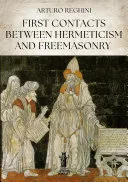
First Contacts Between Hermeticism and Freemasonry
 82
82

First Contacts Between Hermeticism and Freemasonry
Arturo Reghini's "First Contacts Between Hermeticism and Freemasonry" is a meticulously researched piece that avoids sensationalism, a refreshing characteristic in esoteric literature. Reghini, writing as a Pythagorean *Latomus*, demonstrates a profound understanding of both Hermetic philosophy and Masonic symbolism, particularly evident in his tracing of Pythagorean numerology's influence within Masonic degrees. The essay's strength lies in its scholarly rigor and its focus on the intellectual lineage connecting Renaissance Hermeticism to 20th-century Masonic thought, grounded in Reghini's own extensive scholarship. However, the text's density and its reliance on prior knowledge of both traditions can present a significant barrier to entry for newcomers. A more explicit elaboration on the "Primi contatti"—the specific historical moments or texts marking these initial engagements—would have enhanced its accessibility. Despite this, Reghini's work remains a vital, albeit specialized, contribution to understanding esoteric continuities.
📝 Description
82
Arturo Reghini's 1925 essay traces connections between Hermeticism and Freemasonry.
Arturo Reghini's "First Contacts Between Hermeticism and Freemasonry," first published in 1925 in *Era Nuova*, examines the connections between Hermetic philosophy and Freemasonry. Reghini, a mathematician and prominent Masonic figure, approached the subject from his deep knowledge of Pythagoreanism and esoteric symbolism. He focuses on the historical and philosophical links between these two Western esoteric traditions.
The essay avoids speculation, instead offering a scholarly analysis of the confluence of these thought streams. It is best suited for readers already familiar with esoteric terminology and historical context. Those seeking an introduction to the occult will find its dense, academic style challenging. Intellectual historians, students of early 20th-century occultism, and scholars of Masonic philosophy will find this work particularly valuable.
Published in 1925, this essay sits within a period of renewed interest in esoteric traditions. Reghini, a significant figure in Italian Freemasonry, engages with ideas prevalent during a time when thinkers like René Guénon were re-evaluating modern esoteric societies. The work specifically addresses the lineage connecting Renaissance Hermeticism, influenced by figures such as Marsilio Ficino, to the developing philosophical currents within Freemasonry.
💡 Why Read This Book?
• Understand the Pythagorean influence on Masonic symbolism, as Reghini details how numerical and geometric principles, central to Pythagoras's philosophy, were integrated into Masonic teachings. • Gain insight into the specific historical period of 1925, when esoteric thought was actively being re-examined and Reghini published this seminal work in *Era Nuova*. • Explore the concept of Hermetic correspondence, a core Hermetic principle, and how Reghini illustrates its presence and function within the symbolic language of Freemasonry.
⭐ Reader Reviews
Honest opinions from readers who have explored this book.
❓ Frequently Asked Questions
Who was Arturo Reghini and why is his perspective on Hermeticism and Freemasonry important?
Arturo Reghini (1878-1946) was a significant Italian Freemason, mathematician, and esotericist. His tombstone identifies him as a "Pythagoricus Latomusque Insignis." His dual expertise in mathematical philosophy and Masonic practice provides a unique lens through which to examine the historical and symbolic connections between Hermeticism and Freemasonry.
When was "First Contacts Between Hermeticism and Freemasonry" originally published?
The essay "Primi contatti tra Ermetismo e Massoneria" by Arturo Reghini was first published in 1925. This edition makes the work accessible to a contemporary audience interested in early 20th-century esoteric thought.
What is the primary focus of Reghini's essay?
The essay focuses on the historical and philosophical links between Hermeticism, a tradition rooted in ancient wisdom, and Freemasonry, the initiatory fraternity. Reghini explores how Hermetic principles and symbolism found expression and continuity within Masonic structures.
Is this book suitable for beginners in esoteric studies?
While valuable, the book is geared towards those with some familiarity with Hermeticism and Freemasonry. Reghini's academic style and use of specialized terminology require a foundational understanding of esoteric concepts and historical context.
What is the significance of the 'Pythagorean' aspect mentioned in relation to Reghini?
Reghini's self-identification as a 'Pythagoricus' highlights his deep engagement with the philosophy of Pythagoras. This is crucial as his analysis often connects Masonic symbolism and Hermetic thought to Pythagorean principles of number, geometry, and cosmic harmony.
Where else did Arturo Reghini publish his work?
Besides this essay in *Era Nuova* (1925), Reghini was a prolific writer on esoteric subjects. His contributions appeared in various occult and Masonic journals throughout the early to mid-20th century, solidifying his reputation as a key intellectual in Western esotericism.
🔮 Key Themes & Symbolism
Hermetic-Masonic Symbiosis
This theme explores the intricate relationship between Hermetic philosophy and the symbolic language of Freemasonry. Reghini argues that foundational Hermetic concepts, such as the pursuit of gnosis and the principle of "as above, so below," are not merely parallel but actively integrated within Masonic rituals and teachings. The work examines how the Craft serves as a vehicle for transmitting esoteric knowledge, drawing parallels between the alchemical quest for transformation and the Masonic journey of self-improvement and spiritual realization.
Pythagorean Influence
Reghini, a self-proclaimed 'Pythagoricus,' emphasizes the lasting impact of Pythagorean thought on both Hermeticism and Freemasonry. This theme examines how numerical symbolism, geometric principles, and the concept of cosmic harmony, central to Pythagoras's philosophy, permeate the esoteric structures Reghini analyzes. The essay posits that an understanding of Pythagorean numerology is key to deciphering the deeper meanings embedded within Masonic degrees and Hermetic texts, linking them through a shared mathematical and philosophical cosmology.
20th Century Esoteric Discourse
The essay is situated within the context of early 20th-century esoteric intellectual currents. It reflects Reghini's engagement with contemporary movements and debates surrounding the nature of Western esotericism. By examining the historical "first contacts" between Hermeticism and Freemasonry, Reghini contributes to a scholarly discourse that sought to define and trace the lineage of initiatory traditions during a period of significant occult revival and reinterpretation.
Intellectual Lineage
This theme focuses on tracing the intellectual and philosophical lineage that connects ancient Hermetic wisdom to the development of Freemasonry. Reghini meticulously reconstructs the historical pathways through which these ideas likely flowed, highlighting figures and periods crucial to this transmission. The essay serves as a scholarly investigation into how esoteric knowledge systems evolve, adapt, and persist across centuries, emphasizing continuity over innovation.
💬 Memorable Quotes
Direct passages from the work, attributed to the author.
“The tombstone inscription: 'Pythagoricus Latomusque Insignis'.”
— This epitaph expresses Reghini's self-identity and the core focus of his work: a master Pythagorean philosopher ('Pythagoricus') and a Freemason ('Latomus'), signifying his expertise in bridging these seemingly disparate yet interconnected fields of esoteric thought.
“The essay was first published in the magazine Era Nuova in 1925.”
— This citation provides a concrete historical anchor, placing Reghini's influential analysis within the specific intellectual range of early 20th-century esoteric publications and movements in Italy.
“Interpretation: Reghini saw Hermeticism and Freemasonry as sharing fundamental principles of spiritual development.”
— This reflects Reghini's scholarly perspective, suggesting that the connections he explored were not superficial but rooted in shared philosophical underpinnings related to self-knowledge and the pursuit of higher truths.
“Interpretation: The work emphasizes the mathematical and geometric basis of esoteric symbolism.”
— This highlights a key analytical tool used by Reghini, particularly his Pythagorean perspective, demonstrating his belief that numerical and spatial relationships are integral to understanding the structure and meaning of Hermetic and Masonic traditions.
“Interpretation: Reghini's approach is scholarly, focusing on historical and philosophical analysis.”
— This points to the text's value as a serious academic study rather than a purely devotional or practical guide, underscoring its contribution to the critical understanding of Western esoteric history.
🌙 Esoteric Significance
Tradition
This work is firmly situated within the Western Esoteric Tradition, specifically focusing on the confluence of Hermeticism and Freemasonry. Reghini's approach aligns with traditions that seek to uncover the ancient roots and philosophical continuity of initiatory systems. It departs from purely devotional or religiously-bound esotericism by emphasizing intellectual rigor, historical analysis, and the symbolic language inherited from Hermetic philosophy and Pythagoreanism.
Symbolism
Key symbols explored include the Emerald Tablet, representing the core Hermetic principle of correspondence ("As above, so below"), and Pythagorean numbers and geometric figures, which Reghini links to Masonic symbolism. These symbols function not merely as decorative elements but as mnemonic devices and conceptual frameworks for understanding cosmic order, spiritual transformation, and the divine architect's design within both traditions.
Modern Relevance
Contemporary scholars and practitioners of Western Esotericism, particularly those engaged with Hermeticism, alchemy, and comparative Masonic studies, continue to draw upon Reghini's meticulous research. His work informs discussions on the philosophical integrity of esoteric traditions and their historical evolution, providing a scholarly foundation for understanding the enduring appeal of these ancient wisdom systems in the 21st century.
👥 Who Should Read This Book
• Students of comparative esoteric traditions: Those seeking to understand the specific historical and philosophical links between Hermeticism and Freemasonry will find Reghini's scholarly analysis invaluable. • Freemasons interested in philosophical depth: Masons who wish to explore the esoteric underpinnings and historical intellectual currents that shaped Masonic symbolism and ritual will gain significant insight. • Scholars of intellectual history: Researchers focusing on early 20th-century esoteric movements, occult philosophy, and the philosophical development of Western fraternal orders will find this essay a crucial primary source.
📜 Historical Context
Arturo Reghini's "First Contacts Between Hermeticism and Freemasonry" emerged in 1925, a period marked by intense intellectual activity within Western esoteric circles. The early 20th century saw a resurgence of interest in ancient traditions, alongside critical analyses of modern occult movements. Reghini, a prominent Italian Freemason and mathematician, was active during this era, a time when figures like René Guénon were dissecting the perceived deviations of contemporary esoteric societies from their original sources. This essay offers a specific examination of the philosophical currents linking Renaissance Hermeticism, a tradition revitalized by figures such as Marsilio Ficino in the 15th century, to the evolving range of Masonic thought. It provides a nuanced perspective on how these esoteric streams converged, moving beyond generalized histories to focus on specific intellectual and symbolic interplays. The work's reception within Masonic and esoteric scholarship highlights its importance in understanding the philosophical underpinnings of the Craft during a period of significant esoteric discourse.
📔 Journal Prompts
Arturo Reghini's self-identification as a 'Pythagoricus Latomusque Insignis': How does this dual identity shape his analysis of Hermeticism and Freemasonry?
The concept of 'Primi contatti': What specific historical or symbolic evidence does Reghini present to illustrate these initial intersections?
Reghini's interpretation of the Emerald Tablet's principle of correspondence: How does he connect this core Hermetic tenet to Masonic philosophy?
The role of mathematical and geometric principles in Reghini's work: Reflect on the significance of his Pythagorean perspective.
Consider the publication context of 1925 Era Nuova: How might the intellectual climate of that era have influenced Reghini's focus on historical esoteric lineages?
🗂️ Glossary
Hermeticism
A religious, philosophical, and esoteric tradition based primarily upon writings attributed to Hermes Trismegistus. It emphasizes divine wisdom, magic, alchemy, astrology, and the interconnectedness of the cosmos.
Freemasonry
A fraternal organization that traces its origins to the late 16th to early 17th centuries. It is known for its use of allegorical rituals and symbols derived from stonemasonry to impart moral and philosophical lessons.
Pythagoreanism
An ancient Greek philosophical and religious tradition attributed to Pythagoras of Samos. It emphasizes the importance of numbers, geometry, music, and cosmology, believing that the universe is fundamentally mathematical in nature.
Latomus
Latin for 'stone-cutter' or 'mason.' In the context of Freemasonry, it refers to a member of the Craft, often used in historical or symbolic contexts.
Era Nuova
An Italian periodical significant in the early 20th century for publishing articles on spiritualism, esotericism, and philosophy. Arturo Reghini's essay was first published here in 1925.
Gnosis
Greek for 'knowledge.' In esoteric contexts, it refers to a special kind of spiritual insight or intuitive knowledge, often considered essential for salvation or enlightenment.
Esotericism
A broad category of spiritual traditions characterized by their esoteric or 'inner' nature, meaning their teachings are meant only for a select group of adherents who have undergone specific initiations or training.