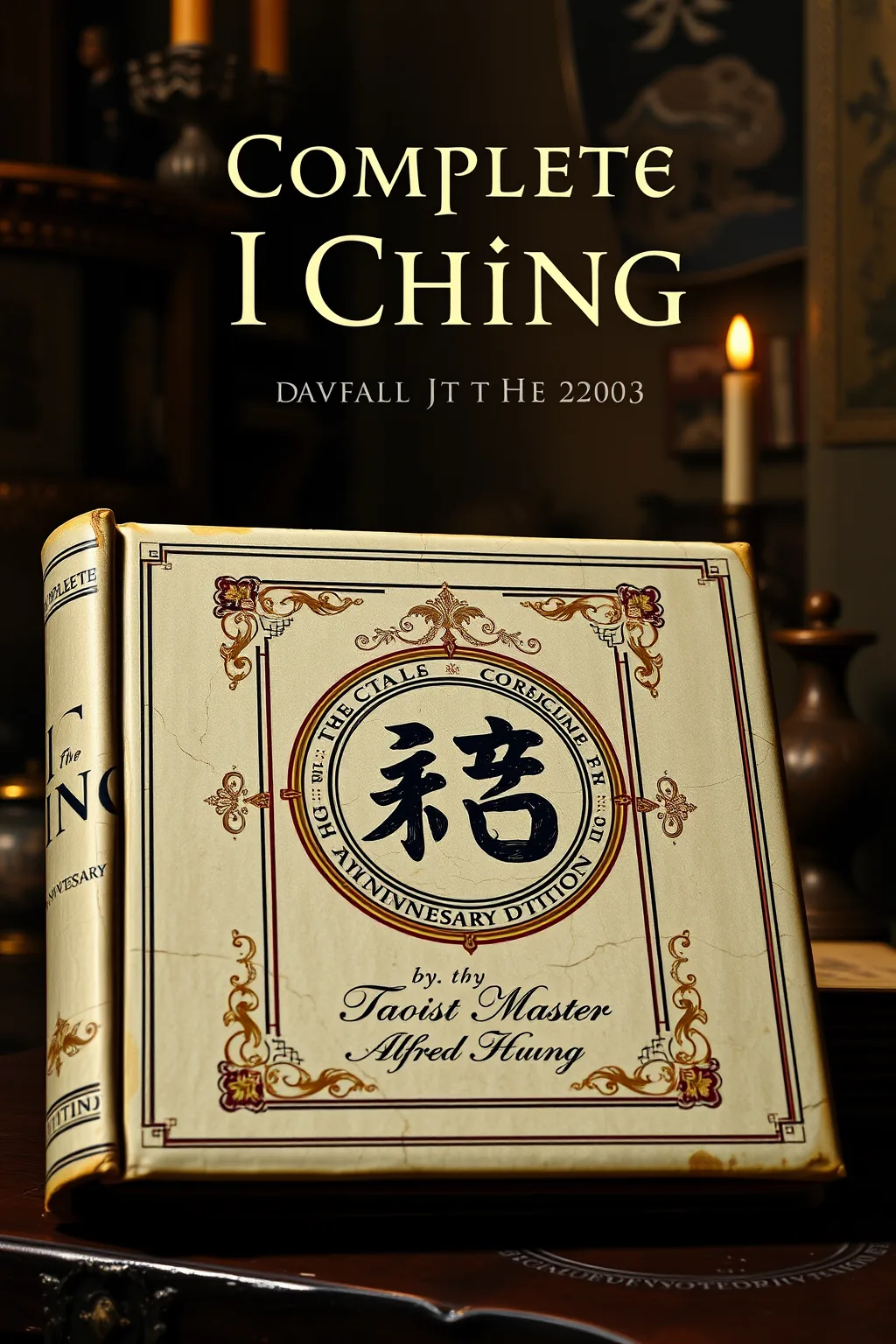
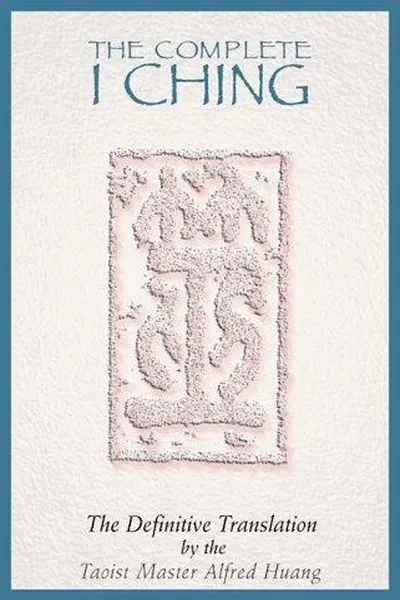
Complete I Ching -- 10th Anniversary Edition
 62
62

Complete I Ching -- 10th Anniversary Edition



Evander Ashcroft (Alchemy & Hermeticism Editor) — For those seeking to transcend superficial understanding, Alfred Huang's Complete I Ching is an indispensable artifact. This 10th Anniversary Edition deepens its allure, presenting the Book of Changes not as a simple fortune-telling device, but as a profound cosmological and philosophical text. Master Huang’s masterful rendering unlocks the layered meanings, revealing its potent connection to Taoist principles and the fundamental forces of the universe. Its clarity and depth make it an invaluable resource for serious students of esoteric traditions, offering practical guidance for personal transformation and the cultivation of inner balance. A cornerstone for any serious occult or philosophical library.
📝 Description
62
Alfred Huang's Complete I Ching translation was first published in 2013.
This 10th Anniversary Edition presents Alfred Huang's translation and commentary on the I Ching. Master Huang, a Taoist master, approached the text as more than a divination system. He saw it as a philosophical guide reflecting universal principles. His work aims to clarify the symbolism within the hexagrams, particularly the concepts of Yin and Yang and cyclical change.
The commentary focuses on the practical application of the I Ching's wisdom for understanding life's shifts. It connects the text's insights to the flow of the Tao. The goal is to help readers align themselves with natural patterns. This edition is intended for those interested in the deeper philosophical and spiritual dimensions of the Book of Changes.
The I Ching is one of the oldest Chinese philosophical and divinatory texts. Its roots are in ancient Taoist and Confucian thought. The text uses a system of hexagrams, formed by combining yin (broken) and yang (solid) lines, to represent states of change and offer guidance. Esoteric interpretations often focus on the I Ching as a map of cosmic processes and a tool for spiritual cultivation, revealing underlying patterns in both the natural world and human affairs.
💡 Why Read This Book?
This edition of the Complete I Ching is essential for anyone yearning to understand the universe's fundamental patterns. It offers a direct conduit to ancient, potent wisdom, revealing the interconnectedness of all phenomena through its rich symbolism. Ideal for seekers of self-knowledge, practitioners of Eastern philosophies, and scholars of esotericism, it provides profound insights into balance, change, and destiny, fostering wisdom and harmony.
⭐ Reader Reviews
Honest opinions from readers who have explored this book.
❓ Frequently Asked Questions
What is the I Ching?
The I Ching, or Book of Changes, is an ancient Chinese divination text and philosophical classic, believed to be the oldest of the Chinese classics. It uses a system of 64 hexagrams to offer guidance on decision-making and understanding the flow of cosmic energies.
Who was Taoist Master Alfred Huang?
Taoist Master Alfred Huang was a highly respected scholar and practitioner of Taoism, known for his profound understanding of the I Ching and his ability to translate its complex wisdom into accessible language for Western audiences.
What makes this edition special?
This 10th Anniversary Edition offers a definitive translation and commentary, enriched by Master Huang's deep esoteric knowledge. It aims to provide a more authentic and profound connection to the I Ching's mystical and philosophical dimensions.
Can I use the I Ching for everyday decisions?
Absolutely. The I Ching is designed to provide insight into the dynamics of any situation, offering guidance and perspective for navigating challenges and making informed decisions, both mundane and profound.
Is prior knowledge of Chinese philosophy required?
While beneficial, prior knowledge is not strictly required. Master Huang's accessible style and comprehensive explanations make this edition suitable for both seasoned practitioners and curious newcomers to the I Ching.
🔮 Key Themes & Symbolism
The Cosmic Dance of Yin and Yang
This theme explores the fundamental duality that underpins the I Ching's entire system: the interplay of Yin (passive, dark, feminine) and Yang (active, light, masculine). The hexagrams are visual representations of their myriad combinations and transformations, illustrating how these opposing yet complementary forces shape all phenomena in the universe. Understanding this dynamic is crucial for grasping the cyclical nature of change, the balance required for harmony, and the subtle energies that govern existence, offering a profound lens through which to view personal growth and universal processes.
Reading through the Currents of Change
The I Ching is intrinsically a book of change, emphasizing that nothing is static. This theme looks at the philosophy of impermanence and the art of adapting to life's inevitable shifts. It teaches how to recognize the opportune moment for action or stillness, fostering resilience and wisdom in the face of adversity or fortune. By understanding the underlying patterns of flux, readers are empowered to align themselves with the natural flow of the Tao, transforming challenges into opportunities for growth and spiritual evolution.
The Oracle of Inner Wisdom
Beyond mere prediction, the I Ching serves as a profound oracle of inner wisdom. This theme highlights its role as a mirror to the soul, reflecting the hidden dynamics of one's circumstances and inner state. Through careful contemplation of the hexagrams and their associated judgments, individuals are guided towards self-awareness, ethical conduct, and the cultivation of virtue. It encourages a dialogue with the subconscious and the universal mind, facilitating clarity, insight, and the discovery of one's true path amidst the complexities of life.
💬 Memorable Quotes
Direct passages from the work, attributed to the author.
“When you have attained self-knowledge, you will know how to act.”
— This highlights the foundational importance of introspection and self-awareness. Understanding one's own nature, motivations, and limitations is presented as the prerequisite for making wise and effective choices.
“The Book of Changes is a mirror for the human heart.”
— This evocative statement positions the I Ching not just as a divinatory tool, but as a profound psychological and spiritual guide that reflects our inner states and helps us understand our place in the cosmic order.
“To know the Tao is to know the way of nature.”
— This succinctly captures the essence of Taoist philosophy, suggesting that true wisdom lies in observing, understanding, and aligning oneself with the natural processes and rhythms of the universe.
“Change is the only constant; embrace it.”
— This powerful aphorism expresses the central message of the I Ching. It encourages acceptance and adaptability, framing change not as something to fear, but as an inherent aspect of life to be navigated with wisdom and grace.
💡 Key Ideas
Editorial paraphrase of the work's core concepts — not direct quotes.
The superior man acts, but does not take credit.
This quote emphasizes the virtue of selfless action, a core tenet of Taoism. True accomplishment lies not in seeking recognition, but in fulfilling one's role with integrity and allowing the natural order to guide outcomes.
🌙 Esoteric Significance
Tradition
The Complete I Ching is deeply rooted in the Taoist tradition, a profound spiritual philosophy originating in ancient China. Taoism emphasizes living in harmony with the Tao, the fundamental, ineffable principle that underlies all reality. The I Ching serves as a primary text within this tradition, offering insights into the Tao's workings through its symbolic language of hexagrams, Yin and Yang, and the cycles of change, guiding practitioners towards balance, spontaneity, and enlightenment.
Symbolism
The core symbolism of the I Ching revolves around its 64 hexagrams, each formed by six stacked lines, which can be either broken (Yin) or solid (Yang). These lines and their combinations represent the fundamental building blocks of reality and the dynamic interplay of cosmic forces. The trigrams (three-line combinations) and the hexagrams themselves are rich with symbolic meaning, representing natural phenomena, human relationships, and stages of transformation, acting as a profound visual lexicon of universal principles.
Modern Relevance
In an era of rapid change and uncertainty, the I Ching's wisdom on adaptation, balance, and understanding cosmic patterns is more relevant than ever. It offers a timeless framework for navigating personal and collective challenges, fostering inner peace and resilience. Its teachings on ethical conduct, self-awareness, and living in harmony with nature provide a vital antidote to the anxieties of modern life, empowering individuals to find their path and cultivate a deeper connection to themselves and the universe.
👥 Who Should Read This Book
This comprehensive edition of the Complete I Ching is a treasure for a diverse range of readers. **Beginners** seeking an accessible yet profound introduction to ancient wisdom will find Master Huang's clear explanations invaluable. **Scholars** of Eastern philosophy, comparative religion, and esoteric traditions will appreciate its depth and authoritative scholarship. **Seekers** of personal growth and spiritual insight will discover a powerful tool for self-reflection and guidance. **Practitioners** of divination, Taoism, or related mystical arts will find it an essential reference for deepening their understanding and practice.
📜 Historical Context
The I Ching, or Book of Changes, traces its origins to ancient China, with its earliest components dating back to the Western Zhou Dynasty (c. 1046–771 BCE). Initially used for divination, it evolved over centuries into a complex philosophical and cosmological text, deeply influencing Confucianism, Taoism, and Chinese culture at large. Its transmission through various dynasties, including the Han, where it was canonized as one of the Five Classics, solidified its status as a foundational text. Master Alfred Huang's translation and interpretation are situated within a modern context, bridging the gap between these ancient esoteric teachings and contemporary seekers, offering a potent distillation of millennia of wisdom for the present age.
📔 Journal Prompts
Reflect on a recent challenge: which hexagram appeals to its underlying dynamics, and what guidance does it offer?
How can the principle of 'action without credit' be applied to your current endeavors to foster greater harmony and effectiveness?
Consider a situation where you feel out of balance: what are the Yin and Yang elements at play, and how can you cultivate greater equilibrium?
The I Ching emphasizes change. Identify an area of your life resistant to change and explore the potential benefits of embracing it.
How does the symbolism of a particular hexagram speak to your current inner state or aspirations?
🗂️ Glossary
Hexagram
A symbol composed of six stacked lines, either solid (Yang) or broken (Yin). There are 64 unique hexagrams in the I Ching, each representing a distinct situation or stage of cosmic unfolding.
Trigram
A basic symbol composed of three stacked lines (Yin or Yang). The eight trigrams are fundamental components, each associated with specific concepts and natural elements, and they combine to form the hexagrams.
Tao
The fundamental, ineffable principle of the universe in Taoism. It represents the natural order, the underlying force, and the 'Way' that governs all existence, emphasizing harmony, spontaneity, and effortless action.
Yin
The passive, dark, feminine principle in Taoism. It is associated with receptivity, introspection, stillness, and the moon. It is complementary to Yang and essential for balance.
Yang
The active, light, masculine principle in Taoism. It is associated with energy, outward expression, movement, and the sun. It is complementary to Yin and essential for balance.
This book appears in 3 collections
🔮 Readers Also Liked
Browse all →









More by Taoist Master Alfred Huang
All books →



From the “I Ching” Collection
View all →







More Free Divination & Tarot Books
View all →