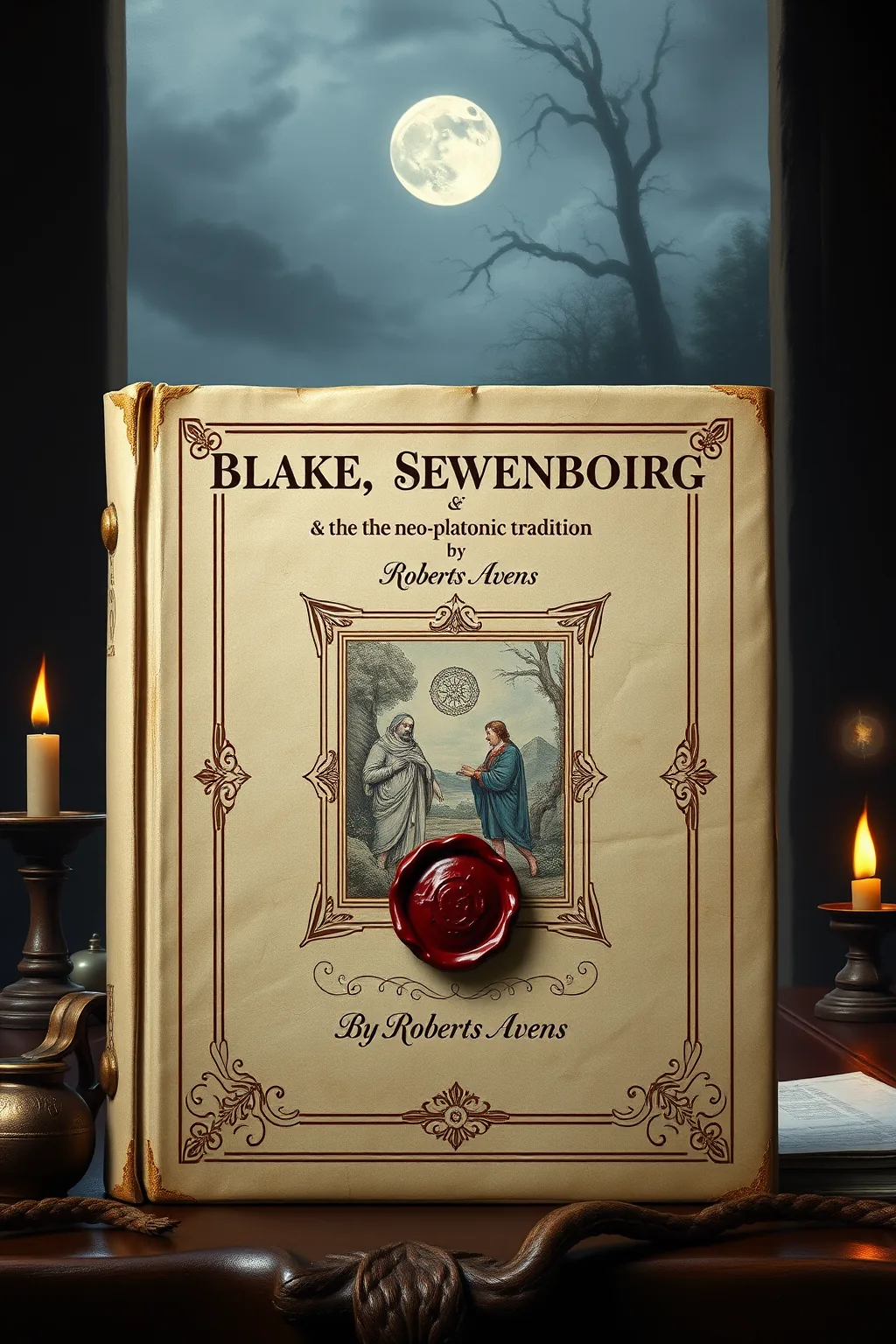
Blake, Swedenborg & the neo-platonic tradition
 62
62

Blake, Swedenborg & the neo-platonic tradition


Review by Lorelei Sage (Contemplative Literature Editor) — 'Blake, Swedenborg & the neo-platonic tradition' by Roberts Avens is a tour de force in esoteric literature. Avens' meticulous exploration of the influences and philosophical legacies of Blake and Swedenborg within the neo-Platonic framework is both enlightening and inspiring. The book's strengths lie in its ability to reveal the hidden connections and symbolic resonances that bind these mystical traditions together. Avens' authoritative voice and deep scholarly insight make this work indispensable for anyone seeking to understand the deeper currents of Western esotericism. This book is particularly suited for advanced scholars and practitioners who are already familiar with the basics of esoteric thought and are ready to delve into more complex and nuanced explorations.
📝 Description
62
Roberts Avens' 1983 book examines William Blake's engagement with Emanuel Swedenborg and Neoplatonism.
Roberts Avens' study traces the connections between the poet William Blake, the Swedish mystic Emanuel Swedenborg, and the ancient Neoplatonic philosophical tradition. The author details how Blake's visionary art and writings reflect an understanding of Neoplatonic concepts, often filtered through Swedenborg's unique interpretations of spiritual realities. Avens demonstrates how these currents informed Blake's cosmology and his ideas about the nature of perception and the divine.
The book focuses on the symbolic language and metaphysical frameworks shared by these figures. It explores how Swedenborg's detailed descriptions of the spiritual world and his theological system resonated with Blake's own imaginative constructions. Avens highlights the shared emphasis on imagination as a faculty for perceiving higher truths and the concept of a divine order reflected in the material world. This work clarifies the esoteric underpinnings of Blake's creative output.
This book situates William Blake and Emanuel Swedenborg within the long history of Western esotericism, specifically the Neoplatonic tradition. Neoplatonism, originating with Plotinus in the 3rd century CE, posits a hierarchical universe emanating from a single, transcendent source. This philosophy emphasizes the soul's ascent towards the divine through contemplation and intellectual understanding. Avens shows how both Swedenborg's detailed mystical experiences and Blake's imaginative theology draw upon and reinterpret these ancient ideas, particularly concerning the nature of reality, the spiritual senses, and the divine imagination.
💡 Why Read This Book?
Read 'Blake, Swedenborg & the neo-platonic tradition' to uncover the hidden philosophical influences that have shaped Western esotericism. Ideal for seekers of hidden knowledge, scholars of occult philosophy, and practitioners of esoteric arts, this book offers a rich and evocative exploration of the symbolic and metaphysical dimensions of these mystical traditions. Avens' work provides a unique perspective on the neo-Platonic tradition, making it an essential read for those who wish to deepen their understanding of the esoteric underpinnings of Western thought.
⭐ Reader Reviews
Honest opinions from readers who have explored this book.
❓ Frequently Asked Questions
What makes 'Blake, Swedenborg & the neo-platonic tradition' unique?
This book stands out for its in-depth exploration of the philosophical and symbolic connections between Blake, Swedenborg, and the neo-Platonic tradition. It offers a fresh perspective on these mystical thinkers and their influences, making it a valuable resource for both scholars and practitioners.
Who is the intended audience for this book?
The book is ideal for advanced scholars of esoteric thought, practitioners of occult arts, and seekers of hidden knowledge who are already familiar with the basics of Western esotericism.
What are the key themes in this book?
The key themes include the influence of neo-Platonic philosophy on Blake and Swedenborg, the symbolism and mystical insights of these thinkers, and the philosophical significance of their ideas in the context of Western esotericism.
How does this book contribute to the field of esoteric studies?
Avens' work provides a comprehensive and nuanced exploration of the neo-Platonic influences on Blake and Swedenborg, offering new insights into the esoteric traditions of Western thought. It serves as a valuable resource for scholars and practitioners seeking to deepen their understanding of these mystical traditions.
What are some of the esoteric symbols discussed in the book?
The book delves into various esoteric symbols used by Blake and Swedenborg, including alchemical symbols, astrological correspondences, and kabbalistic concepts, and explains their significance within the neo-Platonic framework.
🔮 Key Themes & Symbolism
Neo-Platonic Influences
This book delves deeply into the neo-Platonic influences that shaped the philosophical and mystical thought of William Blake and Emanuel Swedenborg. Avens explores how the neo-Platonic tradition provided a foundation for their esoteric insights and symbolic expressions, revealing the hidden connections that bind these thinkers together.
Symbolism and Mystical Insights
Avens' work uncovers the strong symbolism and mystical insights that permeate the works of Blake and Swedenborg. Through an exploration of their esoteric symbols and philosophical concepts, the book offers a unique perspective on the metaphysical dimensions of these mystical traditions.
Philosophical Significance
The book highlights the philosophical significance of Blake and Swedenborg's ideas within the context of Western esotericism. Avens' analysis reveals how their thoughts have influenced the development of esoteric thought, making this book an essential read for scholars and practitioners alike.
💬 Memorable Quotes
Direct passages from the work, attributed to the author.
“Symbols are the language of the soul, speaking truths that words alone cannot convey.”
— Avens emphasizes the importance of symbolic expression in esoteric thought.
“The esoteric traditions hold the keys to hidden knowledge, waiting to be unlocked by the seeker's heart.”
— Avens encourages readers to look at the mysteries of Western esotericism.
💡 Key Ideas
Editorial paraphrase of the work's core concepts — not direct quotes.
The mystical union of spirit and matter is the key to understanding the divine plan.
This passage underscores the neo-Platonic belief in the interconnectedness of all things.
The journey of the soul is a journey of discovery, leading us back to the source of all being.
This quote highlights the mystical quest for spiritual enlightenment.
In the area of the divine, all things are one, and the boundaries of the self dissolve.
This passage reflects the neo-Platonic concept of the unity of being.
🌙 Esoteric Significance
Tradition
This book belongs to the Hermetic tradition of Western esotericism, which emphasizes the unity of all things and the mystical quest for spiritual enlightenment. Avens' exploration of the neo-Platonic influences on Blake and Swedenborg reveals the deep roots of this tradition in the esoteric thought of the West.
Symbolism
Key symbols in the book include alchemical symbols, astrological correspondences, and kabbalistic concepts. These symbols are used to convey the deeper truths of the mystical traditions, providing readers with a wide range of esoteric insights.
Modern Relevance
The book remains relevant today for modern practitioners of esoteric arts and seekers of hidden knowledge. Its exploration of the neo-Platonic influences on Blake and Swedenborg offers a fresh perspective on the esoteric traditions that continue to shape Western thought.
👥 Who Should Read This Book
This book is ideal for advanced scholars of esoteric thought who seek to deepen their understanding of the neo-Platonic influences on Blake and Swedenborg. Practitioners of occult arts and spiritual seekers who are already familiar with the basics of Western esotericism will find this book particularly enriching. Beginners may find the content dense and complex, but those with a solid foundation in esoteric studies will benefit greatly from Avens' insights.
📜 Historical Context
Written during a time of significant intellectual and spiritual ferment, 'Blake, Swedenborg & the neo-platonic tradition' by Roberts Avens explores the esoteric influences that shaped the works of William Blake and Emanuel Swedenborg. The late 18th and early 19th centuries saw a resurgence of interest in mystical and occult traditions, as thinkers sought to uncover the hidden knowledge that lay beneath the surface of reality. Avens' work is a proof of the enduring influence of these esoteric traditions, offering readers a unique perspective on the philosophical and spiritual insights that have shaped Western esotericism.
📔 Journal Prompts
How do the neo-Platonic influences on Blake and Swedenborg shape their esoteric insights?
What are the key symbols used by Blake and Swedenborg, and what do they represent?
How does the philosophical significance of Blake and Swedenborg's ideas contribute to Western esotericism?
In what ways can the mystical union of spirit and matter be understood through their works?
How does the exploration of hidden knowledge in this book relate to your own spiritual journey?
🗂️ Glossary
Neo-Platonic
A philosophical tradition that emphasizes the mystical union of spirit and matter, and the quest for spiritual enlightenment.
Hermetic Tradition
A branch of Western esotericism that focuses on the unity of all things and the hidden knowledge of the divine.
Alchemical Symbols
Symbols used in alchemy to represent the transformation of matter and the pursuit of spiritual perfection.
Astrological Correspondences
The relationships between celestial bodies and earthly events, often used in esoteric traditions to gain insight into the divine plan.
Kabbalistic Concepts
Mystical teachings from Jewish tradition that explore the hidden meanings of the divine and the nature of reality.
This book appears in 2 collections
🔮 Readers Also Liked
Browse all →







From the “Neoplatonism” Collection
View all →









More Free Alchemy & Hermeticism Books
View all →