Mohrd
Mohrd is a term associated with the mystical traditions of Persia, often translated as "lover" or "devotee," signifying a profound spiritual longing and passionate surrender to the Divine. It represents the heart's yearning for union with the Beloved.
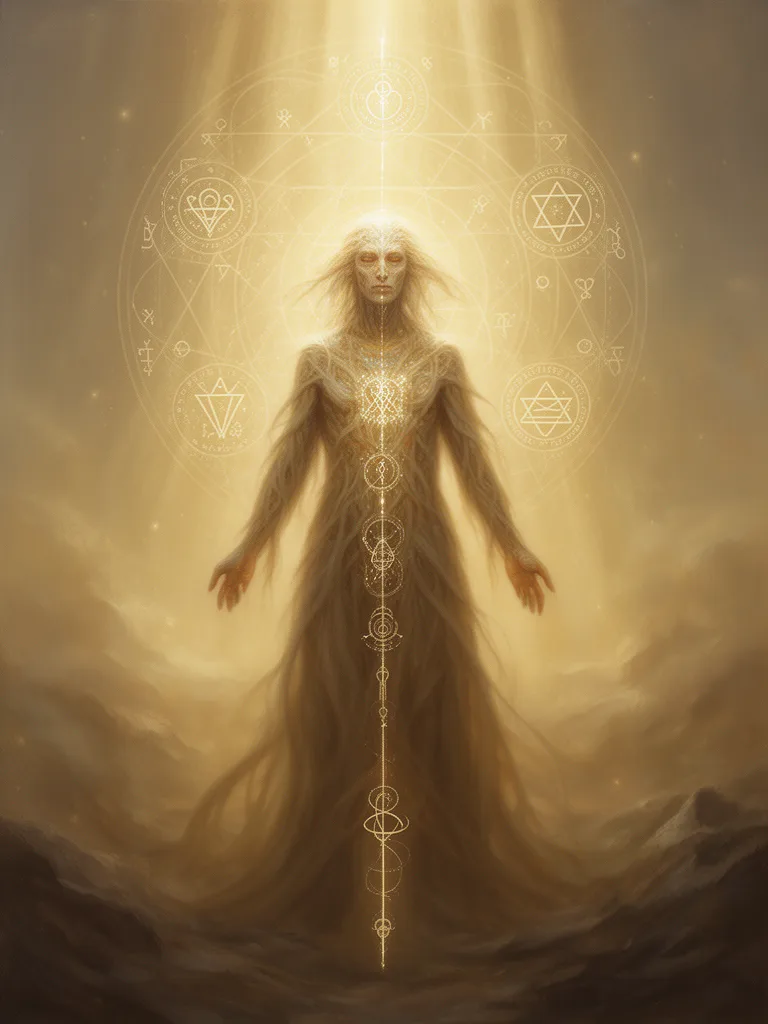
Where the word comes from
The term "Mohrd" originates from Persian, likely derived from the Arabic root "muhabbah," meaning love or affection. It signifies a passionate, devoted love, particularly in a spiritual or mystical context, and is central to the devotional poetry and practice of Sufism.
In depth
Others derived the name from Megh ; ]\Ieh-ab signifying something grand and noble. Zoroaster's disciples were called Mcghestom, according to Kleukei*.
How different paths see it
What it means today
The term Mohrd, though perhaps obscure to the uninitiated, offers a potent lens through which to view the perennial human quest for transcendence. It speaks to a form of love that is not merely an emotion but a spiritual discipline, a consuming fire that purifies and transforms. In the context of Sufism, the Mohrd is the heart that beats in rhythm with the Divine pulse, the soul that yearns for the face of the Beloved with an intensity that eclipses all worldly concerns. This devotional ardor, as explored by scholars like Annemarie Schimmel, is not a sign of weakness but of profound spiritual strength, a courageous surrender that paradoxically leads to liberation.
The Mohrd's journey is one of ecstatic longing, a constant reaching out towards an ever-present, yet often veiled, Divine. It is the lover who risks everything for a glimpse of the Beloved, whose tears are not of sorrow but of an overwhelming, beautiful pain born from proximity to the sacred. This is the love that inspired Rumi's ecstatic poetry, the love that drove Mansur al-Hallaj to his fateful declaration. It is a love that seeks not possession but union, a dissolution of the self into the boundless ocean of being. For the modern seeker, the Mohrd offers a reminder that the spiritual path can be one of passionate engagement, of embracing the ache of separation as a prelude to the joy of reunion. It invites us to consider the transformative power of desire, not as a trap of the ego, but as a divine spark that can ignite the soul.
The concept transcends its Persian origins, resonating with the fervent devotion found in other mystical traditions. The Hindu Bhakti saints, with their intense personal relationships with deities like Krishna or Rama, embody a similar spirit of Mohrd. Likewise, the Christian mystics, in their pursuit of an intimate union with Christ, often described a love so profound it bordered on the ecstatic, a soul consumed by divine desire. This shared language of longing suggests a universal human impulse to connect with something greater than oneself, a yearning that the Mohrd so eloquently articulates. It is in embracing this passionate pursuit, this surrender of the self to the object of ultimate love, that the deepest spiritual transformations can occur. The Mohrd teaches us that love, in its most profound form, is not a passive state but an active, transformative force that can lead us home.
Related esoteric terms
No reflections yet. Be the first.
Share your interpretation, experience, or question.
