Maat
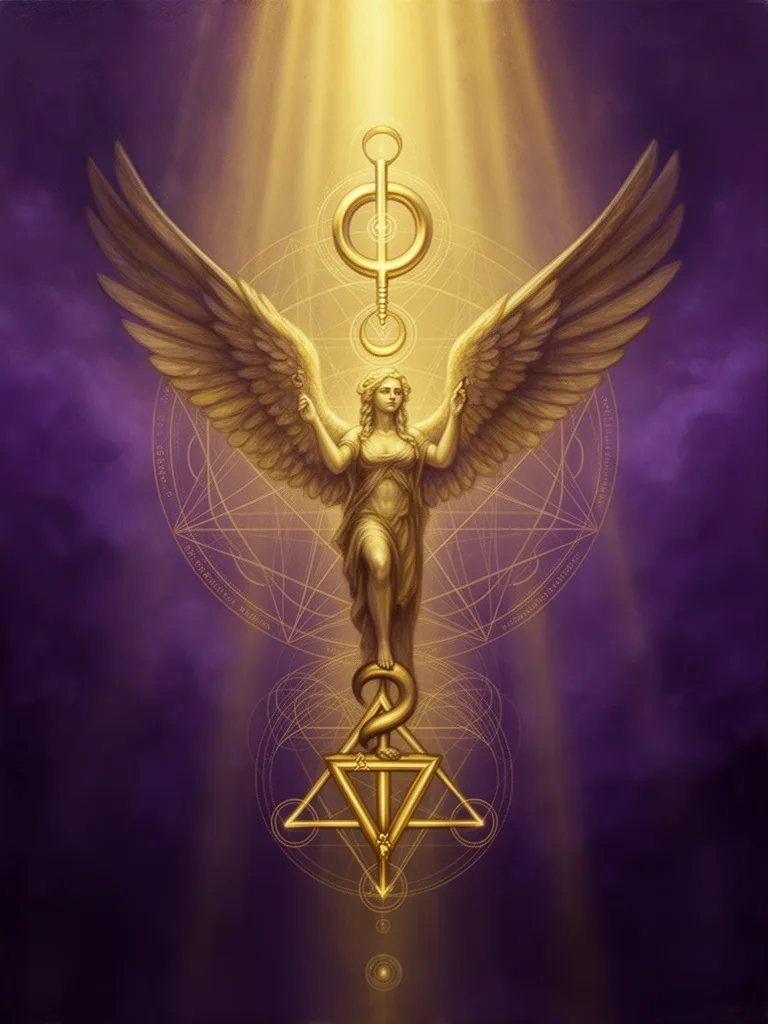
Maat is the ancient Egyptian concept encompassing truth, cosmic order, justice, and moral rectitude. Personified as a goddess, she maintained the balance of the universe, from the celestial movements to the ethical conduct of humans and gods, standing in opposition to chaos (Isfet).
Where the word comes from
The term "Maat" (mꜣꜥt) originates from ancient Egyptian. Its precise etymological roots are debated, but it signifies fundamental principles of order and truth. The concept and its personification appear from the earliest dynastic periods, solidifying its foundational role in Egyptian thought.
In depth
Maʽat or Maat (Egyptian: mꜣꜥt /ˈmuʀʕat/, Coptic: ⲙⲉⲓ) is the ancient Egyptian concept of truth, balance, law, morality, and justice. Maat was also the goddess who personified this concept and regulated the stars, seasons, and the actions of mortals and the deities who had brought order from chaos at the moment of creation. Her ideological opposite was Isfet (Egyptian jzft), meaning injustice, chaos, violence or to do evil.
How different paths see it
What it means today
The ancient Egyptians, in their profound engagement with the cosmos, conceived of Maat not as a sterile set of rules, but as the very breath of existence, the fundamental principle that held the universe together. Mircea Eliade, in his exploration of the sacred, would recognize in Maat the manifestation of cosmic order, an order that was not merely observed but actively participated in. It was the heartbeat of creation, the rhythm of the seasons, the just weight of the scales in the Hall of Judgment, and the integrity of a ruler's decree.
To live by Maat was to align oneself with this divine architecture, to eschew Isfet, the insidious force of chaos, falsehood, and injustice. This was not a passive state; it demanded constant vigilance and ethical action. The scribes, the priests, the pharaohs, and indeed every individual, were custodians of Maat. This echoes the psychological insights of Carl Jung, who saw the integration of the shadow (Isfet) and the embrace of the anima or animus (Maat) as essential for individuation, the process of becoming whole.
The very act of maintaining Maat was a spiritual practice, a daily ritual of ethical conduct. It was the understanding that the personal and the cosmic were inextricably linked. When one acted with truth, fairness, and compassion, they were not just being a good person, they were actively reinforcing the stability of the entire cosmos. This perspective offers a powerful antidote to the fragmentation and moral relativism that can plague modern consciousness. It suggests that our individual choices, our commitment to integrity, have a tangible impact on the world’s equilibrium.
Maat invites us to consider the universe not as a random occurrence, but as a divinely ordered system, and our role within it as active contributors to its harmony. It is a call to embody truth, not just to speak it, and to recognize that justice is not an external imposition but an internal orientation that ripples outward. The ancient Egyptian understanding of Maat offers a profound framework for living a life of purpose and cosmic connection, reminding us that the foundation of reality is built upon the bedrock of truth.
RELATED_TERMS: Dharma, Cosmic Order, Truth, Justice, Ethics, Harmony, Isfet, Cosmic Law
Related esoteric terms
Books on this concept






No reflections yet. Be the first.
Share your interpretation, experience, or question.
