Lucifer
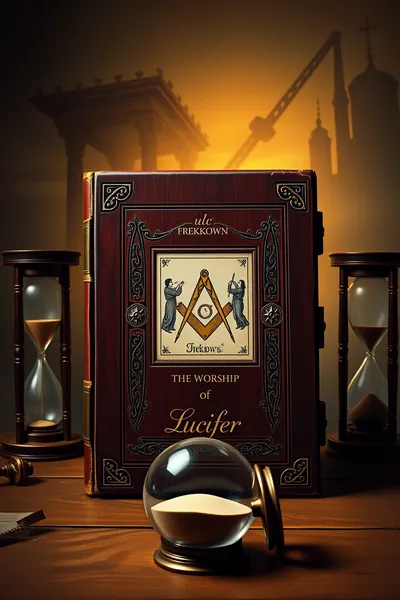
Lucifer is a Latin name meaning "light-bringer," historically associated with the planet Venus as the morning star. It was later conflated with a fallen angel figure in Christian tradition, a transformation largely popularized by John Milton's *Paradise Lost*.
Where the word comes from
The name Lucifer derives from Latin lux meaning "light" and ferre meaning "to bear" or "to bring." It first appeared in ancient Roman literature, notably in Ovid's Metamorphoses, referring to the planet Venus when it appears as the morning star.
In depth
The planet Venus, as the bright "Morning Star". Before .Milton, Lucifer had never been a name of the Devil. Quite the reverse, since the Christian Saviour is made to say of himself in Revelations (xvi. 22). "I am . . . the bright morning star" or Lucifer. One of the early Popes of Rome bore that name ; and there was even a Christian sect in the fourth century which was called the Luciferians. Lully, liai/mond. An alchemist, adept and philo.sopher. born in the 13th century, on the island of Majorca. It is claimed for him that, GLOSSARY 17i» ill a moment of need, ho made for King Edward III. of England st-v.ral millions of gold "rose nobles", and tlius lielped him to carry on war victoriously. He founded several colleges for the study of Oriental hmguages, and Cardinal Ximenes was one of his patrons and held him in great esteem, as also Pope John XXI. He died in 1314. at a good old age. Literature has preserved many wild stories about Raymond Lully, which would form a most extraordinary romance, lie was the elder son of tlie Seneshal of Majorca and inherited great wealth from his father. Lunar Gods. Called in India the Fathers, "Pitris" or the lunar ancestors. They are subdivided, like the rest, into seven classes or Hierarchies. In Egypt although the moon received less worship than in Chaldea or India, still Isis stands as the representative of Luna-Lunus. "the celestial Hermaphrodite". Strange enougli while tiie modern connect the moon only with lunacy and generation, the ancient nations, who knew better, have, individually and collectively, connected their "wisdom gods" with it. Tims in Egypt the lunar gods are ThothHermes and Chons ; in India it is Budha, the Son of Soma, the moon ; in Chaldea Nebo is the lunar god of Secret Wisdom, etc.. etc., Tlie wife of Thoth, Sifix, the lunar goddess, holds a pole with fire rays or the five-pointed star, symbol of man, the Microcosm, in distinction from the Septenary Macrocosm. As in all theogonies a goddess precedes a god, o
How different paths see it
What it means today
The term "Lucifer," meaning "light-bringer," carries a weight of transformation, a testament to how meaning can shift and refract across epochs and belief systems. Originally, it was a poetic appellation for the planet Venus, the harbinger of dawn, a celestial beacon signaling the return of light after the darkness of night. This astronomical observation, imbued with a sense of hope and renewal, found its way into classical literature. Mircea Eliade, in his explorations of the sacred and the profane, often highlighted how celestial phenomena served as foundational elements in early cosmologies, providing a framework for understanding order and cyclical time.
The shift in Lucifer's symbolic valence is a remarkable instance of mythic reinterpretation. While early Christian texts, such as the Book of Revelation, employed the "morning star" metaphor for Christ, symbolizing his divine glory and redemptive advent, later theological developments and literary works, most notably John Milton's epic Paradise Lost, recast Lucifer as the archetypal rebel, the fallen angel cast out of heaven. This dramatic metamorphosis transformed a herald of light into a figure of profound darkness and opposition, a narrative that has profoundly shaped Western consciousness and its understanding of good and evil.
This evolution invites contemplation on the nature of duality. It suggests that even the most luminous symbols can be shadowed, and that the very act of bringing light can, in certain contexts, be perceived as a disruptive force. Carl Jung's work on archetypes and the shadow self offers a lens through which to view this phenomenon, suggesting that the Luciferian figure embodies the potent, often dangerous, energy of individuation and the assertion of will, which can manifest as either creative illumination or destructive pride. The figure of Lucifer, therefore, serves not merely as a theological construct but as a complex psychological and cultural symbol, reflecting humanity's ongoing struggle with the allure of forbidden knowledge and the consequences of ambition. It reminds us that the path of illumination is rarely linear, and that the brightest lights can cast the deepest shadows.
Related esoteric terms
Books on this concept






No reflections yet. Be the first.
Share your interpretation, experience, or question.
