Jinn
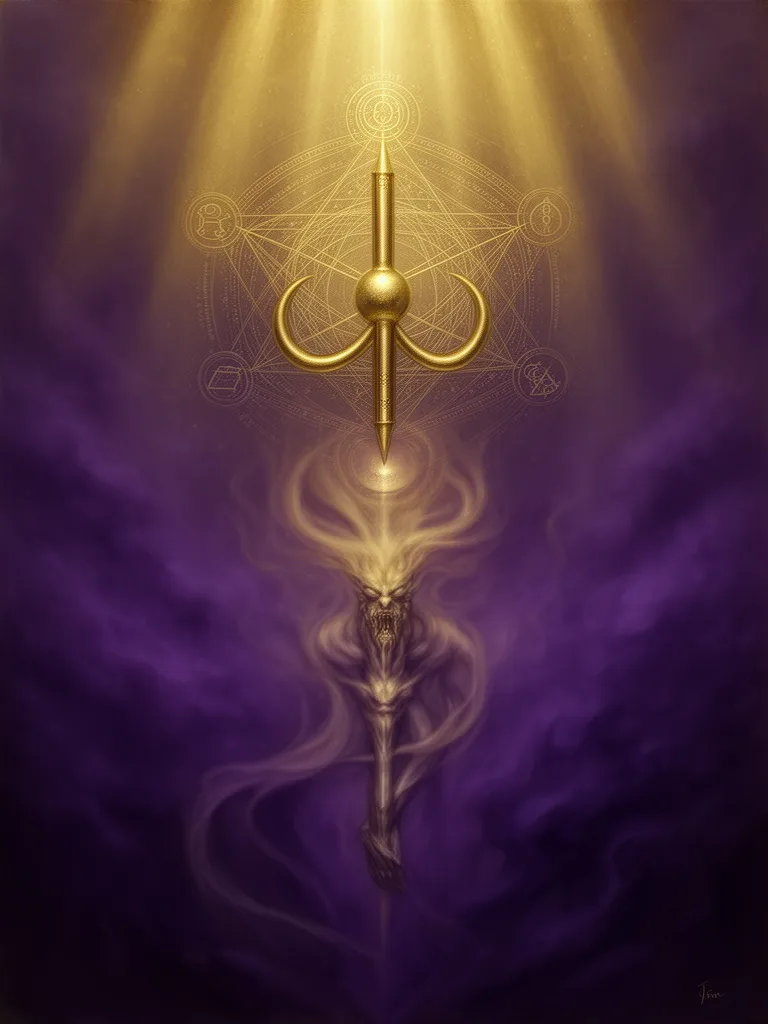
Jinn are invisible, intelligent beings in pre-Islamic Arabian folklore and later Islamic theology, possessing free will and the capacity for both good and evil. They inhabit a realm coexistent with the human world, capable of influencing events but generally unseen.
Where the word comes from
The Arabic term "jinn" (جِنّ) is derived from the root j-n-n (جَنَّ), meaning "to conceal" or "to be hidden." This etymology directly reflects their invisible nature. The concept predates Islam, appearing in ancient Arabian oral traditions and inscriptions.
In depth
Jinn (Arabic: جِنّ), also romanized as djinn or anglicized as genies, are supernatural beings in ancient Arabian religion and Islam. Like humans, they are accountable for their deeds and can be either believers (Mu'minun) or unbelievers (kuffar), depending on whether they accept God's guidance. Since jinn are neither innately evil nor innately good, Islam acknowledged spirits from other religions and could adapt them during its expansion. Likewise, jinn are not a strictly Islamic concept; they may...
How different paths see it
What it means today
The Jinn, as conceived in the rich tapestry of Arabian lore and later woven into Islamic theology, offer a fascinating counterpoint to the often stark dualisms of Western thought. Blavatsky's definition, though brief, touches upon a crucial aspect: their accountability. This imbues them with a moral dimension, distinguishing them from mere automatons or forces of nature. They are not simply spirits of the wind or shadows in the desert; they are beings capable of choosing their path, a characteristic that resonates deeply with the Hermetic principle of correspondence, where the microcosm reflects the macrocosm.
Mircea Eliade, in his profound explorations of the sacred and the profane, often highlighted how cultures construct realities through the recognition of unseen powers. The Jinn, like the elemental spirits described by Paracelsus or the daemons of ancient Greece, populate the liminal spaces, the borderlands between the manifest and the unmanifest. They are the "hidden ones," a concept that speaks to our own inner landscape, the unconscious realms that shape our conscious experience. Carl Jung's work on archetypes and the collective unconscious might find echoes here, in beings that represent primal forces or aspects of the human psyche given form.
The notion that Jinn can be believers or unbelievers, accepting divine guidance or rejecting it, aligns with a worldview that sees spiritual evolution as a universal process, not confined to humanity. This challenges anthropocentrism, suggesting that the divine drama plays out across multiple planes of existence. The Islamic tradition, in its remarkable capacity for synthesis, absorbed and reinterpreted pre-existing Arabian beliefs, demonstrating a flexible approach to the spiritual realm. This adaptability is a hallmark of living traditions, which, like the Jinn themselves, can appear in various guises while retaining a core essence. The existence of Jinn encourages a more nuanced understanding of reality, one that acknowledges the profound influence of the unseen and the complex interplay between different orders of being. They remind us that the world is not solely what our senses perceive, but a layered reality where mystery and agency reside beyond the visible veil.
RELATED_TERMS: Angels, Demons, Elementals, Spirits, Djinn, Ghoul, Ifrit, Marid
Related esoteric terms
Books on this concept







No reflections yet. Be the first.
Share your interpretation, experience, or question.
