Hindu nationalism
Hindu nationalism is a political ideology advocating for a Hindu-centric Indian state and society, drawing upon the subcontinent's indigenous cultural and social traditions. It emphasizes a distinct Indian identity rooted in Hindu heritage and has historically served as a counterpoint to foreign influence and colonialism.
Where the word comes from
The term "nationalism" itself emerged in the late 18th century, gaining prominence in the 19th. "Hindu" derives from the Persian word "Hindu," referring to the Indus River and the lands beyond it, a term applied by outsiders to the inhabitants of the Indian subcontinent. Its usage evolved to denote a religious and cultural identity.
In depth
Hindu nationalism has been collectively referred to as the expression of political thought, based on the native social and cultural traditions of the Indian subcontinent. It is better described as seeking a "Hindu polity". The native thought streams became highly relevant in Indian history when they helped form a distinctive identity about the Indian polity and provided a basis for questioning colonialism. These also inspired Indian nationalists during the independence movement based on armed struggle...
How different paths see it
What it means today
Blavatsky's description, though framed through the lens of her era's nascent understanding of such movements, captures the core impulse of Hindu nationalism: the assertion of a unique civilizational identity intrinsically tied to the land and its ancient cultural currents. This is not merely a political aggregation but a profound re-grounding in ancestral narratives, a quest to re-establish a social and political order that reflects the deep spiritual and philosophical reservoirs of India. In the modern era, this search for a "Hindu polity" can be seen as a contemporary echo of what Mircea Eliade termed the "eternal return," a desire to reconnect with a perceived primordial state of order and meaning, particularly potent in the face of rapid globalizing changes. It speaks to a longing for continuity, for a sense of belonging that transcends transient political structures and anchors itself in the enduring spirit of a civilization. The emphasis on "native social and cultural traditions" suggests a rejection of imposed frameworks, a turning inward to rediscover and reanimate the indigenous genius. This can manifest as a vibrant cultural resurgence, but also, as history has shown, can become a source of exclusionary dynamics when the perceived boundaries of "Hindu" identity are rigidly defined. The challenge, then, lies in discerning between the vital reclamation of heritage and the potentially stifling erection of walls.
Related esoteric terms
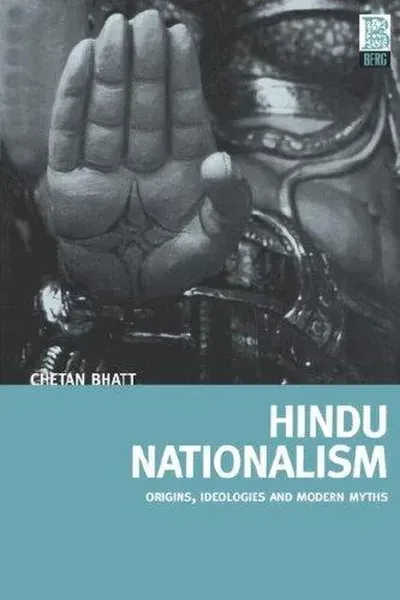
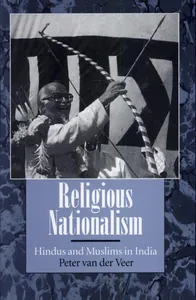
Books on this concept






No reflections yet. Be the first.
Share your interpretation, experience, or question.
